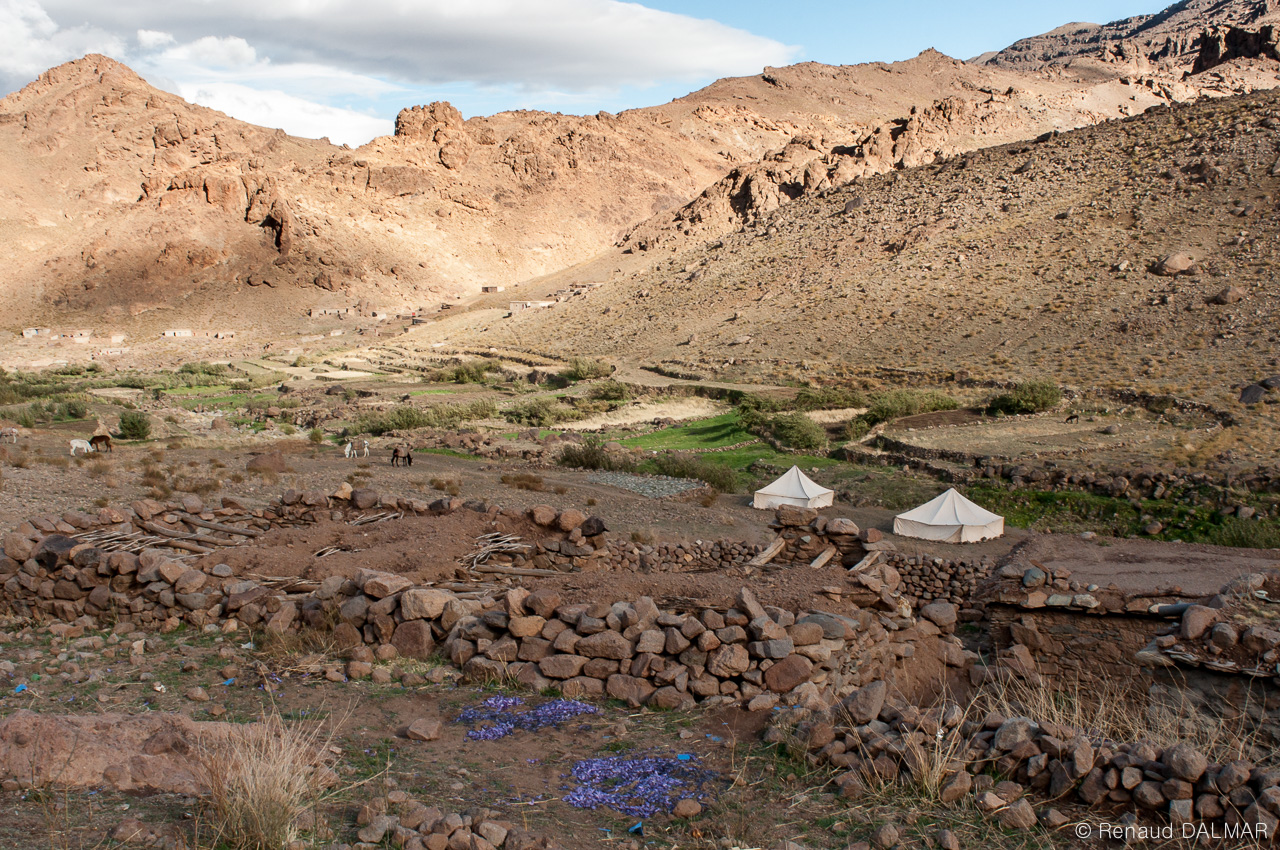
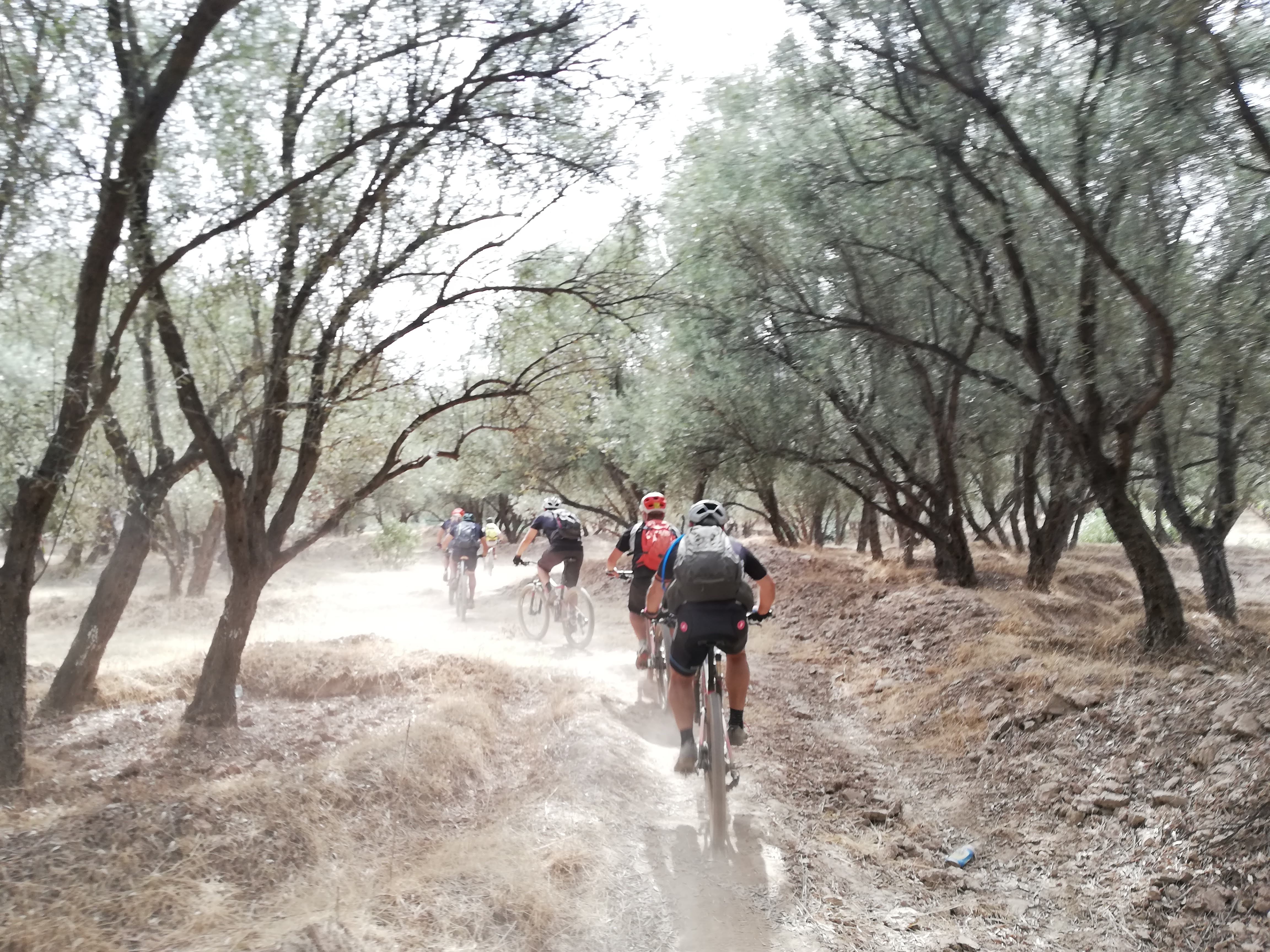
A multi-day bike expedition is a cycling journey spanning at least one night where you carry all your gear on the bike and travel through varied terrain under your own power. The industry uses two main terms for this: bikepacking and cycle touring. Both describe self-contained travel, but they differ in gear setup, terrain, and riding style. Beginner routes typically run 2–5 days with daily distances around 40–60 miles, while advanced expeditions like the Manali-Leh route cover over 500 km across 11 days of high-altitude riding. Whether you want a rugged mountain crossing or a scenic road trip through peaceful villages, a multi-day cycling adventure is one of the most immersive ways to experience a landscape.
What is a multi-day bike expedition, and how does it differ by type?
A multi-day bike expedition falls into two broad categories: bikepacking and traditional cycle touring. Understanding the difference helps you choose the right setup before you spend a dollar on gear.
Bikepacking uses lightweight frame-mounted bags designed for off-road or mixed terrain. The minimalist approach keeps weight low and the bike nimble on gravel paths, mountain trails, and rugged backcountry routes. Traditional cycle touring uses panniers mounted on front and rear racks, carrying heavier loads comfortably on paved roads. Touring setups prioritise comfort and capacity over agility.
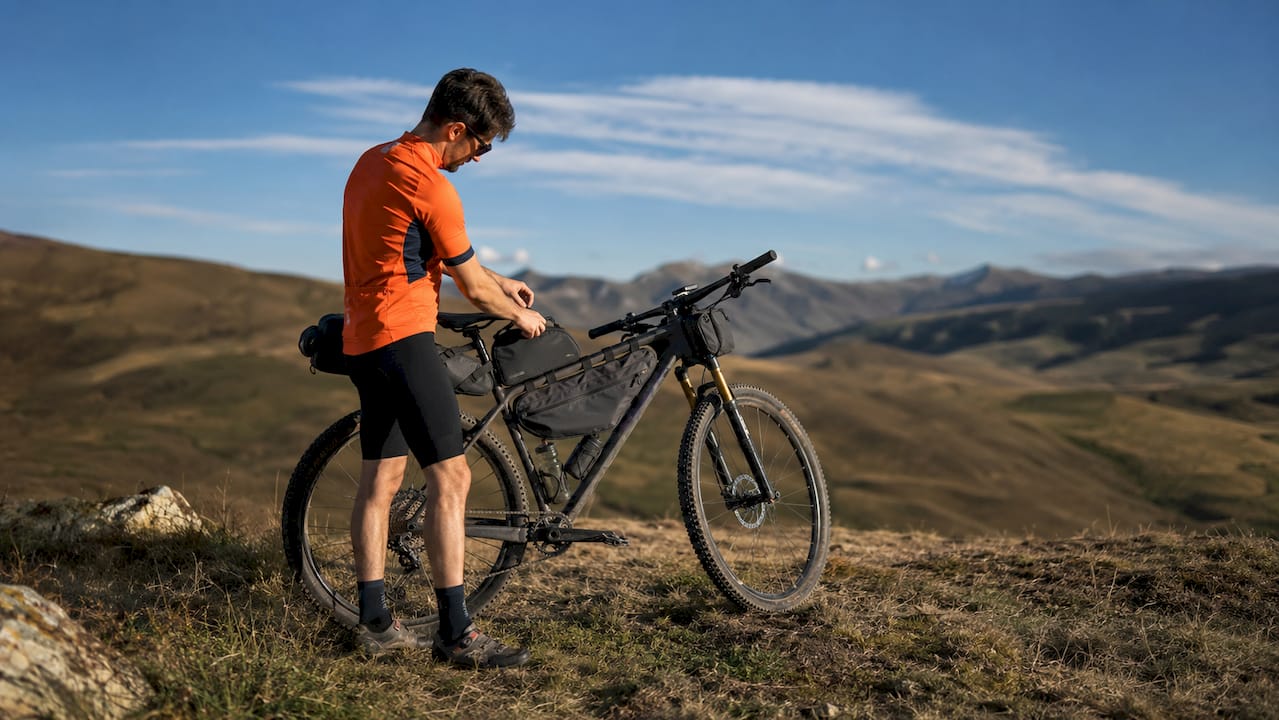
Beyond gear, expeditions split into supported and self-supported styles. Self-supported riders carry everything: food, shelter, tools, and clothing. Supported expeditions include a guide vehicle or pre-arranged accommodations along the route, which reduces physical load and logistical stress. Guided tours from operators like Atlasmountainbike sit in the supported category, providing accommodation, local knowledge, and safety backup throughout the trip.
Style | Gear setup | Best terrain | Load level | Experience needed |
|---|---|---|---|---|
Bikepacking | Frame bags, minimalist | Off-road, gravel, mountain | Light | Intermediate to advanced |
Traditional touring | Panniers on racks | Paved roads, mixed | Heavy | Beginner to advanced |
Supported expedition | Minimal personal gear | Any | Very light | Any level |
Self-supported touring | Full kit on bike | Any | Heavy | Intermediate to advanced |
Each style suits different goals. Bikepacking rewards those who want raw terrain and physical challenge. Traditional touring suits riders who prefer comfort and longer daily distances on smoother roads. Supported expeditions work best for first-timers or travellers who want cultural immersion without logistical complexity.
How to plan and prepare for a multi-day bike expedition
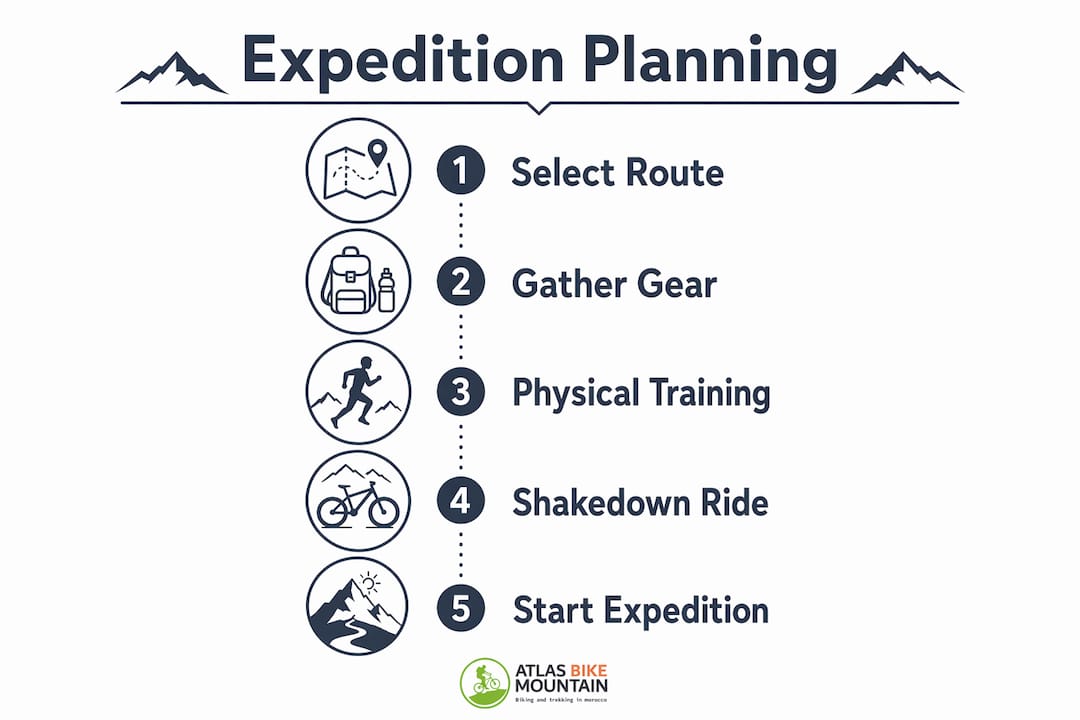
Good bike tour planning follows a layered timeline. Route selection happens 1–3 months out, gear testing 2–4 weeks before departure, and final logistics like passport checks and insurance confirmation in the last two weeks. Compressing this timeline is the most common mistake first-time riders make.
Choosing your route and budget
Match your route to your current fitness level, not your aspirational one. A rugged mountain route that looks spectacular on a map can become miserable if your legs are not ready for it. Budget varies widely: minimalist wild camping costs as little as $6 per day, while guesthouse-supported tours run $38–$63 per day. International trips require valid passports and travel health insurance, two details that often get left until the last week.
Building your gear list
Bikepacking essentials fall into five categories: shelter, clothing, nutrition, tools, and navigation. For shelter, a lightweight tent or bivy works for self-supported trips. For navigation, download offline maps using apps like Komoot or Gaia GPS before you leave cell coverage. For tools, carry a multi-tool, tyre levers, spare tubes, a patch kit, and a chain breaker at a minimum.
Pro Tip: Pack your full kit and ride a loaded 30-mile loop before your expedition. This single shakedown ride reveals fit problems, bag rub points, and gear you will never actually use.
Physical training for the trail
Build endurance with at least 3 months of consistent cardio and hill work before a demanding expedition. Endurance matters far more than speed on a loaded bike. Your goal is to feel comfortable riding 4–6 hours on consecutive days, not to set personal records on climbs. Riders planning high-altitude routes like those in Morocco’s Atlas Mountains should include specific elevation gain work in their training.
For mountainous terrain, add 10% extra time per 1,000 feet of elevation gain when estimating daily schedules. This buffer prevents the frustration of arriving at camp after dark because the climb took twice as long as expected.
What can travellers expect on long-distance bike routes?
The daily experience of a multi-day expedition feels very different from a weekend ride. A bike touring pace averages 10–14 mph, including stops, which is slower than most riders expect. That slower pace is the point. It gives you time to notice the terrain, stop at a roadside market, or talk to a local farmer.
Loaded bikes reduce average speeds by 20–50% compared to unloaded riding, especially on mixed terrain. A rider who averages 18 mph on a training ride might average 11 mph with full panniers on a gravel path. Planning daily distances around realistic loaded speeds prevents exhaustion and keeps the trip enjoyable.
Terrain shapes the entire character of an expedition. Road routes through Morocco’s Draa Valley offer long, scenic stretches with manageable gradients. Mountain trails in the High Atlas demand technical skill, lower gearing, and more recovery time between riding days. Gravel routes split the difference, offering adventure without the full technical demands of singletrack.
“There is no wrong way to undertake a multi-day bike trip. Whether supported or self-supported, enjoyment and immersion are the measures of success.” — Cycle Tourism Show
The mental shift that happens on longer expeditions is real. After two or three days, the bike stops feeling like exercise equipment and starts feeling like a home on wheels. You develop a rhythm: wake, pack, ride, eat, explore, sleep. That rhythm is what separates a multi-day cycling adventure from a day trip. It changes how you see a place.
Practical tips for first-time expedition riders
First-time riders consistently underestimate two things: how much a loaded bike slows them down, and how much time morning logistics consume. Both are fixable with the right habits.
Start short. A 2-day mountain biking tour through rugged terrain teaches you more about your gear and pacing than any amount of reading.
Ride loaded in training. At least two of your pre-trip training rides should use the same bags and weight you plan to carry on the expedition.
Plan for weather windows. Check historical weather for your route and build one rest day per week into your itinerary for weather delays or mechanical issues.
Fuel early and often. Eat before you feel hungry. On a loaded bike, bonking (running out of energy) hits harder and recovers slower than on a day ride.
Carry cash. Remote villages and mountain passes rarely have card readers. Cash keeps you fed and sheltered when technology fails.
Pro Tip: Set a consistent morning start time of 8–9 AM. Early starts help manage daily schedules, avoid afternoon heat or fatigue, and leave buffer time for mechanical issues without sacrificing evening relaxation.
E-bike riders face one additional planning layer. Battery range on loaded e-bikes drops significantly on climbs. Map your charging stops before you leave, and build your itinerary around confirmed power sources rather than hoping a guesthouse has an outlet available.
Key takeaways
A multi-day bike expedition is a self-contained cycling journey of at least one night, defined by the gear you carry, the terrain you choose, and the pace you sustain across consecutive riding days.
Point | Details |
|---|---|
Core definition | A multi-day expedition lasts at least one night with all gear carried on the bike. |
Two main styles | Bikepacking suits off-road terrain; traditional touring suits paved roads with heavier loads. |
Planning timeline | Start route selection 1–3 months out and test gear at least 2–4 weeks before departure. |
Realistic pacing | Loaded bikes average 10–14 mph; plan daily distances around this, not your unloaded speed. |
Start small | A 2-day shakedown trip reveals gear and fitness gaps before a longer expedition. |
Why the first expedition changes everything
I have guided riders of all backgrounds through the Atlas Mountains for over two decades, and the pattern is always the same. Riders arrive focused on mileage targets and gear checklists. By day two, they stop checking their GPS every ten minutes. By day three, they are asking about the history of a Berber village we pass through, or stopping to photograph a light they have never seen before.
The preparation matters. Riders who skip the shakedown trip or ignore the training timeline suffer for it on day one. But the preparation is not the point. It is just the price of admission to something that genuinely shifts how you experience travel.
I also want to push back on the idea that you need a demanding, self-supported route to have a real expedition. A 3-day family bike tour through scenic mountain terrain, with accommodation arranged and a guide who knows the trails, is a full expedition. The immersion is the same. The cultural richness is the same. The physical challenge is real. What changes is the support structure, and that is a feature, not a compromise.
Start with a route that matches your current fitness. Build from there. The riders who try to skip straight to a 500 km self-supported crossing on their first attempt rarely finish it with a smile. The ones who start with two or three days on varied terrain, get comfortable with the rhythm, and then extend their ambitionsthrough or, those are the riders who come back year after year.
— Rachid
Plan your next multi-day mountain biking adventure with Atlas mountain bike
Atlas Mountain Bike has spent over 25 years building guided expeditions through Morocco’s Atlas Mountains, from rugged singletrack above Marrakech to the sweeping desert terrain toward the Sahara. Every tour includes experienced local guides, pre-arranged accommodation, and route planning tailored to your fitness level.
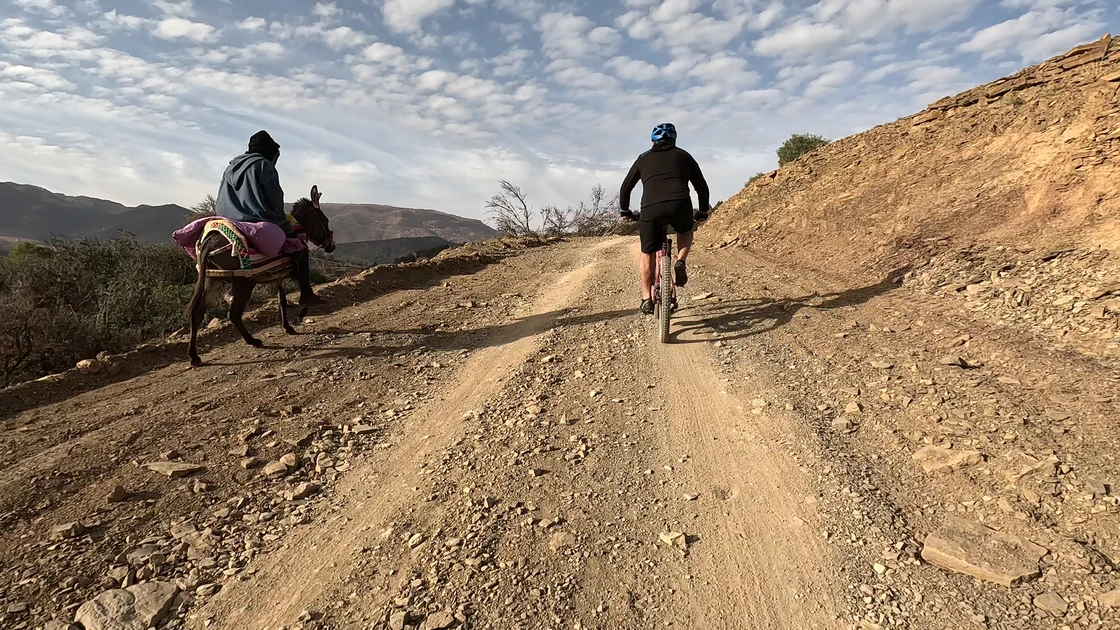
Whether you are ready for a 7-day cycling itinerary from Marrakech to the Sahara or looking for a shorter introduction to mountain riding, Atlas Mountain Bik has a tour that fits. Browse the full range of guided mountain biking expeditions and find the route that matches where you are right now, not just where you want to be.
FAQ
What is the minimum length for a multi-day bike expedition?
A multi-day bike expedition includes at least one overnight stay, making it a minimum of two days. Most beginner routes run 2–5 days with daily distances of 40–60 miles.
What is the difference between bikepacking and cycle touring?
Bikepacking uses lightweight frame-mounted bags for off-road terrain, while cycle touring uses panniers on racks for heavier loads on paved roads. Both are forms of multi-day self-contained cycling travel.
How fast do you ride on a loaded bike expedition?
Touring pace averages 10–14 mph with stops, and loaded bikes can reduce your normal speed by 20–50% depending on terrain and total weight carried.
What should I pack for a multi-day bike trip?
Bikepacking essentials include shelter, layered clothing, nutrition supplies, a basic tool kit with spare tubes, and offline navigation maps downloaded before departure. Match your kit weight to your route type.
Do I need a guide for my first multi-day cycling adventure?
A guided expedition is the most reliable option for first-timers. Operators like Atlasmountainbike handle route planning, accommodation, and safety logistics, letting you focus on riding and experiencing the terrain.
Recommended
Adventure Awaits: Join Our 10-Day Cycling Expedition Across Morocco! - Atlas Mountain Bike
Cycling the Atlas Mountains: An Immersive Bike Journey - Atlas Mountain Bike Blog
Pedal to Paradise: 7-Day Cycling Itinerary from Marrakech to the Sahara - Atlas Mountain Bike
Family Bike Tour in The Atlas Mountains | 3 Days of Biking Adventures - Atlas Mountain Bike