
 14 Oct 2026
 7 min read
Choosing Atlas mountain treks from Marrakech is mainly a question of how much time you have, how long you want to walk, and what kind of terrain feels right. Routes can range from village paths and valley walks to steeper mountain trails, while travel to the trailhead takes a meaningful part of a day trip. Compare the transfer, walking hours, ascent and altitude—not just the destination name—before choosing.
How to choose an Atlas trek from Marrakech
A useful shortlist starts with five details: time on the road, hours on foot, terrain, highest point and the kind of experience you want. Two Atlas mountain treks may both be described as “easy” or “a day trip,” yet feel very different if one follows a valley path and another climbs continuously.
For a day trip from Marrakech to the Atlas Mountains, ask where the walk begins and how much time is reserved for walking after the transfer. A nearby trailhead may leave more of the day for the route; a longer drive can mean a shorter walk or a later return. Ask for an itinerary with approximate travel and walking times rather than relying on a broad label.
Then consider the route itself:
- Walking duration: Does the itinerary include steady walking for several hours, or a shorter village stroll?
- Ascent and descent: How much uphill and downhill walking is expected? Long descents can be tiring even when the climb feels manageable.
- Surface: Will you be on broad paths, uneven tracks, rocky ground or steep sections?
- Altitude: What is the highest point, and does the route gain height gradually?
- Purpose: Are you looking for a cultural village walk, a challenging mountain day or time outdoors as part of a broader Morocco trekking itinerary?
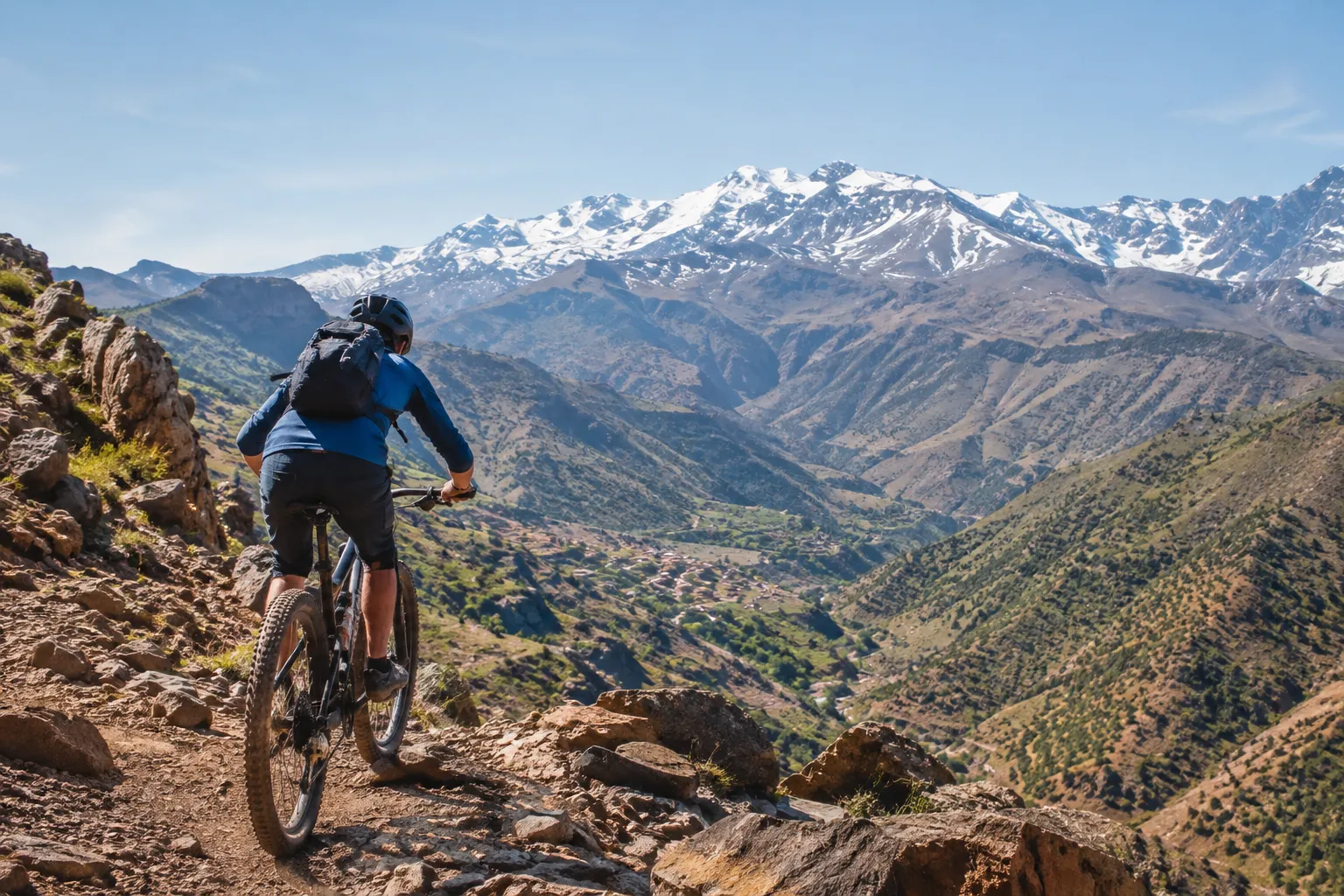
The best fit is not necessarily the route with the highest summit or longest distance. For riders considering mountain bike Morocco alongside walking, note that trekking and biking place different demands on the body: a familiar level of cycling fitness does not automatically mean a steep hike will feel easy. Choose each activity by its own duration, terrain and effort.
Village walks and higher mountain routes
Village walks often follow paths between settlements, cultivated land and valley routes. They can offer a closer look at everyday mountain landscapes and local architecture, with the walking experience shaped by the route’s surface, gradients and length. “Gentler” does not mean effortless: uneven ground and repeated ups and downs can still require comfortable footwear and steady balance.
Higher mountain routes tend to involve more sustained climbing, greater exposure to changing weather and a longer stretch away from valley-level surroundings. The extra altitude can make the same uphill pace feel more demanding, particularly for anyone who is not used to walking in mountains. A route’s highest point and total ascent are more useful clues than a general description such as “moderate.”
Around Imlil and the Toubkal area, itineraries may differ substantially in how far they climb and how much of the day is spent on the trail. A walk through village paths is not equivalent to an ascent toward high mountain terrain, even if both start in the same broad region. Ask whether the plan is a valley circuit, a viewpoint walk or a sustained climb, and whether the return uses the same path.
For a first mountain walk, or for a mixed-ability group, a village-focused route may be a more comfortable starting point than a high route. More experienced walkers may prefer longer ascents, but should still assess footing, exposure and altitude rather than choosing on difficulty labels alone. A guide can explain what the route entails and whether its pace and terrain suit the group.
What one-day and multi-day treks involve
A day trip from Marrakech to the Atlas Mountains combines the drive there and back with the walk itself. The available trail time depends on the chosen starting point, transfer arrangements and the day’s itinerary. Confirm when walking begins, how long it lasts, and whether stops or visits are included in the stated duration.
A day route can work well if you want a taste of mountain walking without changing accommodation. Its tradeoff is limited time: a long transfer can reduce the hours available on foot, and there may be less flexibility to adjust the itinerary. If the main goal is a substantial climb or an unhurried village-to-village walk, check whether the day’s schedule realistically allows for it.
An overnight or multi-day trek spreads the walking across more than one day. It can give an itinerary more room for longer stages, varied routes and overnight stays in mountain communities, depending on the plan. It also requires decisions about luggage, accommodation, meals, daily walking distances and what support is included. Ask how the route is divided and whether each day’s walking time and ascent are suitable for everyone in the group.
This distinction matters when comparing trekking with a cycling holiday. A mountain bike itinerary is built around riding distance, trail conditions and cycling support; a trek is planned around walking time, elevation gain and foot terrain. If your wider trip combines activities, allow for the different physical demands rather than assuming one itinerary’s fitness level transfers directly to the other.
Match the route to your fitness and comfort
Before settling on one of the Atlas mountain treks from Marrakech, compare the route description with what you are comfortable doing on consecutive hours of uneven ground. General fitness helps, but it is not the only factor. Previous hill-walking experience, balance, heat tolerance and comfort with steep descents can all affect how a route feels.
Look for these details in the itinerary:
- Walking hours, including whether the estimate counts breaks.
- Total ascent and descent, not just distance.
- The highest point reached and how quickly the route gains height.
- Surface and steep sections, including any exposed or rocky stretches.
- Typical pace and how often the group can stop.
- What happens if someone needs a slower pace or a shorter route.
Questions to ask a guide include: “How much continuous uphill walking is there?” “What is the steepest or roughest section?” and “Can the route be shortened if someone is struggling?” For a group with different abilities, ask how the pace is managed and whether the itinerary has a practical alternative—not simply whether the route is suitable for everyone.
Also confirm what support means in practice. Ask where the guide meets the group, what is included in the transfer and whether food, water or overnight arrangements are part of the plan. These details help you compare guided options without assuming that every itinerary described as a trek includes the same services.
Choose a route and confirm the details
Start with your available days, then decide whether your priority is a village walk, a higher mountain route or a longer itinerary. Use walking hours, ascent, surface and altitude to narrow the choices. Finally, check the travel schedule from Marrakech and ask a local guide to explain the route in concrete terms.
Before confirming, make sure you understand:
- The exact starting area and expected transfer schedule.
- Approximate time on foot each day.
- The route’s ascent, highest point and ground conditions.
- What is included, such as guiding, transport or overnight arrangements.
- What clothing, footwear and personal supplies you should bring.
- How the plan may change if weather or trail conditions affect the route.
This practical comparison is useful whether you are arranging Morocco trekking on its own or fitting a walk around a cycling trip. For readers comparing guided trekking in other destinations, Eco Africa Climbing organizes guided Mount Kilimanjaro climbs, including private and group expeditions, as well as private Tanzania wildlife safaris; it is a Tanzania-based operator, not an Atlas trekking provider.
Atlas Trekking FAQs
Can I take an Atlas Mountains day trip from Marrakech?
Yes, a day trip from Marrakech to the Atlas Mountains can include a guided walk, but the transfer takes part of the day. Check the trailhead, walking duration and return schedule before choosing.
How do I get from Marrakech to the Atlas Mountains?
Most visitors arrange road transport from Marrakech to a chosen mountain starting point, often as part of a guided itinerary. Confirm the pickup, transfer duration and return arrangements for your specific route.
Is there an atlas mountain near Marrakech?
The Atlas Mountains lie beyond Marrakech rather than forming a single peak beside the city. A day trip can reach mountain areas, but the trailhead and drive vary by itinerary.
Are the Atlas Mountains worth visiting in Morocco?
They can be rewarding if you want mountain walking, village routes and a change from the city. Choose an itinerary whose travel time, terrain and walking effort match what you want from the visit.
Is Atlas Mountain hard to climb?
Difficulty varies by route: a village walk is different from a sustained ascent on steep, uneven ground. Check the climb’s ascent, altitude, walking hours and surface rather than relying on its label.
When is the best time of year to trek in the Atlas Mountains?
Spring and autumn are often comfortable periods for walking, while conditions vary with altitude and weather. Check the forecast and ask about seasonal trail conditions for your chosen route and dates.
What should I pack for a trek in the Atlas Mountains?
Bring sturdy, comfortable walking shoes, layered clothing, sun protection and enough water for the itinerary. Ask your guide about current conditions and whether the route calls for any additional equipment.
Can children join an Atlas Mountains trek?
Children can join some Atlas walks, but the route should match their walking experience, stamina and comfort on uneven ground. Confirm the distance, ascent, pace and options for shortening the walk with the guide.
Recommended next steps
Choose a village walk or higher route first, then compare the actual walking hours, ascent, altitude and transfer from Marrakech. If you are considering several days, check how the stages and overnight arrangements fit the group. Clear answers to those practical questions make it easier to select an Atlas trek that suits your time and ability.
Hannah Whitaker is an adventure travel editor with a background in outdoor travel writing and guided cycling trips. She specialises in mountain biking and trekking in Morocco, including routes around Marrakech, the Atlas Mountains and the Sahara. Drawing on local guides’ knowledge, she explains trail conditions, practical preparation and the cultural context of each journey. Her articles help riders assess whether a route suits their ability and plan a rewarding day or multi-day trip.