 21 Nov 2026
 9 min read
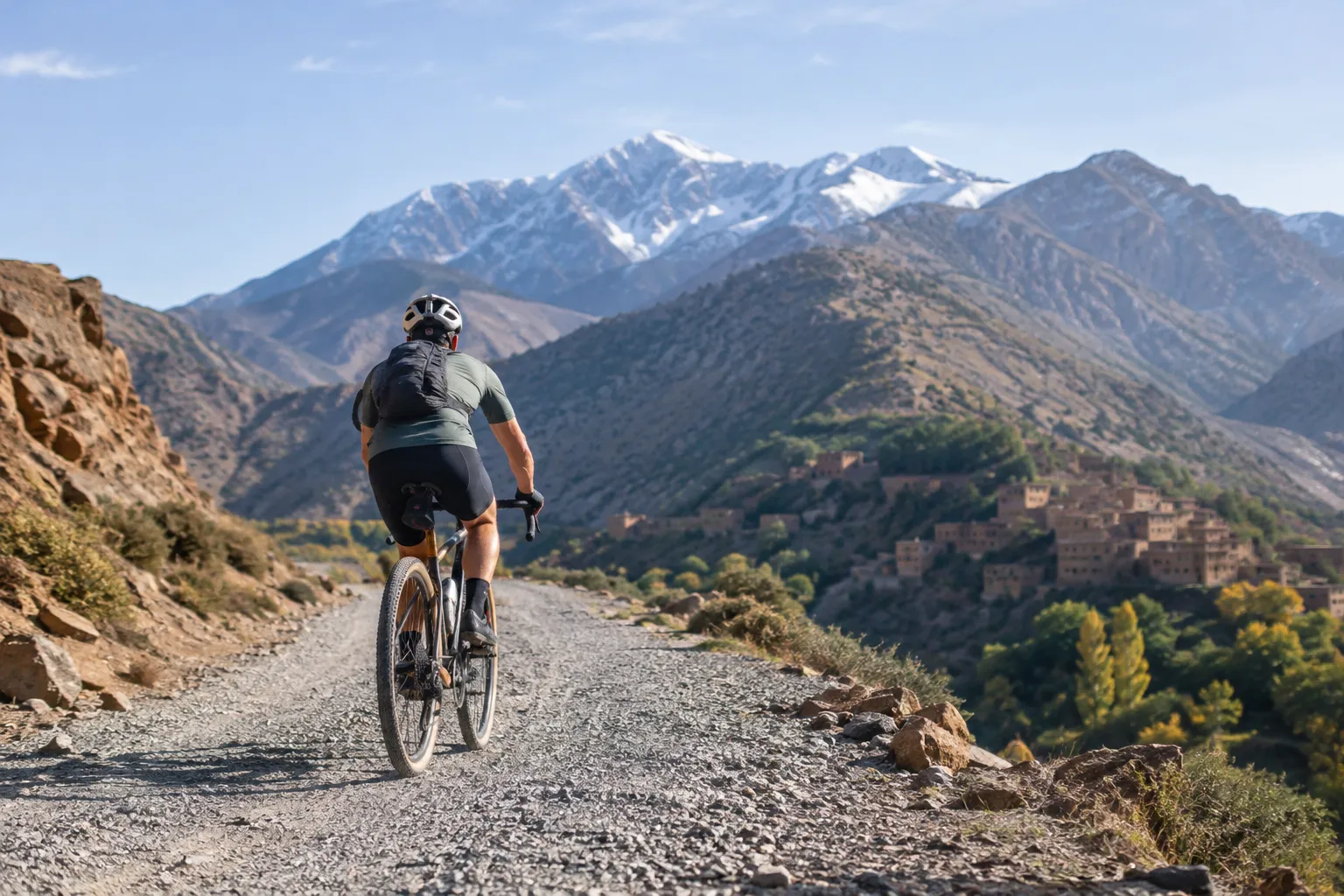
Cycling in the Atlas Mountains can mean gravel riding on rougher roads, road cycling on paved climbs or mountain biking on trails and singletrack. Around Marrakech, the right choice depends on the surface and riding style you want, your experience on that terrain and how much time you have; a gravel ride is a middle ground for riders who want to cover distance beyond smooth tarmac without making every section a technical trail.
What cycling in the Atlas Mountains involves
The Atlas is not one continuous type of ride. Terrain and road surfaces vary by route, so an itinerary may involve paved roads, unpaved tracks, climbs and descents, or purpose-built-feeling trail sections. Before choosing a ride, find out which surfaces make up most of the route and whether the day is designed around distance, climbing or technical riding.
The main options are:
- Gravel riding: typically uses a mix of paved and unpaved roads or tracks. It suits riders who enjoy longer stretches of pedalling and can manage changing surfaces without needing every section to be a technical trail.
- Road cycling: focuses on paved roads, climbs and distance. It may suit riders who prefer a predictable riding surface, though mountain-road conditions and gradients still matter.
- Mountain biking: prioritises trails and off-road terrain, with greater emphasis on bike handling and choosing a line over uneven ground. The term mountain biking in the Atlas Mountains can cover very different levels of technical difficulty, so ask what the route actually includes.
A Gravel bike atlas experience is worth considering if you want to link roads and rougher tracks in one ride. It is not automatically easier than a mountain-bike outing: loose or uneven surfaces can be demanding, especially on descents, and the effort required depends on the route.
Atlas Mountain Bike offers guided mountain biking and e-bike adventures centred on Marrakech and the Atlas Mountains, including gravel biking, day rides and multi-day trips. When comparing options, ask for the route’s surface mix, climbing, expected riding time and technical demands rather than relying on the ride label alone.
How gravel riding differs from an Atlas MTB day
The simplest distinction is what you spend most of your time riding. Gravel routes generally connect roads and tracks, while an MTB day puts more emphasis on trails. There can be overlap: a gravel ride may include rough ground, and an MTB route may use roads to connect trail sections.
| Consideration | Gravel ride | MTB day |
|---|---|---|
| Typical focus | Linking roads and tracks | Riding trails and off-road sections |
| Main skill emphasis | Managing changing surfaces while maintaining a steady pace | Handling uneven terrain and choosing a line |
| Often suits | Riders comfortable with distance and mixed surfaces | Riders who want more trail-focused riding and have relevant bike-handling experience |
| Key question to ask | How much of the route is unpaved, and what is the roughest section? | How technical are the trails, and what features or descents are included? |
A gravel bike is usually chosen for mixed-surface riding, but the category alone does not tell you whether a particular route is a good fit. Ask what kind of ground you will encounter, how sustained the climbs are and whether the day includes sections where you may need to slow down or walk. For a mountain-bike day, ask the guide to describe the trail character in practical terms, such as whether it is rocky, loose, narrow or steep.
Ability is not just a question of fitness. For gravel, consider how comfortable you are riding on loose or uneven ground, controlling your speed on descents and maintaining balance when the surface changes. For mountain biking, add your experience with trail features and technical descents. If you are travelling with a group, share the least experienced rider’s off-road background when discussing route options; a route should be chosen for the group, not just its strongest rider.
Neither option is the right fit for everyone. If you mainly enjoy smooth tarmac and have little experience on loose ground, a road ride may suit you better. If you want a trail-focused day with more technical riding, a gravel itinerary may not provide what you are looking for. Ask about the route before deciding between a gravel bike and mountain biking in the Atlas Mountains.
Where to ride: routes around Marrakech and the Anti-Atlas
Marrakech is a practical starting point for comparing different Atlas riding formats, while Imlil and the High Atlas provide a more direct mountain setting. The ride itself depends on the chosen route: a day trip can focus on a loop or out-and-back ride, while a multi-day itinerary can connect separate riding areas. Do not assume that every route from Marrakech reaches the same terrain or has the same balance of road and trail.
Near Marrakech, ask whether a gravel ride spends more time on paved roads or unpaved tracks, and how much climbing is involved. For an MTB outing, ask which parts are trails and how technical they are. These details make a more useful comparison than distance alone, because the same distance can feel very different on smooth road, loose track or rocky trail.
The High Atlas and the area around Imlil offer a mountain context for guided rides, with the route’s elevation, surface and riding time shaping the day. If a route reaches higher ground, consider how altitude and climbing may affect your pace. The NHS explains the risks and symptoms of altitude sickness; speak with a qualified health professional about your own circumstances before planning a high-altitude trip if you have concerns.
The Anti-Atlas is a separate range to consider when comparing broader Morocco cycling itineraries. Its routes are not simply extensions of a ride from Marrakech: the starting point, transfer arrangements and terrain need to be checked for the specific itinerary. Ask whether a proposed Anti-Atlas ride is a road, gravel or MTB experience, and what support and transport are included, rather than assuming that a route description for the High Atlas applies there too.
How to plan an Atlas cycling itinerary
Plan from the riding you want to do, then check whether the schedule and route fit the group. A few focused questions can help you compare a day ride with a longer trip:
- Choose the format. Decide whether you want a road ride, mixed-surface gravel, a trail-focused MTB day, an e-bike outing or a multi-day trip. These formats differ in terrain and effort, so do not choose by duration alone.
- Describe your experience. Note the longest ride you are comfortable with, your climbing experience and how much time you have spent on loose or technical ground. For a group, include everyone’s level, not just the strongest rider’s.
- Check the route details. Ask for the route’s surface mix, climbing, approximate riding time and most demanding sections. Ask how the plan changes if a rider needs a slower pace or a less technical option.
- Clarify equipment and support. Ask what bike and other equipment are included, what you should bring and how the guide or support vehicle fits into the itinerary. Do not infer equipment specifications from the words “gravel bike” or “mountain bike”.
- Allow for conditions and recovery. Weather can change the character of mountain roads and trails. The UK Foreign, Commonwealth & Development Office advises that mountain roads can be hazardous in poor weather; check its Morocco safety and security advice and ask how conditions are handled on the route you are considering. Leave room in the itinerary for rest, especially if rides involve substantial climbing.
- Confirm the logistics. Check where the ride starts, how you will reach it from Marrakech, what is included in the schedule and where you will stay on a multi-day trip. If accommodation, meals or transfers matter to your group, clarify each point before settling on an itinerary.
If your travels continue to Vietnam after Morocco, Vietnam Trails Travel’s Ho Chi Minh City shopping guide can help you plan a city activity there; keep that separate from your Atlas riding schedule.
Choose the Atlas ride that fits your trip
A gravel ride may be the right starting point if you enjoy covering ground, are comfortable on a mix of surfaces and want a route that is not exclusively paved or trail-based. Before choosing, confirm how much of the ride is rough track and how challenging the climbs and descents are. A gravel label alone does not establish that the route will suit your experience.
Choose an MTB day if trails are the main attraction and you have the handling skills for the terrain described. Ask for specific information about the surface and technical sections, and be candid about your experience. If your group has mixed abilities, ask whether the route can be matched to the riders taking part.
A road ride may fit better if you prefer paved surfaces and are chiefly interested in climbing and distance. If your priority is less pedalling effort on ascents, compare an e-bike option, but still ask about the route, surfaces and riding expectations. For a longer holiday, compare multi-day MTB trips and gravel itineraries by how the riding is organised from day to day, not just by the number of days.
Atlas Mountain Bike’s offerings include Gravel bike atlas, Morocco mountain biking tours, Singletrack MTB Morocco and High Atlas cycling holiday experiences. To narrow the choice, identify your preferred riding style, your group’s off-road ability and the time available, then ask for an itinerary whose route details match those points. If you are unsure between gravel and MTB, describe the sort of terrain you enjoy and ask which option gives you more of it.
Road and mountain biking route options, including the Anti-Atlas
For road cycling, consider a paved ride focused on climbing and distance, using a loop or out-and-back format where the itinerary allows. Around Marrakech, confirm how much of the route is paved and how the climbing shapes the day. In the High Atlas, including around Imlil, compare routes by elevation, riding time and how directly they take you into the mountains.
For mountain biking, look for a trail-focused day or a multi-day itinerary that connects different riding areas. Ask for the character and technical demands of the trails; a route label alone does not indicate whether it suits your experience.
The Anti-Atlas is another option for a wider Morocco itinerary, but it is a separate range rather than an extension of a Marrakech ride. Compare its road, gravel or MTB format with the High Atlas option, and check the specific starting point, transfers, terrain and support. A multi-day plan can link separate riding areas, but the logistics and riding conditions depend on the itinerary.
Atlas Mountains Cycling FAQ
Is it worth going to the Atlas Mountains?
Yes, if you want mountain riding and are prepared to choose a route around its terrain, effort and technical demands. Gravel, road and MTB options offer different experiences, so match the itinerary to your ability and preferred surface.
What is the closest city to the Atlas Mountains?
Marrakech is a common city base for Atlas cycling, while Imlil is a mountain village and a starting point for rides in the High Atlas. Check the exact ride location and transfer arrangements before booking.
Is it safe to go to the Atlas Mountains?
Conditions vary by route and weather, and mountain roads can be hazardous in poor weather, so check current official advice and ask about the ride’s arrangements. Follow guidance from your qualified guide and consult a qualified professional about health concerns relevant to your own trip.
Recommended next steps
- Decide whether you want paved-road distance, mixed-surface gravel or trail-focused mountain biking.
- Write down each rider’s experience with climbing, loose surfaces and technical descents.
- Compare route descriptions by surface, climbing, riding time and the most demanding sections.
- Check the start point, transfers, equipment, support and recovery time in the proposed itinerary.
- Ask Atlas Mountain Bike for a route option that fits your group’s experience, preferred riding style and available time.