
 21 Oct 2026
 9 min read
Biking in Morocco ranges from technical Atlas singletrack and steep mountain passes to quiet valley roads and exposed desert-edge tracks. The right trip depends on your riding style, the season, your comfort with remote terrain and how much support you want.
- Choose the High Atlas for climbs, mountain descents and trail riding.
- Look to rural valleys for village-to-village rides and quieter roads.
- Consider desert-edge routes for open landscapes, while planning carefully for heat, water and distance between services.
- Match your bike and itinerary to the surface: technical trails, gravel tracks and longer road links call for different setups.
Choose a Moroccan riding region for your trip
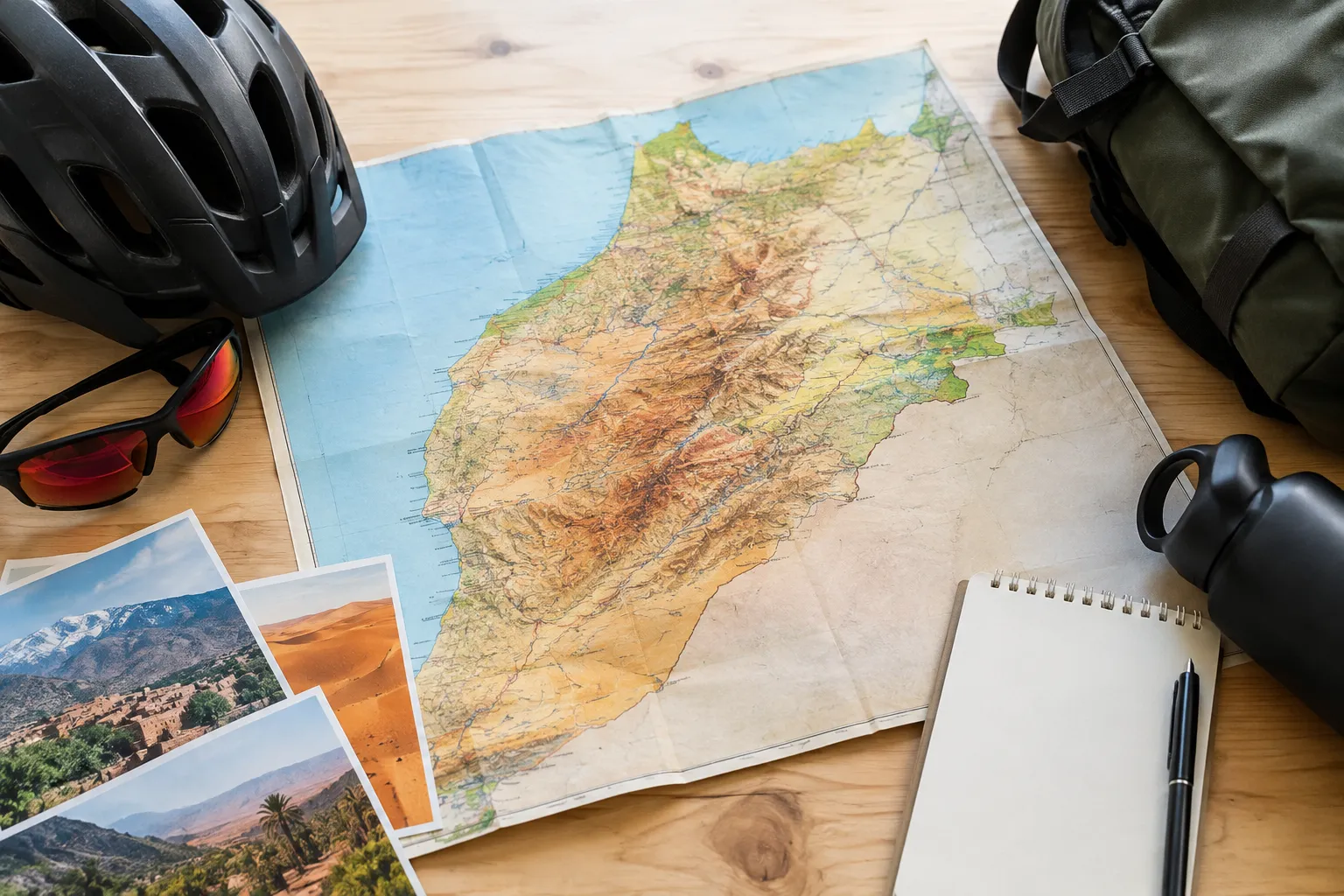
Morocco is not one uniform cycling destination. In the High Atlas, elevation and steep terrain shape the ride; in valleys, roads and tracks link settlements; farther south, dry landscapes bring more exposure and longer stretches between services. For biking in Morocco, compare not just the scenery but also the surface, climbing, access to water and support options.
Marrakech is a useful starting point for trips into the Atlas, including rides around Imlil. From the city, itineraries can head toward mountain villages or continue into other regions, depending on time and riding goals. Our biking in Morocco tips offer additional practical advice for first-time visitors.
High Atlas trails and mountain passes
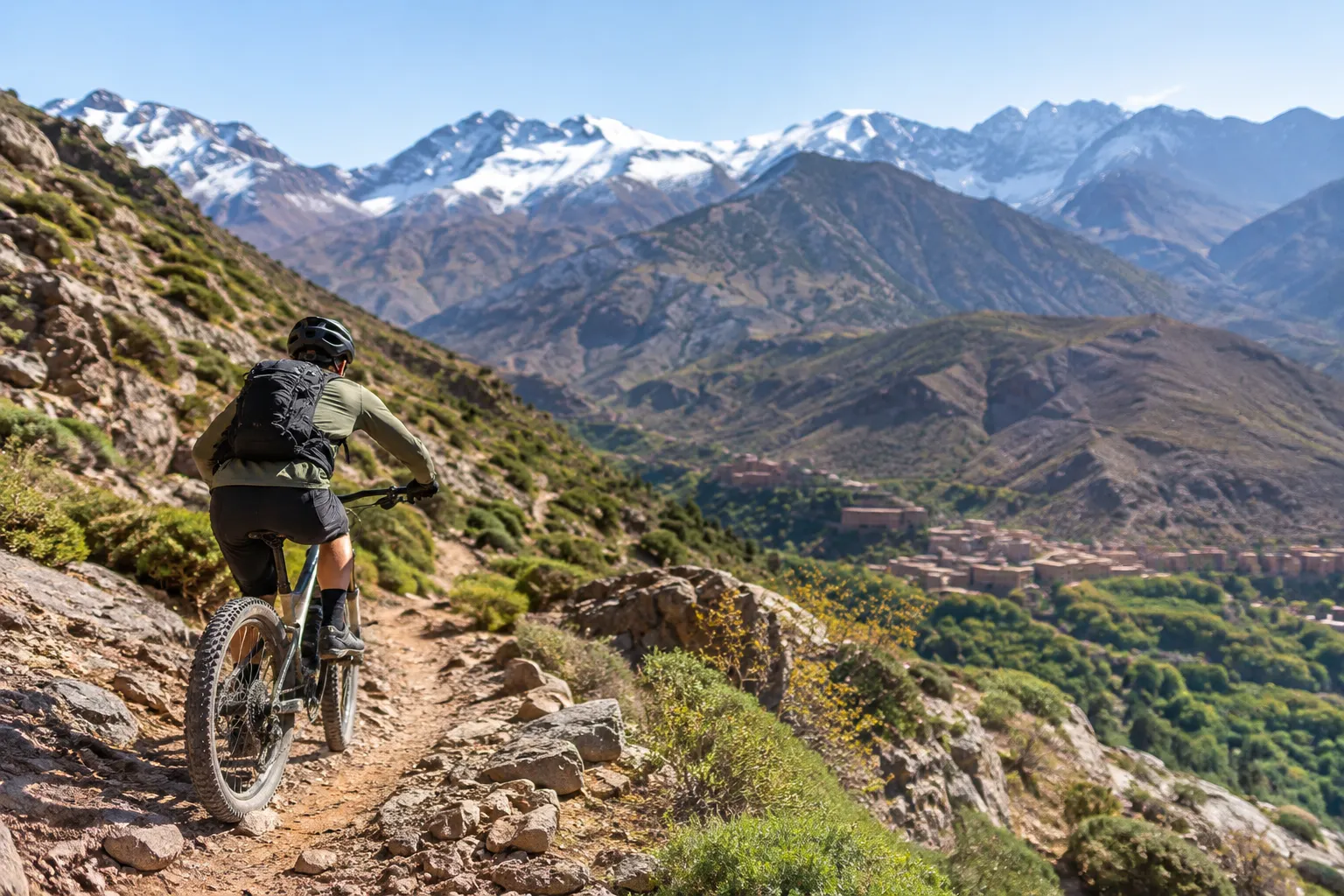
The High Atlas suits riders who want sustained climbs, mountain scenery and descents that may involve rough or technical surfaces. Routes around Imlil and the Toubkal area can combine steep gradients with changing trail conditions. A route’s difficulty depends on more than distance: elevation gain, surface, altitude and how much of the descent is rideable all matter.
For mountain biking in Morocco, ask for a route description that explains the terrain and climbing, not just the total kilometres. A long climb on a rough track can feel very different from a similar distance on a smooth road. Riders planning a multi-day trip should also consider how consecutive days of climbing and descending affect their pace.
Valley roads and Berber villages
Valley routes can suit scenic day rides and bike touring in Morocco, especially for cyclists who enjoy linking smaller settlements at a steady pace. Rural roads and tracks may pass through cultivated land and villages, with the surface and traffic changing from one section to the next.
These rides can offer a quieter alternative to busy tourist routes, but “quiet” does not mean empty or isolated from local life. Build time into the day for stops, changes in surface and the practicalities of moving through inhabited areas. If you are riding with family or a group, choose a route whose climbs, distance and support arrangements match the least experienced rider.
Desert-edge landscapes
In Morocco’s arid southern regions, open roads and tracks can make for a very different ride from the Atlas. The terrain may be less about sustained mountain climbing and more about exposure, surface changes and distance between settlements or services.
Plan water access and resupply before setting out, and check how the route changes if conditions or your pace differ from expectations. Heat, wind, limited shade and long distances can make an apparently straightforward day demanding. A support vehicle or carefully planned overnight stops can be especially useful where independent resupply is uncertain.
Match the terrain to your riding style
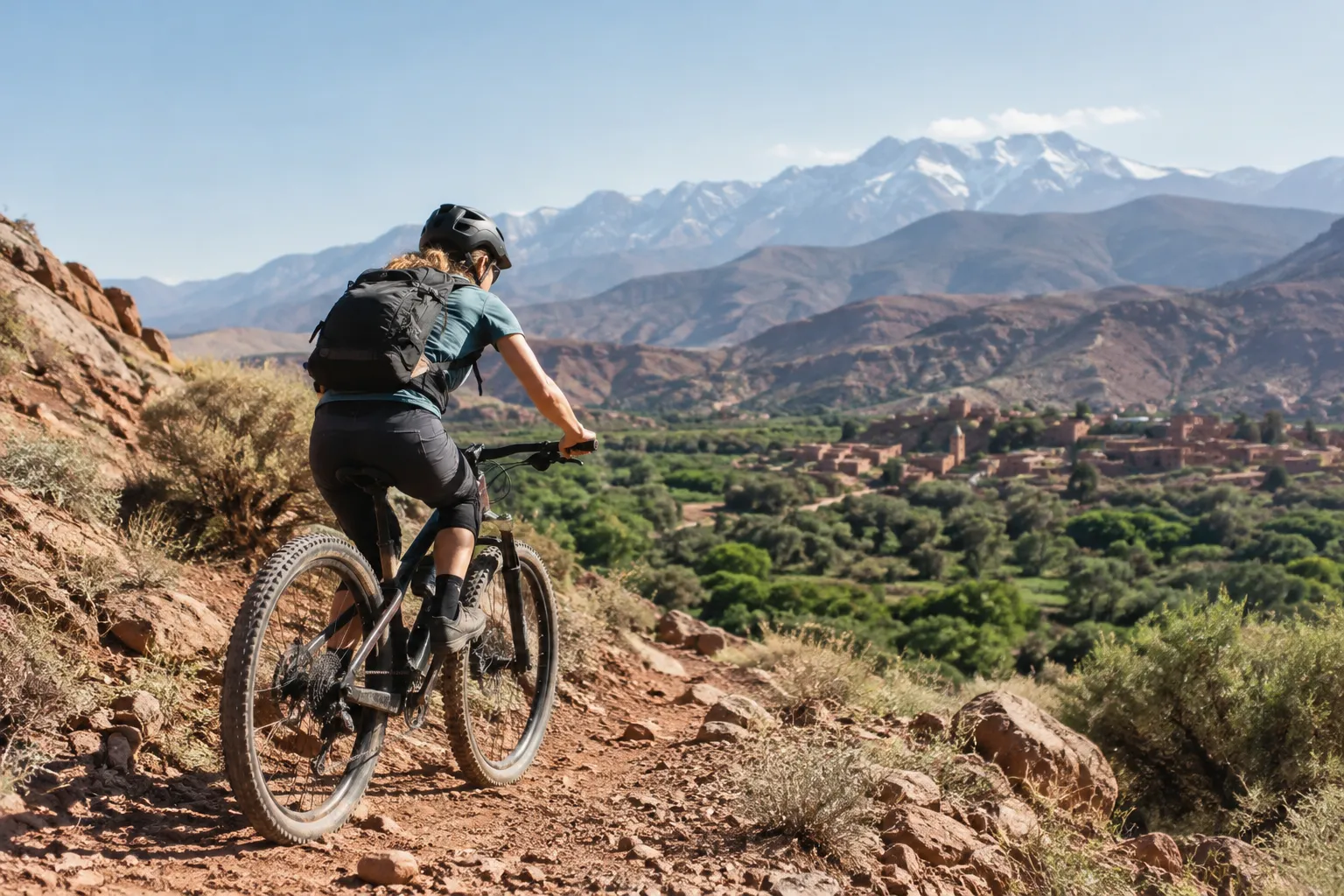
The best bike for a route depends on its surface and your preferred pace. Technical trails call for control and confidence on rough ground; gravel routes reward a versatile setup and good route planning; touring usually prioritises comfort over long days and the ability to carry what you need.
For a broader view of ride formats, see Types of Mountain Biking Adventures in Morocco. When comparing options, ask what kind of terrain occupies most of the itinerary, how much climbing is involved and what happens if a rider needs a shorter day.
When mountain biking suits the route
Mountain biking is the natural fit for singletrack, rocky tracks and steep mountain descents. These routes can be physically demanding, but technical skill is a separate consideration: a fit rider may still find loose, narrow or uneven trails challenging. Check whether the itinerary includes hike-a-bike sections and whether the guide can adapt the route to the group’s experience.
A suitable route should be matched to the riders, not chosen solely for its reputation. Ask about the typical surface, gradient, descent character and opportunities to adjust the day. A guided singletrack ride can help visitors navigate unfamiliar trails, but riders should still be comfortable with the level of technical riding involved.
Where gravel riding and bike touring fit
Gravel riding can work well on unpaved roads and tracks that connect villages or cross open countryside. It may offer more range than a technical trail ride, but surfaces can vary: a route that looks smooth on a map may include rough patches, loose stones or steep sections. Choose tyres and gearing for the terrain rather than assuming every unpaved road is easy to ride.
Bike touring suits riders who want to cover distance over several days, often combining roads and tracks with overnight stops. It offers a different rhythm from a trail-focused MTB trip: daily distance, luggage and access to food and accommodation become central planning questions. Remote routes can be rewarding, but they also require more thought about navigation, resupply and mechanical issues.
Plan around Morocco’s riding seasons
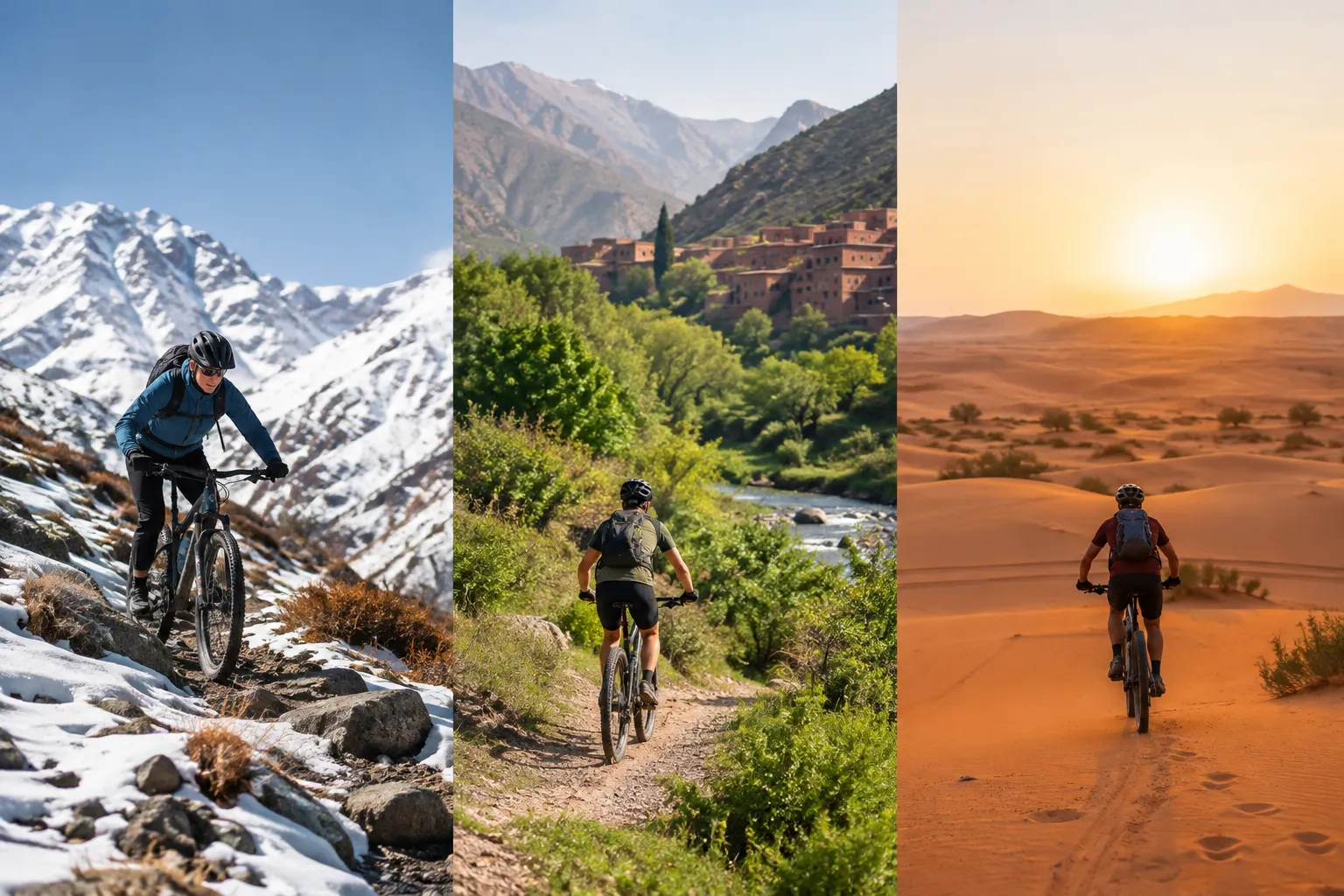
Conditions vary by region and altitude. A time of year that is comfortable for a ride near Marrakech may feel quite different on a high Atlas route or in a dry southern landscape. Before choosing dates, consider expected heat, altitude, daylight and the kind of terrain you intend to ride.
At higher elevations, cooler conditions can affect comfort and the amount of clothing you need, while warmer areas can make exposed riding more demanding. Shorter daylight also leaves less margin for delays on a long route. Check a current forecast close to departure, and plan daily distances around the conditions rather than relying on a fixed mileage target.
For more mountain-bike-specific preparation, use our guide to planning a Morocco MTB trip. It is worth considering the whole itinerary: travel days, recovery time and the possibility that a route may take longer than expected.
Sort out bikes, transport and route support
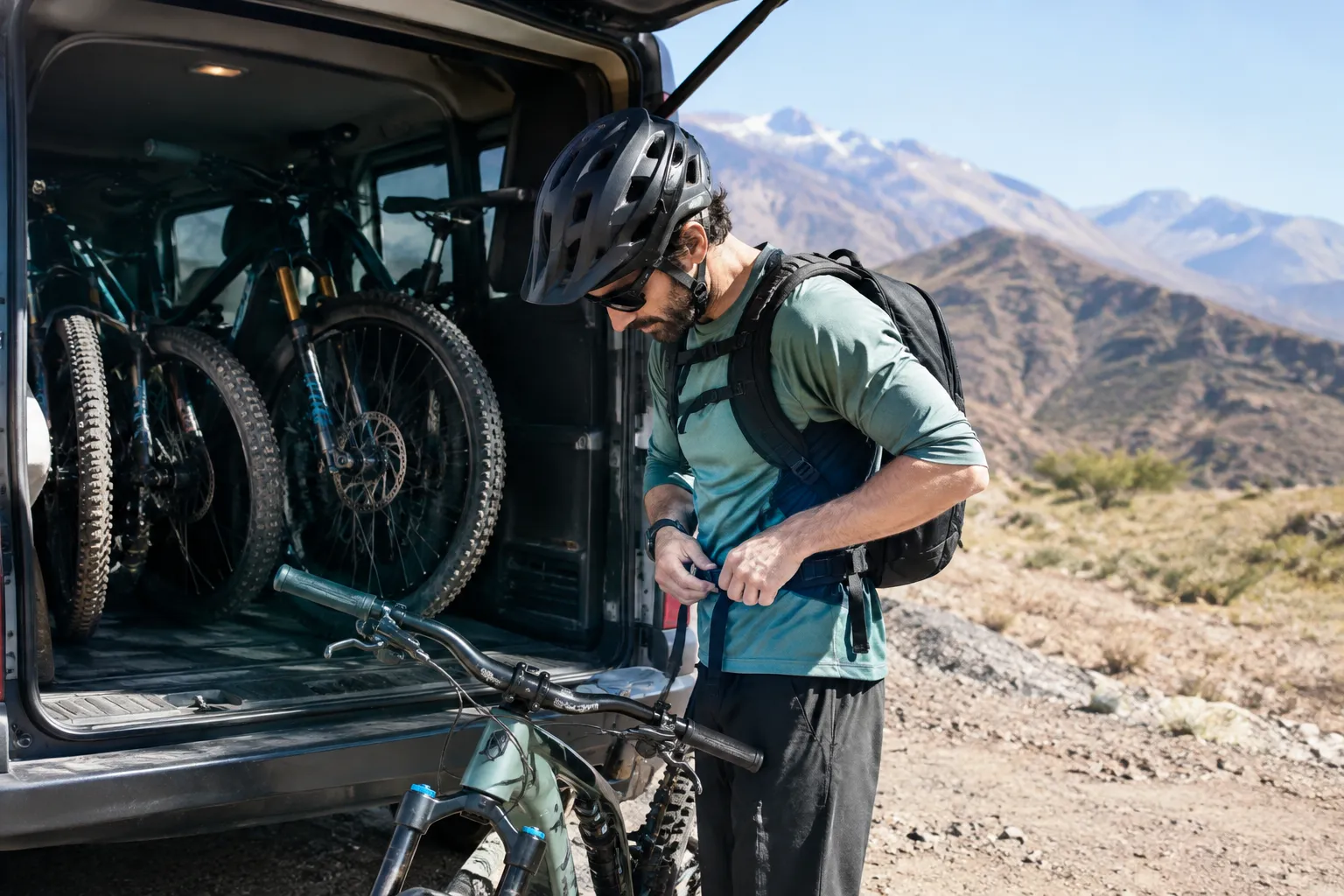
If you are bringing a bike, check your airline’s current baggage rules and packing requirements before booking. If you plan to use a local bike, confirm the available type, size, condition, included equipment and arrangements for any repairs or replacements. For a long or remote trip, these details affect more than convenience: they shape what routes are realistic.
Marrakech is the main base for Atlas Mountain Bike’s guided rides and e-bike adventures. Trips into the Atlas, including areas around Imlil, require onward transport from the city; confirm the meeting point and how bikes and luggage will be moved before travel. The business offers Morocco mountain biking tours, day rides, gravel biking and multi-day MTB trips, so riders can compare formats according to their time and experience.
For independent bike touring, map out food, water and overnight stops as carefully as the riding itself. Download route information for offline use, carry basic repair supplies and make sure your navigation plan accounts for forks or tracks that may not be clearly marked. Groups should agree on a pace, regrouping points and a plan if someone needs to stop early.
A support vehicle can carry luggage or help a group manage a long itinerary, but clarify exactly what support includes: luggage transfer, mechanical help, route changes and assistance if a rider cannot continue. A well-organised trip should explain the daily plan without making every day feel rigid; ask how guides adapt the route when pace or conditions change.
Ride considerately through local communities
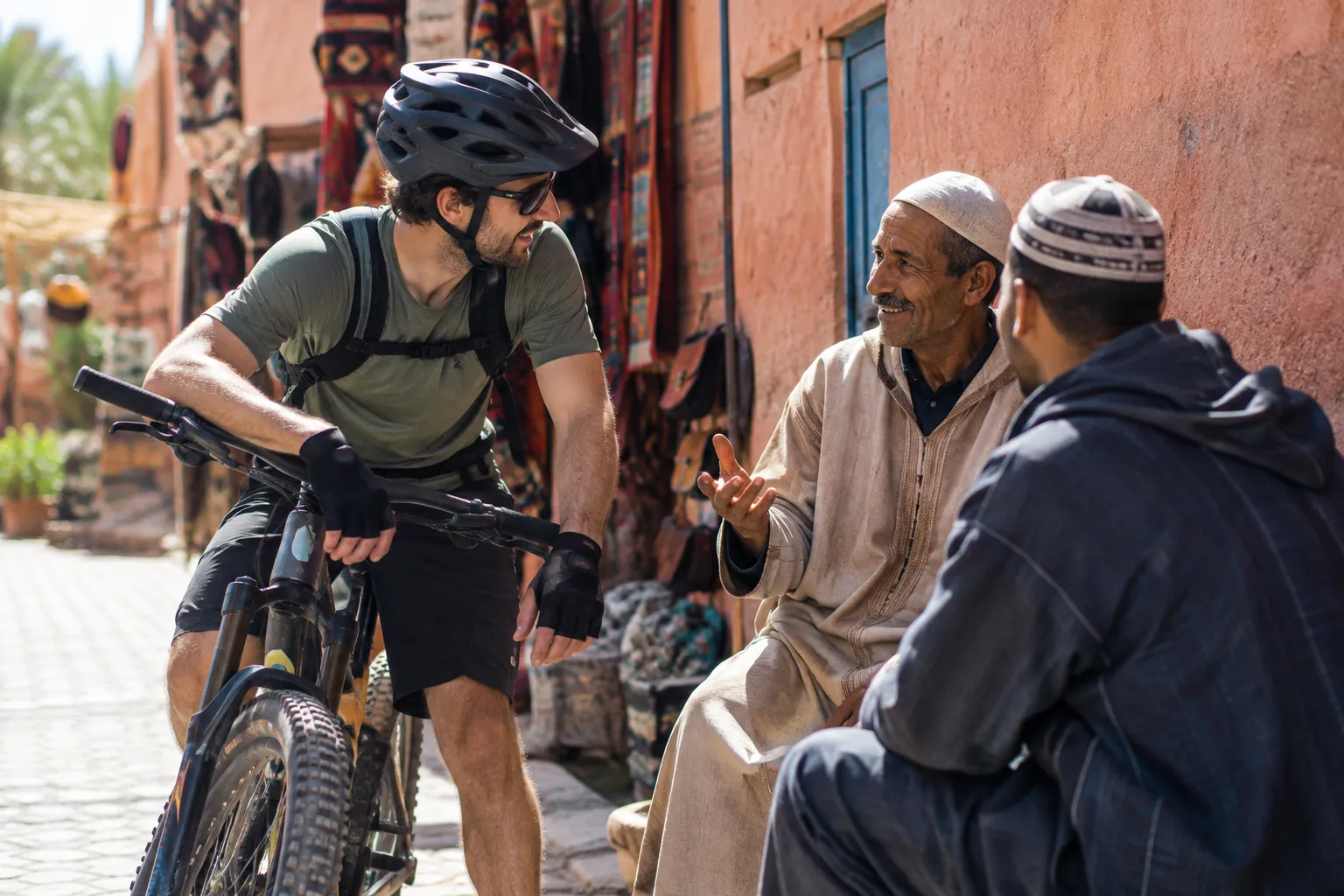
Routes through Berber villages and rural settlements are not empty trails. People may be working, walking or moving animals along the same paths and roads, so slow down near others and give space. A greeting and a patient approach make a practical difference, especially on narrow lanes.
Dress with consideration for the places you pass through. Clothing that is comfortable for riding can still offer coverage when stopping in a village or visiting a community space. Ask before taking photographs of people, homes or private activity; a landscape view does not imply permission to photograph someone.
Keep noise low, avoid leaving litter and follow local guidance about paths, gates and land access. If riding in a group, leave room between cyclists rather than arriving at a settlement as a tight, fast-moving pack. These small choices help make village-to-village riding more respectful for both visitors and residents.
Build a Morocco ride that fits your plans
Start with the riding experience you want: technical trails, gravel exploration, longer touring days or a mix. Then narrow the options by season, available days, climbing comfort and the level of support you prefer. A family trip with teenagers, for example, needs a route and daily rhythm that work for the group as a whole—not just the strongest rider.
For a guided itinerary, share your group’s experience honestly and ask for a clear outline of terrain, daily effort, transport and overnight arrangements. That makes it easier to judge whether the trip is suitably challenging without being overcommitted. If you are organising the trip independently, keep the first day conservative and build in flexibility for weather, mechanical problems or slower-than-expected progress.
Atlas Mountain Bike’s service area centres on Marrakech and the Atlas Mountains, with guided riding options that include Imlil and other parts of Morocco. Travellers can reach the business by arranging a ride from Marrakech and confirming the meeting and transport details directly when discussing an itinerary. For a more active holiday beyond cycling, the company also offers trekking-style excursions.
Biking in Morocco FAQ
What are some good bike routes in Morocco?
Good routes depend on your preferred terrain: consider Atlas trails for mountain biking, village-linked valley roads for scenic rides, and desert-edge tracks for remote, exposed cycling. Check surface, climbing and resupply before choosing.
Is there a bikepacking route in Morocco?
Morocco can suit bikepacking on a planned combination of roads and tracks, but route choice depends on water, food, overnight options and navigation. Research each stage and have a contingency for remote sections.
Is Morocco a good destination for cycling?
Yes, Morocco offers varied cycling, from High Atlas trails to rural roads and desert-edge routes. The right fit depends on your experience, chosen season, preferred surface and appetite for logistical planning.
How difficult is it to climb in the Atlas Mountains?
Atlas climbs can be demanding because of steep gradients, sustained elevation gain and rough surfaces on some routes. Difficulty varies by itinerary, so check the climbing, altitude and road or trail conditions.
Can I rent a bicycle in Morocco?
Bike availability varies by location and riding type, so confirm options before travel. Ask about the bike’s size, condition, included equipment and repair support, especially if you plan to ride away from major centres.
Do I need a guide for mountain biking in Morocco?
A guide is not essential for every ride, but local guiding can help with route choice and unfamiliar trails. For remote or technical routes, consider your navigation skills, experience and support plan.
Are e-bikes suitable for riding in the Atlas Mountains?
E-bikes can suit some Atlas routes, particularly when riders want assistance on climbs, but route suitability depends on terrain, battery planning and charging access. Confirm those details for the specific itinerary.
What should I pack for a cycling trip in Morocco?
Pack riding clothing for expected temperatures, a helmet, gloves, sun protection, water-carrying capacity and basic repair items suited to your bike. Add layers for cooler mountain conditions and check luggage needs for your route. For a health condition or questions about whether a particular ride is appropriate for you, consult a qualified healthcare professional before travelling.
Recommended next steps
Choose a region first, then compare routes by surface, climbing, daily distance and access to support. Check seasonal conditions and transport arrangements before committing to an itinerary, and be realistic about the experience level of everyone in your group.
With those basics in place, it becomes easier to decide whether mountain biking, gravel riding, touring or a guided multi-day trip fits your plans. A clear route description and a flexible daily schedule can help you make the most of biking in Morocco without leaving essential logistics to chance.
Hannah Whitaker is an adventure travel editor with a background in outdoor travel writing and guided cycling trips. She specialises in mountain biking and trekking in Morocco, including routes around Marrakech, the Atlas Mountains and the Sahara. Drawing on local guides’ knowledge, she explains trail conditions, practical preparation and the cultural context of each journey. Her articles help riders assess whether a route suits their ability and plan a rewarding day or multi-day trip.