 6 Nov 2026
 6 min read
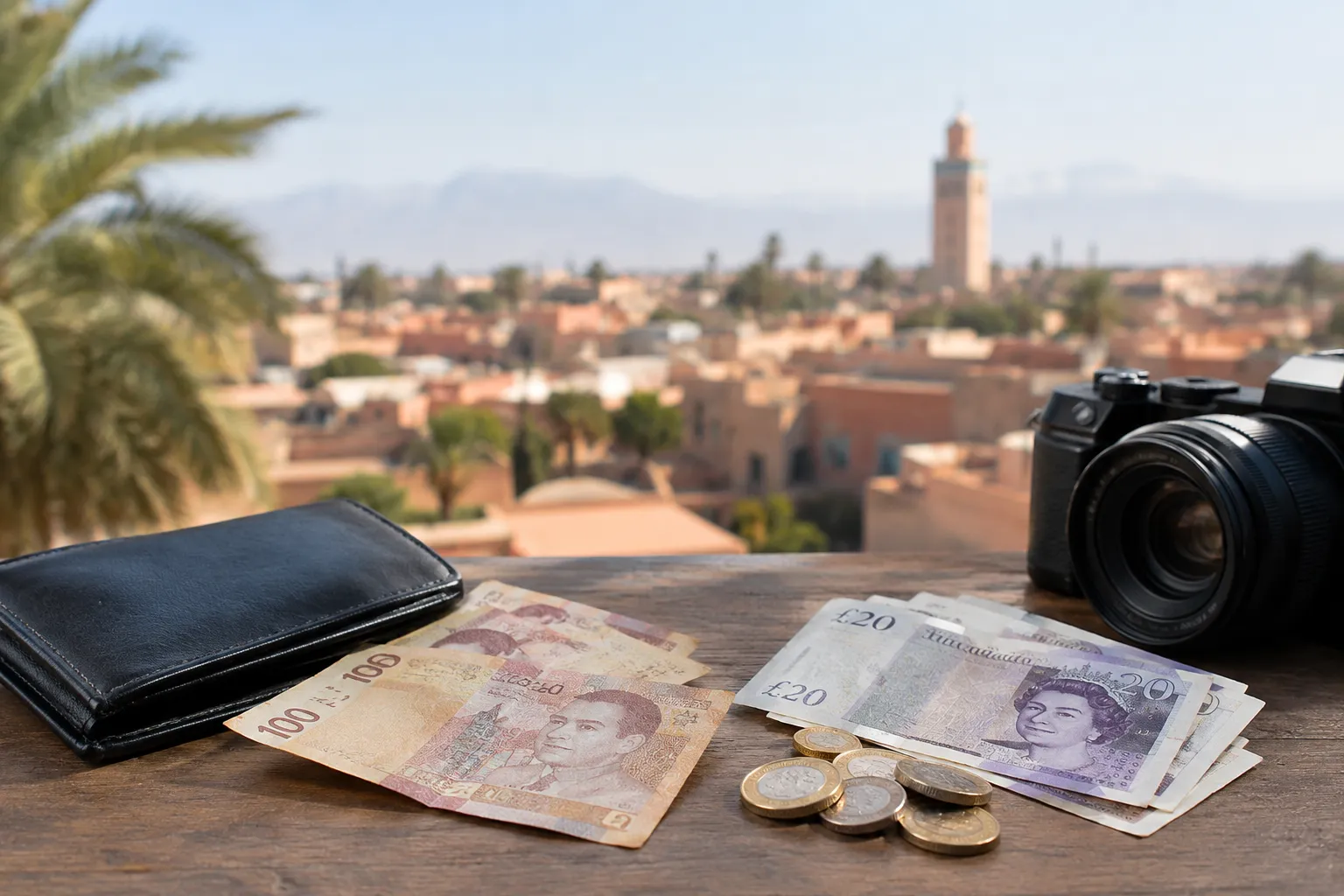
The answer to “is it better to buy dirhams in Morocco or the UK?” depends on the full cost offered by your exchange provider or card, not simply the advertised rate. Compare how many dirhams you will receive after fees, and plan to have a way to pay in cash as well as by card.
How money works for UK visitors in Morocco
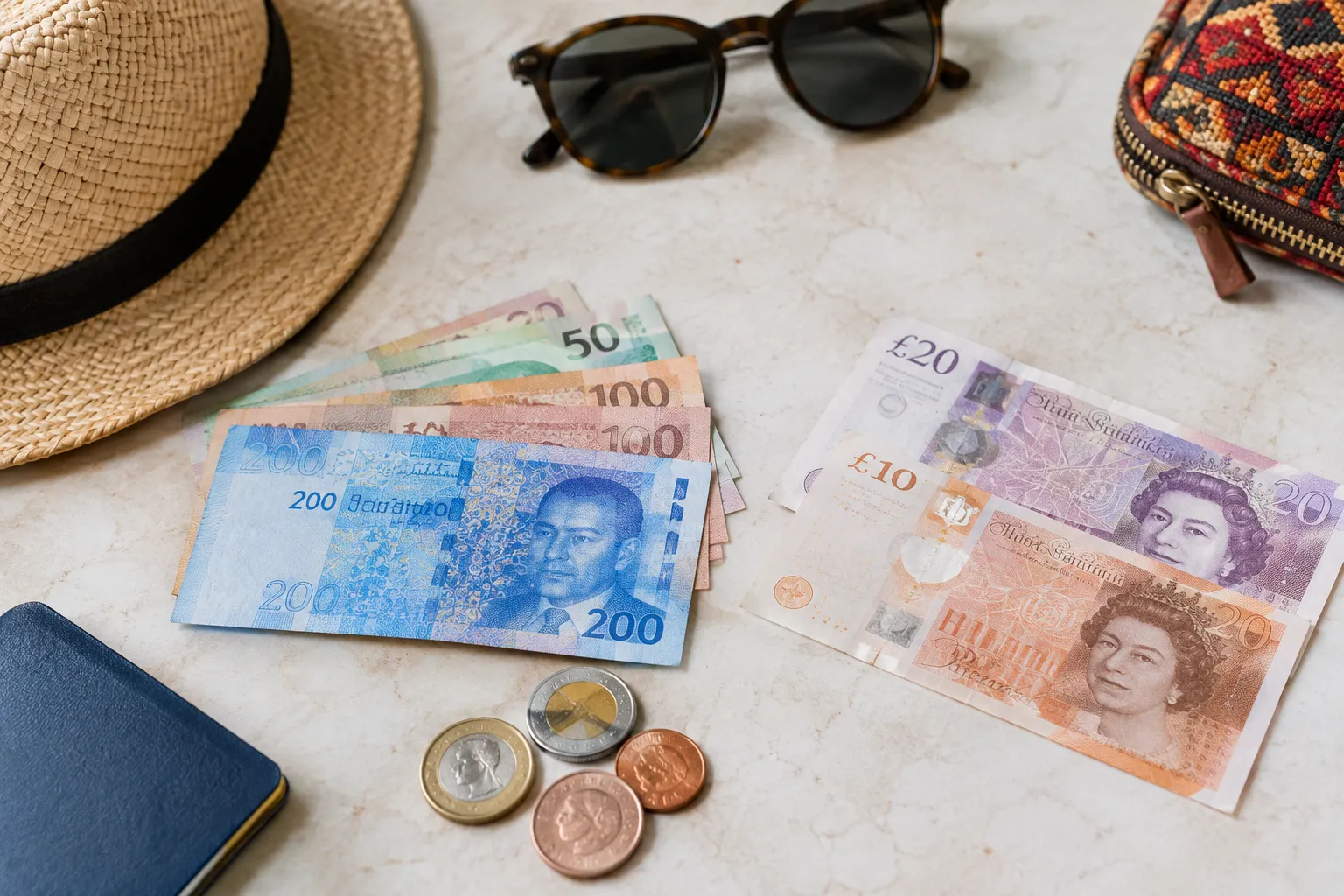
Morocco uses the Moroccan dirham, and UK visitors can obtain it by exchanging pounds or using a bank card to withdraw cash. The practical choice is to compare the total cost and carry a payment backup.
An exchange counter may show a rate that looks favourable but apply a margin or fee. A bank card may use its own exchange rate and charge for purchases or cash withdrawals. These costs depend on the provider and account, so check the terms that apply to your card and the exchange service rather than relying on a general rule.
Cash and card are useful in different situations. Having some dirhams available can help with small purchases or places where card payment is not offered. A card can reduce the need to carry all your spending money as cash, but it is not a substitute for checking whether your particular card works abroad and what it charges.
This matters when deciding what to do in Marrakech and when planning activities outside the city. A day trip from Marrakech to the Atlas Mountains may involve different payment opportunities from a day spent in the city. Check what is included in any activity and which payments are accepted for anything you expect to pay for separately.
Compare the full cost, not just the exchange rate
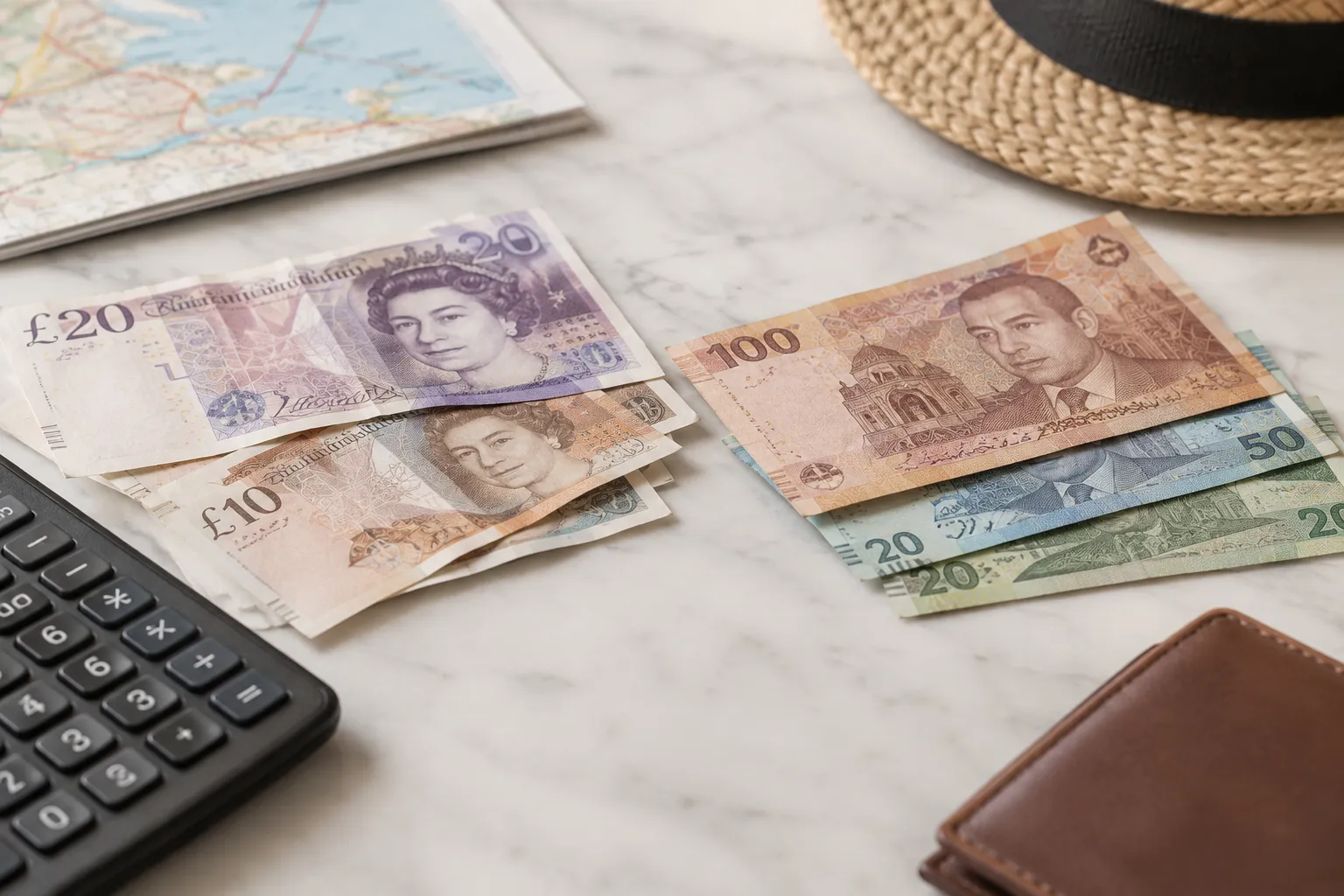
The cheaper option is the one that leaves you with more usable dirhams after the exchange margin, card fees and any withdrawal charges are included.
For a fair comparison, look at the final amount rather than comparing a headline rate with a card’s advertised rate. Ask how many dirhams you would receive for a particular amount of pounds, then account for each additional fee that applies. For a card withdrawal, check both your own provider’s charges and any fee shown during the withdrawal process.
Use the same amount of pounds in each comparison. For example, if you are comparing an exchange counter with a cash withdrawal, compare the dirhams received after all costs for the same intended spend. That avoids mistaking a higher displayed rate for a better deal when a separate charge changes the total.
Check the terms that affect your own situation:
- The exchange rate the provider will use, and whether it is guaranteed when you place an order or only at collection.
- Any service, transaction or delivery charge.
- Whether your bank charges for foreign-currency purchases or cash withdrawals.
- Whether a withdrawal fee may also be charged at the ATM.
- How the provider handles a transaction in a foreign currency, including any conversion choice shown at the point of payment.
Do not assume the same choice will suit every part of your trip. Exchanging a small amount before departure may offer convenience, while withdrawing or exchanging after arrival may suit someone who wants to compare local options. Either can cost more than expected if the rate margin or fees are unfavourable. Check current provider terms shortly before you travel, because rates and charges can change.
When to use cash, cards and ATMs in Morocco
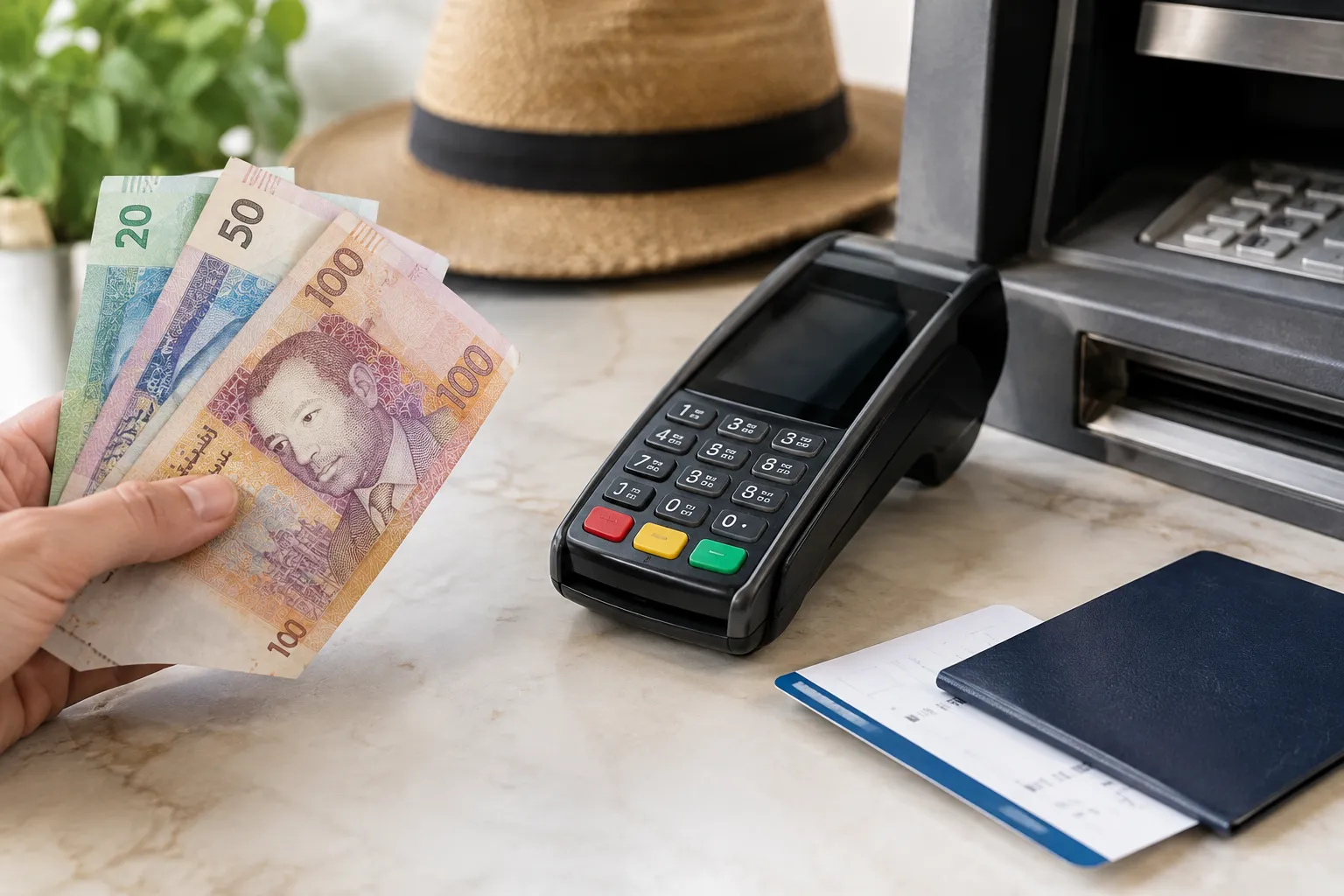
Carry a modest amount of dirhams for spending that needs cash, use a card where it is accepted and works for you, and keep another payment method separate as a backup.
Cash is useful when a business does not accept cards or when a purchase is too small for your preferred card payment. Decide how much to carry based on the purchases you expect to make, rather than withdrawing or exchanging more than you can reasonably manage. Keep cash secure and avoid putting all of it in one place.
A card can be convenient for purchases where it is accepted, but acceptance and your card’s overseas terms are separate questions. Check with your bank or card provider before travelling to confirm that your card can be used abroad, what fees apply and how to report a lost or blocked card. Take a second way to pay if available, and keep it separate from your main card.
ATMs can provide access to cash, but the total cost may include charges from more than one provider. Before confirming a withdrawal, read the screen for any fee and check whether the transaction is offering to convert the amount into pounds. Compare the options shown with your card provider’s instructions; if you are unsure how a conversion choice affects your charges, ask the provider before travelling.
For a day exploring Marrakech, you may prefer to carry enough cash for planned small purchases while keeping a card available for places that accept it. For a day trip from Marrakech to the Atlas Mountains, consider whether the route and itinerary offer convenient opportunities to access cash. Check arrangements in advance rather than relying on finding an ATM when you need one.
Make a money plan for Marrakech and the Atlas Mountains
Plan a mix of payment methods before leaving, check what your card and exchange provider charge, and carry enough cash for expected expenses without relying on one source of money.
Start with your itinerary. List the purchases you expect to make in Marrakech and any additional spending during a day trip from Marrakech to the Atlas Mountains. Separate costs that are paid in advance or included in an activity from costs you may need to pay yourself. Confirm payment methods with the relevant provider instead of assuming that every expense can be settled by card.
Next, compare the exchange options available to you. Check a UK exchange provider’s final amount after fees against the likely total cost of using your card for a cash withdrawal. If you plan to exchange money after arrival, check the rate and charges offered at the time. Do not treat an online rate or a displayed headline figure as a guarantee of what you will receive.
Choose a practical backup. Keep a second card, if you have one, apart from your main card, and make sure you can contact your provider if a payment method is lost or blocked. Carry cash separately from your cards. These are straightforward ways to avoid depending on a single method, not a guarantee that every payment will be accepted.
If you are travelling for riding, include the logistics of the trip in your planning. A mountain biking itinerary around Marrakech and the Atlas Mountains may take you beyond the places where you expect to make everyday city purchases. Confirm which costs are already covered, what you may need to pay for separately and how to bring an appropriate payment method. You can explore the Atlas Mountain Bike website for information about guided riding in Morocco and consider these practical questions when planning your trip.
Dirham Exchange FAQs
How many Moroccan dirhams are in one pound?
The pound-to-dirham rate changes, so check a current exchange-rate source or provider quote when you are ready to exchange. The amount you receive may differ after the provider’s margin and fees.
Is it better to get Moroccan dirhams in the UK or Morocco?
Neither is always cheaper: compare the final dirham amount after exchange margins and fees in the UK with the total cost of withdrawing or exchanging money in Morocco. Check current rates and your card terms.
Where is the best place to buy Moroccan dirhams?
Compare providers by the dirham amount you receive after all charges, and check when their rate is set and whether additional fees apply. The best fit depends on the current offer and your travel plans.
Recommended next steps
Compare current exchange and card costs, then choose a small cash-and-card plan that fits your itinerary and includes a backup payment method.
- Check your bank or card provider’s foreign-currency purchase, cash-withdrawal and overseas-use terms.
- Compare the final dirham amount offered by UK exchange providers after any fees.
- Check any local exchange or ATM charges at the point of transaction before confirming.
- List expected cash expenses in Marrakech and during your Atlas Mountains plans, and carry an amount suited to those purchases.
- Set aside a separate backup payment method and keep it apart from your main cash and card.
Related
- Is a day trip to the Atlas Mountains worth the journey?
- Can you take a day trip to the Atlas Mountains from Marrakech?