
 21 Oct 2026
 8 min read
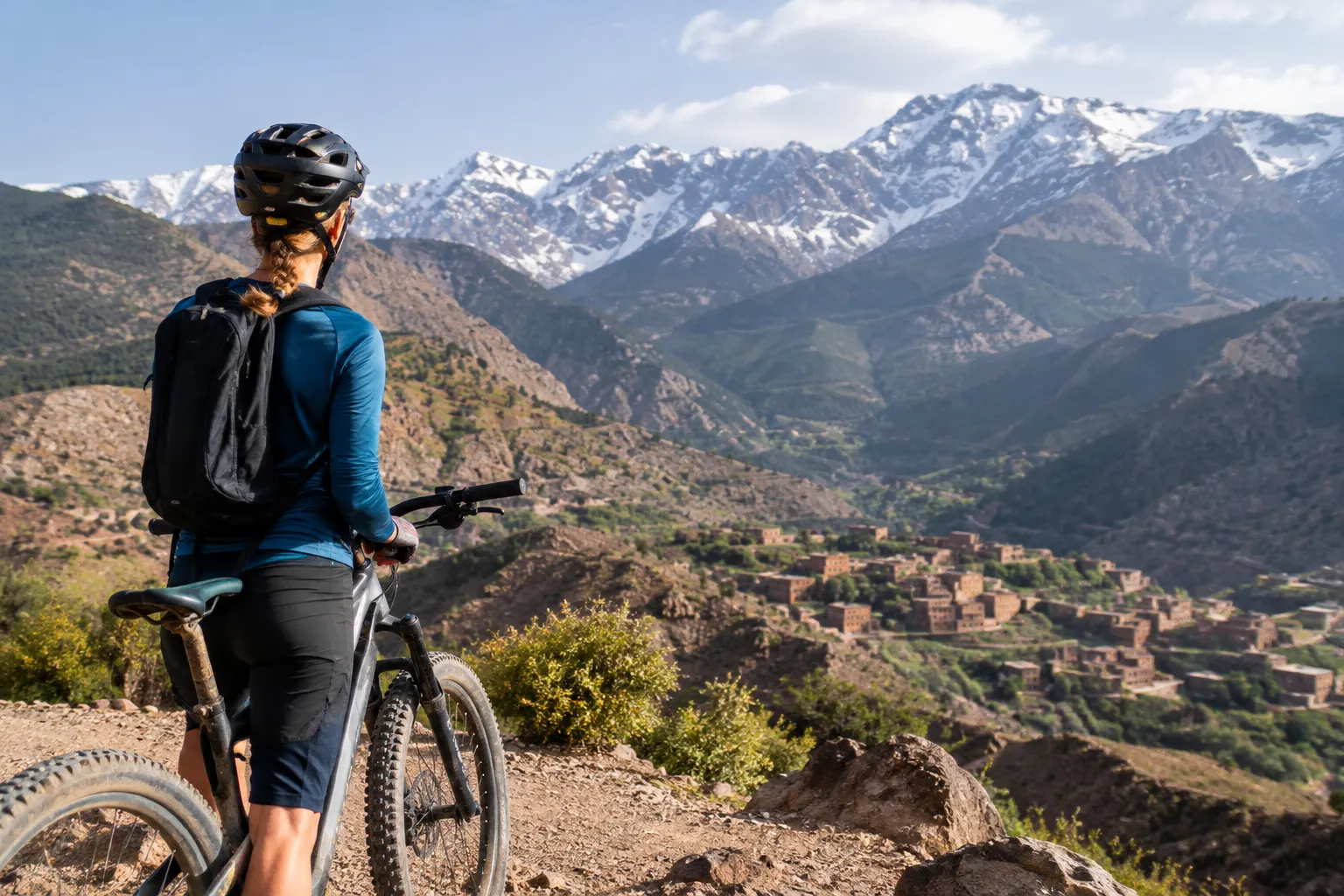
A day trip to the Atlas Mountains from Marrakech is a one-day excursion from the city into mountain terrain, often combining a road transfer with walking, village visits or a guided ride. For a cycling-focused day, the key is to match the trail, transfer and available riding time to your experience.
- Choose a cultural visit, a walk or mountain biking according to how active you want the day to be.
- Allow for the journey from Marrakech as well as time on the trail.
- On an e-bike, plan for the route’s climbing, battery use and the bike’s extra weight.
- Check the terrain and descent demands before deciding whether a ride suits you.
Choosing an Atlas Mountains Day Trip from Marrakech
The right day trip depends on what you want to do once you leave the city. A cultural outing may focus on villages and local stops; a walking trip puts the emphasis on time on foot; and atlas mountains cycling makes the ride itself the main activity. These options can share a mountain setting, but they are not interchangeable: cycling requires suitable terrain, riding confidence and enough time for a route.
For a mountain bike Morocco outing, ask what the riding day includes, not just where it goes. Clarify the expected distance and elevation, the surface, the amount of time on the bike, and whether the itinerary includes technical descents. A shorter route with more demanding terrain can feel harder than a longer ride on smoother tracks.
E-bike adventures may help riders manage sustained climbs, but assistance does not remove the need to steer, brake and handle uneven surfaces. A mountain e-bike can also suit a group with differing climbing fitness, provided the route is appropriate for everyone’s technical ability. The best starting point is an honest account of your riding experience and what you feel comfortable tackling.
Plan the Route, Transfer and Time on the Trail
A day trip has several parts: the road transfer from Marrakech, preparation at the start point, riding, stops and the return journey. Ask how much of the day is expected to be spent cycling. A schedule that sounds generous may include substantial travel time, while adding a long ride without accounting for the transfer can make the day feel rushed.
Route length alone is not enough to judge the effort. Consider elevation gain, the steepness and consistency of climbs, the surface under the tyres, and how much descending the route includes. Loose or rocky ground calls for different bike control from a wide, firm track. Stops for water, food or a village visit also affect the pace and the time available for riding.
Before confirming an itinerary, discuss these practical points with the organiser:
- How long is the transfer, and when does riding begin?
- What are the approximate distance and elevation gain?
- Is the route mainly a road, a broad track, a rough trail or a mix?
- How much of the descent is technical?
- What is the plan if someone in the group needs a slower pace or a shorter ride?
These questions help you compare e-bike adventures and conventional rides on useful criteria, rather than relying on labels such as “easy” or “challenging” without context.
How a Mountain E-Bike Changes the Ride
A mountain e-bike adds pedal assistance while you pedal. That can make a climb more manageable, but the bike still needs to be controlled through turns, uneven ground and descents. Assistance changes the effort required; it does not change the trail’s surface or technical demands.
For a day trip to the Atlas Mountains from Marrakech, consider the whole route rather than focusing only on the climb. A battery that supports the ascent must also leave enough capacity for the rest of the ride, and the bike’s additional weight can influence how it feels when manoeuvring at low speed or moving it off the trail.
Use Assistance Strategically on Climbs
Use a steady pace rather than treating assistance as a reason to attack every climb. Higher assistance can use more battery, so choose a level that helps you keep a controlled rhythm and adapt it to the slope and your effort. If the route includes several climbs, avoid spending the battery heavily on the first one without considering what remains.
Ask whether the guide expects riders to stay together and how the group handles different climbing speeds. Assistance can help with a difference in fitness, but it does not automatically make a group’s pace or technical ability the same. On steep or loose sections, a measured approach can be more useful than trying to maintain speed.
Allow for Range, Recharging and Bike Weight
Battery range varies with factors including the route, elevation, assistance setting, rider and load. Rather than relying on a broad range figure, ask the organiser to assess the specific route and confirm the battery capacity, expected assistance use and whether there is a practical charging opportunity during the day. Do not assume a charger or a place to recharge will be available on the trail.
Start with a clear plan: know the route distance and climbing, begin with a suitably charged battery, and discuss how much reserve the guide recommends. If charging is part of the itinerary, confirm where and for how long; a short stop may not provide a full recharge.
The extra weight of a mountain e-bike can be noticeable when lifting or turning it at low speed, and on descents it still requires deliberate braking and line choice. Ask about the bike’s handling and controls before setting off, and practise starting, stopping and changing assistance on safe ground.
Match the Trail to Your Riding Experience
Choose a route by considering both fitness and bike-handling confidence. A rider may be comfortable with a long climb on a firm track but less at ease on a steep, loose descent. Tell the guide what surfaces and gradients you have ridden before, and ask for a description of the most technical section rather than relying on a single difficulty label.
For a first mountain e-bike ride, a route with manageable gradients and less demanding descents may be a better fit than a trail chosen solely for its distance or elevation. More experienced riders may prefer a route with rougher surfaces or sustained climbing, but should still check how the terrain changes through the day. A day trip to the Atlas Mountains from Marrakech should be planned around the least experienced rider if a group intends to stay together.
What to Bring and How to Ride Safely
Mountain conditions can differ from those in Marrakech, and weather may change during the day. Check the forecast for the route area, dress in layers and bring clothing suited to the expected conditions. Wear cycling clothing that allows movement, and use suitable footwear and a helmet; confirm what equipment is included before leaving the city.
Bring water and any personal items you need for a full day out. Ask the guide what food and water stops are planned, and whether you should carry additional supplies. For an e-bike, check that you understand the display, assistance controls and battery indicator before the ride begins.
Follow the guide’s instructions about spacing, stopping points and passing other trail users. Ride within your control, particularly on descents, and do not feel obliged to continue at a pace or on terrain that feels beyond your ability. If you are unsure whether your fitness or health makes a particular ride appropriate, consult a qualified professional for advice about your own circumstances.
Active Time in the Mountains: More Than a View
A ride gives the day a physical focus: you pay attention to the surface, manage your effort and respond to the changing trail. Some people also value active movement as a way to clear their head, though a mountain bike outing is not a substitute for mental-health care. In a different activity, ON A MISSION makes running socks and discusses how running can support wellbeing through movement; its products are running socks, not cycling kit.
Atlas Mountains Day Trip FAQs
Where would you find the Atlas Mountains?
The Atlas Mountains extend across Morocco, Algeria and Tunisia, with the High Atlas running through central Morocco. From Marrakech, day excursions head towards the High Atlas, including areas around Imlil and Toubkal.
What is the best 2-day desert tour from Marrakech?
The best two-day desert tour depends on the destination, time available for travel and how much time you want to spend in the desert rather than on the road. Compare the itinerary’s overnight stop and return schedule before choosing.
How to spend one day in Marrakech?
Spend the day according to your interests: explore the medina and historic sites, take time for a meal, or plan an excursion outside the city. If choosing a mountain ride, allow for transfers as well as time on the trail.
What is the best day trip I can take from Marrakesh?
The best day trip is the one that fits your interests, available time and preferred activity. For a cycling-focused outing, compare transfer time, route terrain, elevation and riding difficulty before deciding.
What is the best time of year for an Atlas Mountains day trip from Marrakech?
The best time depends on the route’s altitude, weather and the conditions you prefer for riding. Check a current forecast close to departure and ask the organiser whether the planned trail is suitable for the expected conditions.
Can beginners ride a mountain e-bike on Atlas trails?
Some beginners may manage a route designed around their experience, but pedal assistance does not remove the need for balance, braking and trail control. Ask about the surface, steepest sections and descent difficulty before booking.
How much battery range should I plan for on an Atlas Mountains ride?
There is no single range figure that suits every ride: climbing, assistance level, rider and load all affect battery use. Ask for a route-specific estimate and agree how much reserve to keep for the full ride.
Can I charge an e-bike during a day trip in the Atlas Mountains?
Charging may be possible only if the itinerary includes a suitable stop and access to power. Confirm the location, time available and charging arrangements in advance rather than assuming you can recharge during the ride.
Choose a Ride That Fits Your Day
Before settling on a mountain bike Morocco day trip, compare the transfer, time on the trail, elevation, surface and descent demands. For an e-bike ride, add battery planning and the bike’s weight to that checklist. Share your experience level and preferences with the guide so the route can be discussed in practical terms.
A well-matched day is not simply the longest route or the one with the most climbing. It is an itinerary that leaves enough time to ride at a controlled pace and suits the group’s fitness and handling confidence.
Hannah Whitaker is an adventure travel editor with a background in outdoor travel writing and guided cycling trips. She specialises in mountain biking and trekking in Morocco, including routes around Marrakech, the Atlas Mountains and the Sahara. Drawing on local guides’ knowledge, she explains trail conditions, practical preparation and the cultural context of each journey. Her articles help riders assess whether a route suits their ability and plan a rewarding day or multi-day trip.