
 28 Oct 2026
 6 min read
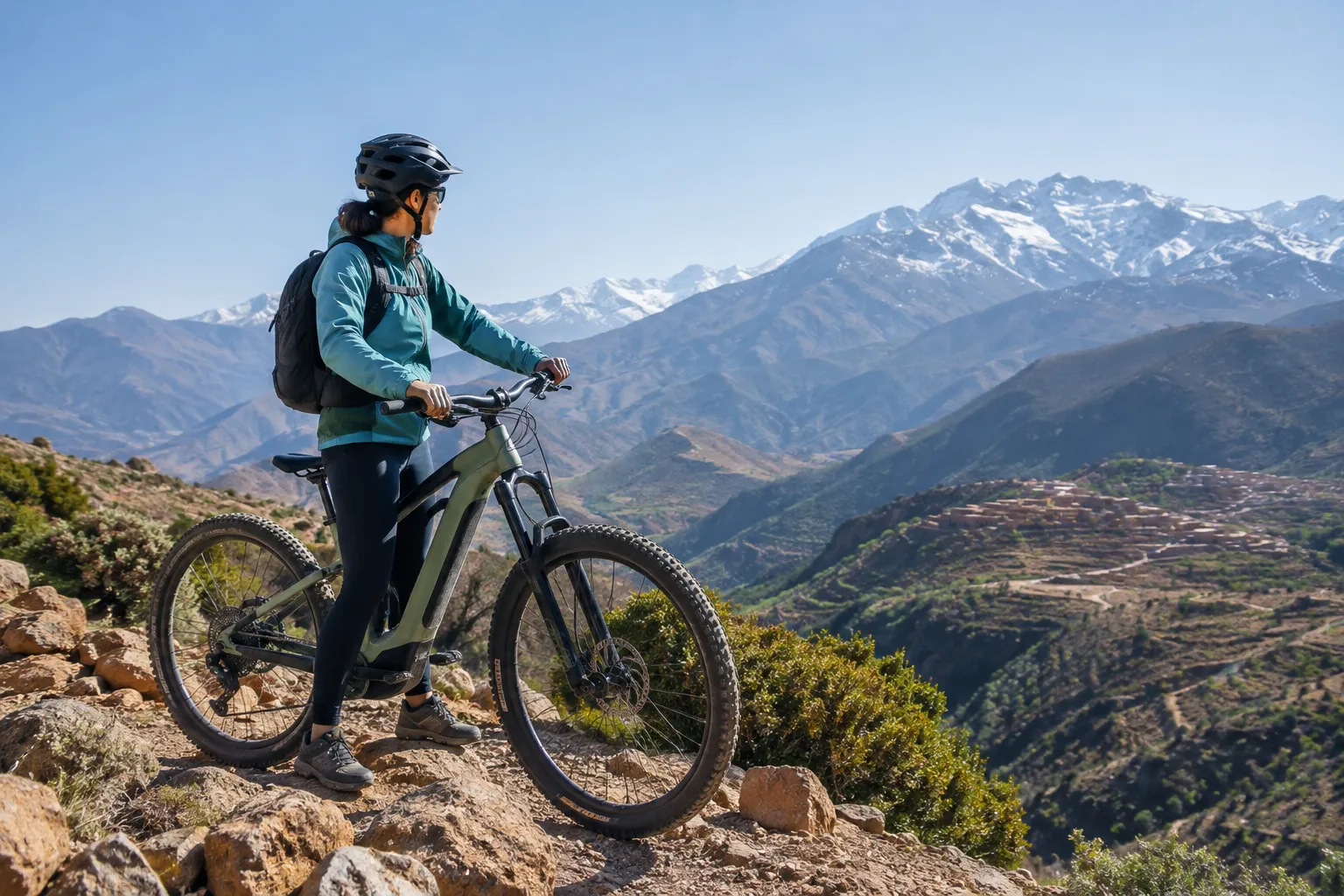
E-bike adventures combine the distance and terrain of a cycling trip with electric assistance that can help on climbs and longer days. In Morocco, the right experience depends on the route, your riding skills, battery planning and the pace your group wants to keep.
A well-planned ride should account for:
- Climbing, surface and technical difficulty, not just distance
- How assistance levels and riding conditions affect battery use
- Charging access, breaks and differences in group pace
- A route and support plan that match the riders taking part
What makes e-bike adventures in Morocco different
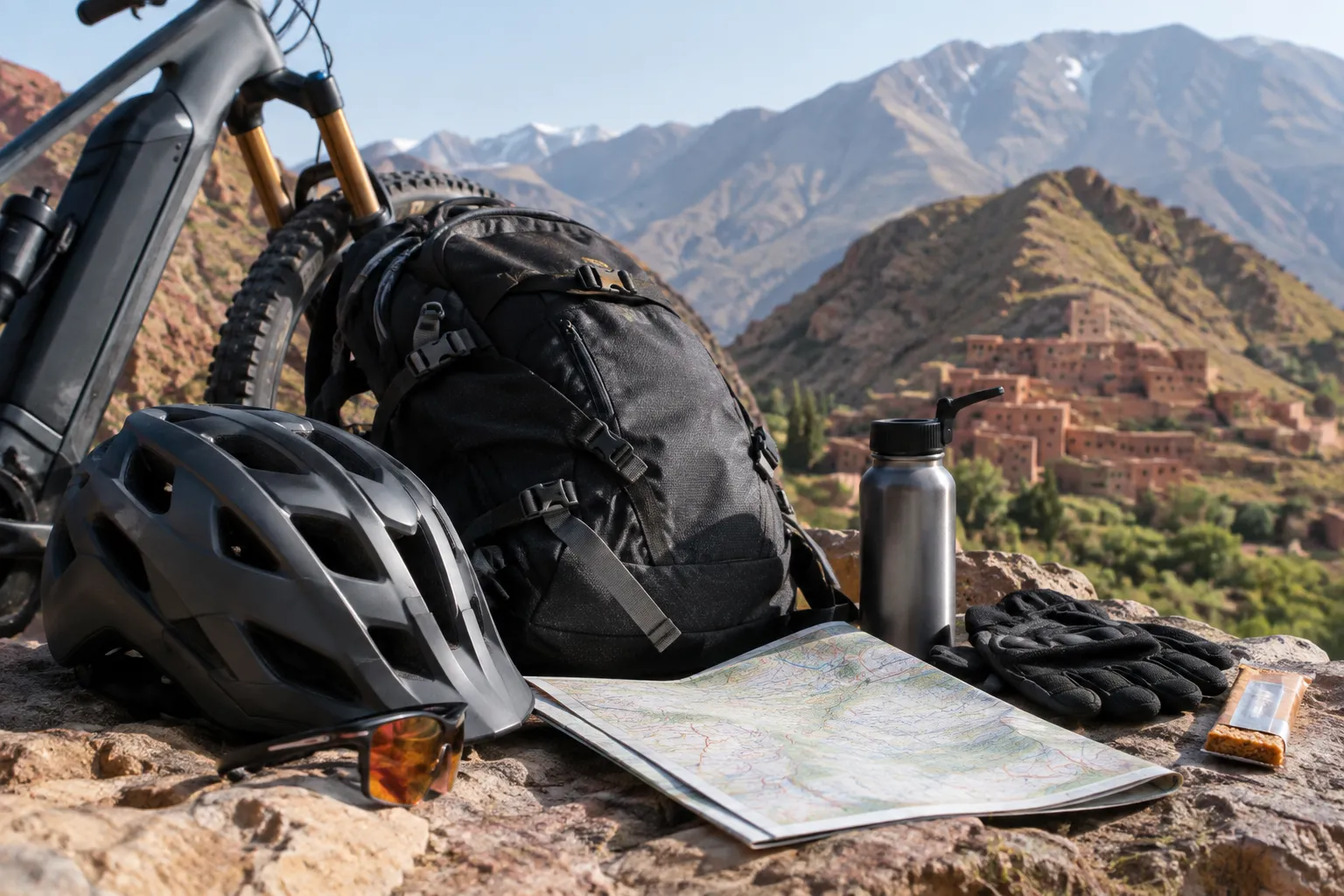
Morocco’s Atlas foothills bring together mountain roads, village tracks and changing gradients. E-assistance can make it more practical to include a climb or extend a day’s route, but it does not remove the need to handle uneven surfaces, descents or changes in weather and terrain.
That combination makes e-bike adventures appealing to riders who want to explore further without treating every climb as a test of fitness. A mountain e-bike can support your effort, but the ride still calls for balance, control and judgement—particularly on loose or rocky ground. In mountain biking in Morocco, route character matters as much as the distance on a map.
The bike and its fit also matter. Check that the riding position, controls and assistance settings feel manageable before setting off. For one example of an e-bike used in this context, see the Cube Stereo e-bike. The right choice for your trip depends on the route and your needs, so review the equipment details and discuss any questions with your guide.
Choose an Atlas route that matches your riding level
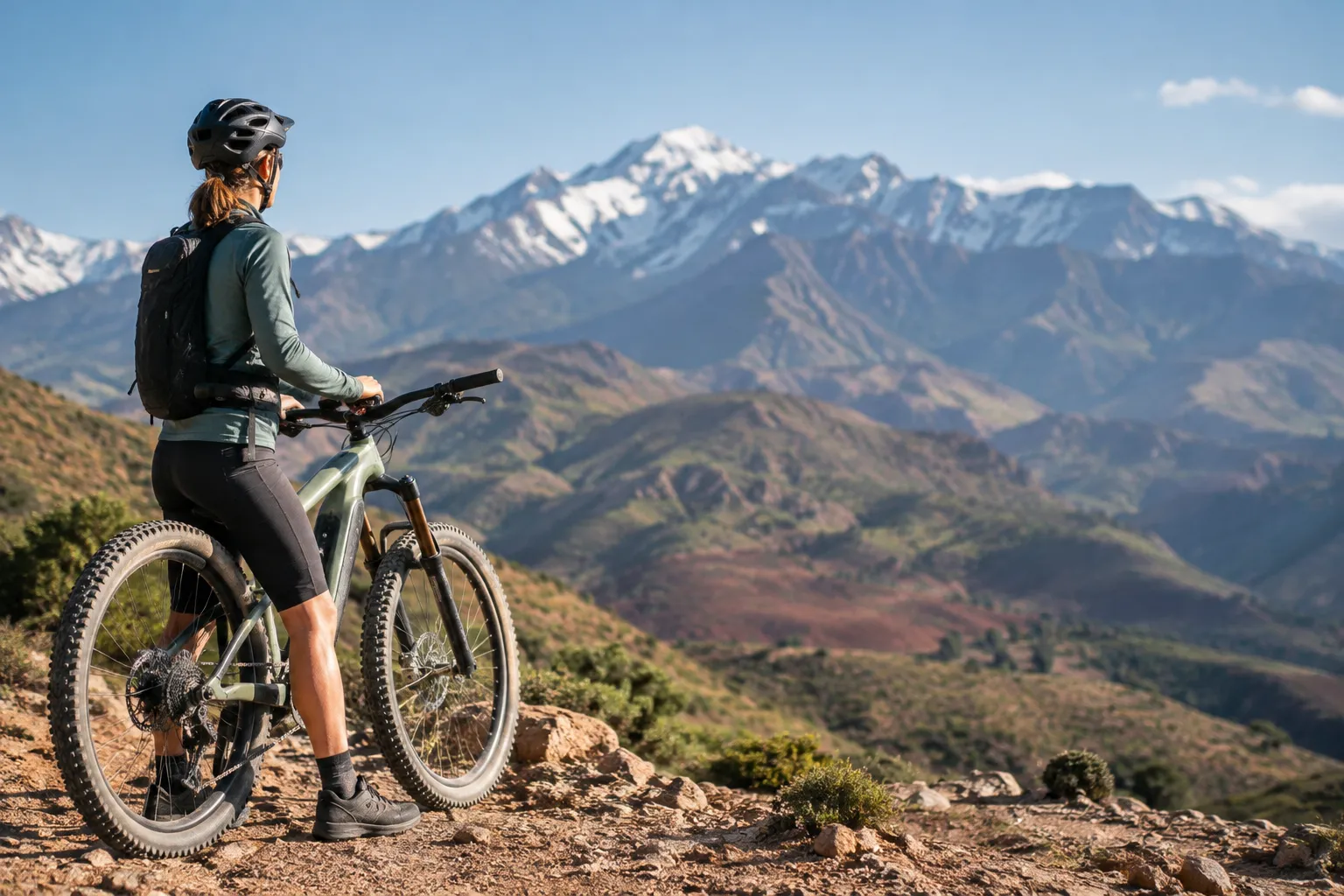
A route’s difficulty is not captured by distance alone. Ask about the amount and steepness of climbing, the surface under the tyres, the technical demands of descents and how long the group is expected to be riding. A shorter route with rough ground may feel more demanding than a longer ride on smoother roads.
Guided tours can help riders compare formats and route styles before committing to a plan. When discussing options, explain your experience clearly and ask how the route can be adapted if the group’s pace or comfort level differs from expectations.
Match the route to your skills and comfort
Think about the terrain you already ride confidently. If you are used to smooth paths but have little experience on loose tracks, steep descents or rocky surfaces, choose a route that lets you build confidence rather than one defined mainly by its distance or elevation.
Be specific when describing your ability: for example, whether you are comfortable braking and cornering on uneven ground, riding for several hours, or climbing for sustained periods. A guide can use this information to discuss route choices and likely challenges. Riders in one group may also have different strengths, so agree on a pace that leaves room for breaks and regrouping.
Build a day around places such as Imlil
Imlil provides a useful example of how Atlas village riding can be shaped around a group. A day might focus on a shorter outing with time to take in the surroundings, or on a longer route with more climbing. The appropriate plan depends on surface, elevation, rider ability and the time available; a place name alone does not define the route’s difficulty.
When planning an e-bike day around Imlil, ask what the ride involves from start to finish: where the climbing falls, what the descents are like, how much is on tracks versus roads, and where the group can pause. That gives you a more useful picture than distance alone.
Plan battery range around climbs and conditions
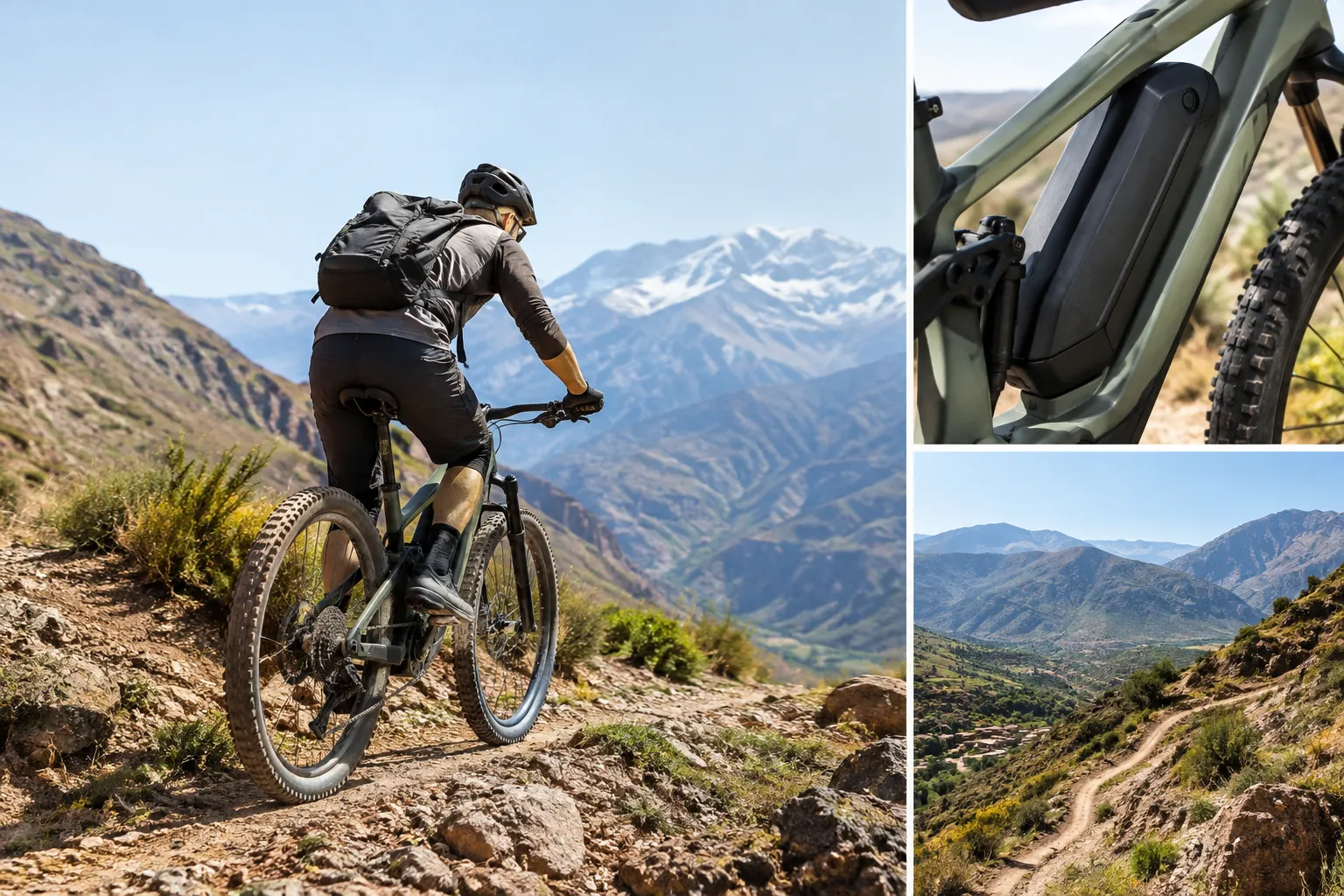
A quoted range is a guide, not a promise of how far you will travel on a particular ride. Battery use varies with elevation, surface, assistance level, rider and luggage load, weather, and how consistently you pedal. A steep Atlas climb on a rough track can use charge differently from a flatter stretch on a smoother road.
For practical planning, talk through the route with your guide before setting out. Ask how much climbing is planned, what assistance level is likely to be useful, where charging may be available and what the plan is if the ride needs to change. Avoid building a route that depends on reaching the battery’s theoretical maximum.
Adjust assistance to the terrain
Use assistance in response to the terrain and your own effort. You may want more support on a sustained climb and less on an easier section, but the right setting depends on your comfort, the bike and the conditions. Getting familiar with the controls before the ride helps you make those choices without distraction.
Ask your guide how to check the remaining charge and change assistance settings on your bike. A steady approach can help you manage the battery over the day, but it cannot guarantee a particular range. Keep enough reserve for the route ahead rather than using the highest setting throughout by default.
Leave room for changing conditions
Plan conservatively, especially if the route includes long climbs, rough tracks or limited opportunities to charge. Discuss battery limits with your guide and ask which parts of the ride are easiest to shorten or adjust if conditions change.
Weather, an unplanned stop or a slower group pace can alter the day’s timing. A flexible route gives the group more room to respond than a plan that relies on covering a fixed distance at a fixed speed.
Sort out charging, pace and ride support
For a day ride, confirm whether charging is available before and after the outing, and whether the battery is expected to start fully charged. On a multi-day trip, ask how charging fits into the overnight arrangements and what you should bring. Do not assume that a stop or accommodation will have charging access unless it has been confirmed.
Group pace needs attention too. Riders using assistance can still have different fitness, confidence and preferred speeds. Agree on a realistic pace, where the group will regroup and how breaks will work. These details are particularly helpful when teenagers or riders with varied experience are sharing the day.
Before departure, establish what support is included if the route changes or a mechanical issue interrupts the ride. Clarify who to speak to, how the group stays together and what happens if a rider wants to stop. A clear plan makes it easier for everyone to focus on riding rather than guessing how the day is organised.
Shape an e-bike day to suit your group
Start with the riders, not the route. Consider everyone’s experience on uneven terrain, confidence on descents, preferred riding pace and appetite for climbing. Then fit the route and available time around those needs, leaving room for breaks and changes of plan.
If your group has mixed abilities, ask about a route with options to adapt its length or difficulty. For a family with teenagers, for instance, the key questions may be whether the terrain suits each rider and whether there is enough flexibility to keep the day enjoyable for the whole group. A group looking for a more challenging ride may focus instead on climbing, technical sections and how the day is supported.
Atlas Mountain Bike offers guided adventures centred on Marrakech and the Atlas Mountains. Based in Marrakech, we can help you explore available options by discussing your riding experience, preferred terrain and time in the area. You can also browse the Atlas Mountain Bike website to find out more about the riding formats.
E-Bike Adventure FAQs
What is the best adventure e-bike?
The best adventure e-bike is one that suits the terrain, distance and rider, with a comfortable fit and controls you can use confidently. For mountain routes, consider the surface and climbing involved as well as battery planning.
How much does it cost to replace an e-bike battery?
The cost varies by battery and bike, so check the manufacturer’s current price and confirm compatibility with the exact model. Ask a qualified bike retailer or service professional to verify the replacement before buying.
Plan your Atlas e-bike adventure with confidence
A good plan brings together the route, your riding level, battery use, charging arrangements and the group’s preferred pace. Before booking, share how much experience you have on mountain terrain, what kind of riding you enjoy and how much time you have. That gives Atlas Mountain Bike a practical starting point for discussing guided options around Marrakech and the Atlas Mountains.
If you have a health or fitness concern that could affect your ability to ride, consult a qualified professional for advice specific to your circumstances.
Hannah Whitaker is an adventure travel editor with a background in outdoor travel writing and guided cycling trips. She specialises in mountain biking and trekking in Morocco, including routes around Marrakech, the Atlas Mountains and the Sahara. Drawing on local guides’ knowledge, she explains trail conditions, practical preparation and the cultural context of each journey. Her articles help riders assess whether a route suits their ability and plan a rewarding day or multi-day trip.