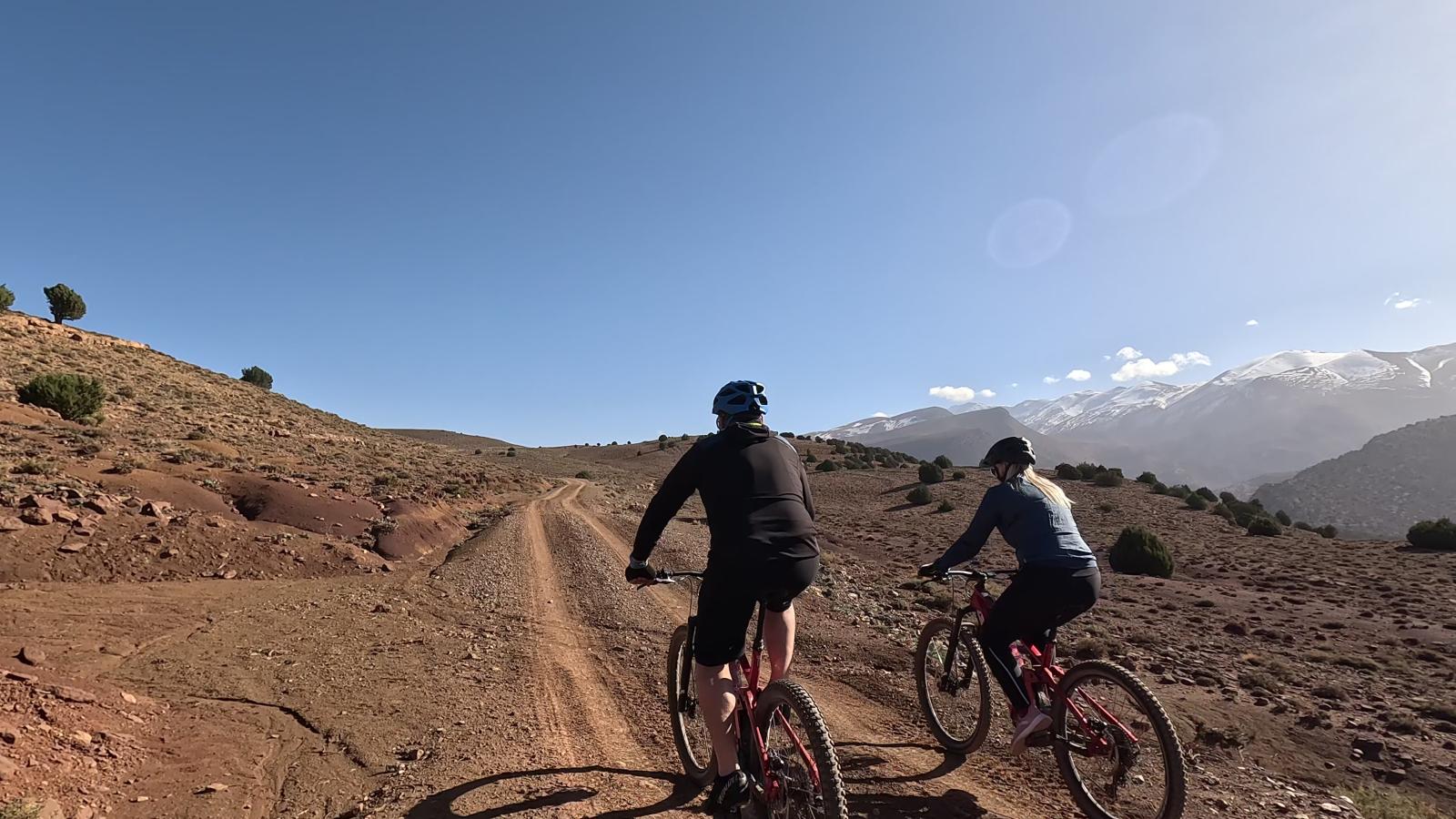
Bringing your own bike to Morocco means riding a machine you know and trust in the mountains. It also means dealing with bike boxes, airline fees and the small worry that something will arrive bent. With a bit of planning, the process is smooth. Here is what we have learned from helping many riders arrive with their bikes.
If you are still deciding whether to bring your bike at all, read bring your own bike or rent? first.
Step 1: Check the airline rules
Every airline has its own policy for bikes. Before you book, check:
- The fee: many airlines charge a fixed price for sports equipment each way. Low-cost airlines often require you to book it in advance online.
- Weight limit: commonly between 20 and 32 kg for the bike bag, but it varies.
- Size limits: most airlines accept standard bike boxes and bags.
- Packing rules: some require pedals removed, handlebars turned and tyres partly deflated.
- Advance notice: space is limited on small aircraft, so book the bike when you book your seat.
Keep a screenshot of the booking confirmation for the bike. It helps at check-in.
Step 2: Choose a box or a bag
Cardboard bike box: free from most bike shops, light and cheap. It offers decent protection if packed well, but it is bulky and can be damaged by rain or rough handling. Hard to store during your trip.
Soft bike bag: padded bags are lighter and easier to carry. Good protection with careful packing, and they fold away when empty.
Hard case: the best protection, but heavy and expensive, and awkward in small vehicles and riad doorways.
For Morocco, many riders choose a padded soft bag. It is easy to load into vehicles, and our support team can store it during the trip.
Step 3: Pack the bike step by step
1. Clean the bike. Customs and airlines prefer clean bikes, and you will spot problems more easily.
2. Remove the pedals. Put them in a small bag with your tools.
3. Remove the rear derailleur from the hanger and tape or tie it inside the frame, wrapped in a cloth. This protects the hanger, the part most often bent in transit.
4. Remove the wheels. Fit a spacer in the fork and rear dropouts to stop them being crushed. Bike shops often give these away.
5. Turn or remove the handlebars. Tape them to the frame with padding.
6. Lower or remove the saddle and seat post. Mark the height with tape first.
7. Protect the frame with pipe insulation or bubble wrap on the tubes.
8. Protect disc rotors. Remove them if possible, or make sure nothing presses against them. Put a pad spacer between the brake pads so the brakes do not close if a lever gets squeezed.
9. Let some air out of the tyres. Not all of it, especially with tubeless set-ups.
10. Pack soft items around the bike: riding clothes, helmet and shoes add padding and save space in your other luggage, as long as you stay within the weight limit.
11. Take photos of the packed bike and the bike before packing, in case you need to make a claim.
Step 4: What not to pack
- CO2 cartridges: many airlines restrict them. Check before you fly or buy a pump instead.
- E-bike batteries: large lithium batteries are generally not allowed on passenger flights. This is why riders rent e-bikes rather than bringing their own.
- Sealant in large quantities: check airline rules for liquids in checked bags.
- Tools in hand luggage: multi-tools and knives must go in checked luggage.
Step 5: At the departure airport
Arrive early. Bikes often go to an oversized baggage counter. Label the bag clearly with your name, phone number and destination. Some riders add a "fragile, bicycle" sticker. It does not guarantee gentle handling, but it does not hurt.
Step 6: Arriving at Marrakech Menara airport
Marrakech's Menara airport is small and fairly easy to navigate. After passport control, bikes usually appear at the oversized baggage area or on the regular belt. If your bike does not arrive, report it at the airline's baggage desk before leaving the airport, and keep the reference number.
Customs officers may ask what is in the bag. A bicycle for personal use on holiday is normally not a problem. Be ready to open the bag if asked. Our visa and entry guide has more on arrival formalities.
Step 7: Getting the bike to your accommodation
Most taxis at the airport are small cars that cannot carry a bike box. Book a transfer with a larger vehicle in advance. On our tours, the transfer is included, and the vehicle is set up for bikes.
If you are staying in the medina, cars cannot reach most riads. A porter with a handcart can carry your bike bag through the alleys for a small tip. If you are staying only one night in Marrakech, consider leaving the bike packed and going straight to the mountains. See getting from Marrakech to Imlil.
Step 8: Rebuilding the bike
- Do it in good light, with space and time, not at midnight in a dark courtyard.
- Refit the derailleur, wheels, bars, saddle and pedals.
- Check brake function, gear shifting and tyre pressure.
- Tighten all bolts to the correct torque.
- Do a short test ride before the first big day.
On our tours, the guide or mechanic helps rebuild and check every bike before the first ride.
Step 9: Storing the bag during the trip
A big bike bag is a nuisance in the mountains. On guided trips, we keep it in our base or in the support vehicle. If you are travelling independently, ask your Marrakech hotel or riad to store it until you return.
Step 10: The return journey
Repeat the process in reverse. Clean the bike before packing, as dried mud and dust can be an issue for customs in some countries. Let the guide know a day before so there is time to pack properly.
A final tip
Before you fly, have the bike serviced, fit fresh tubeless sealant and pack a spare derailleur hanger. Many trips have been saved by that small piece of metal. See our repair kit list and packing list for everything else you need.