 24 Nov 2026
 8 min read
Mount Toubkal is a trekking objective in Morocco’s High Atlas Mountains, reached from Imlil, and the usual walk involves an approach to a mountain refuge followed by a summit attempt and return. The Morocco Toubkal trek is demanding because of sustained walking, changing conditions and altitude; it is usually planned over more than one day, with the exact itinerary depending on the group and conditions.
Where Morocco’s Toubkal sits in the Atlas Mountains
Mount Toubkal, also called Jebel Toubkal, is in the High Atlas of south-western Morocco. Imlil is the main village used as a starting point for treks into the surrounding mountains, while Marrakech is the usual city from which travellers arrange onward transport.
The Atlas Mountains are a broad mountain system, not a single trekking area. Toubkal is one destination within the High Atlas; Imlil gives visitors access to mountain paths and villages, while Marrakech offers a different base for travel and cycling. Knowing which place you want to spend time in helps shape the trip: a Toubkal trek centres on walking and altitude, whereas a Marrakech-based riding holiday centres on time in the saddle.
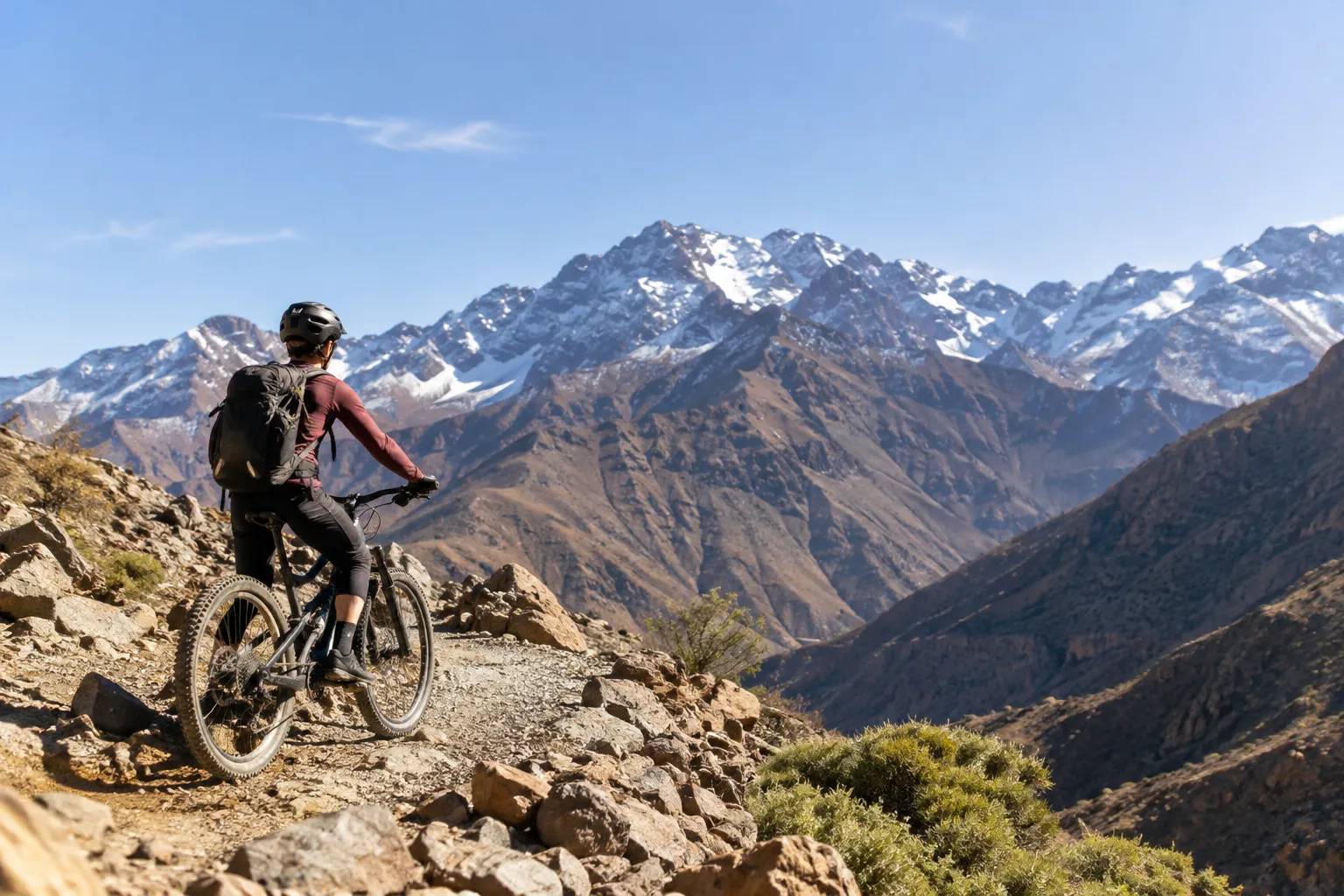
For a cycling-focused trip, Atlas Mountain Bike offers guided mountain-bike, e-bike, gravel and multi-day tours around Marrakech and the Atlas Mountains. These are distinct from a summit trek: compare the activity, terrain and daily effort you want before choosing a trip.

How long the Toubkal trek takes, from Imlil to the summit
A common outline is to travel to Imlil, walk from the village towards the mountain refuge, spend the night there, then attempt the summit and return. This takes more than one day, but there is no single duration that fits every itinerary. The pace, overnight arrangements, weather and the group’s condition can all affect the plan.
Getting from Marrakech to Imlil
Arrange the journey from Marrakech to Imlil before setting out on foot. Confirm where the transfer begins and ends, how the return journey is handled, and whether your walking itinerary starts on arrival or after an overnight stay. These details matter if your travel plans have fixed arrival or departure times.
Imlil is a mountain village, so do not treat the journey as a city-to-city commute with no need for contingencies. The UK government’s Morocco travel advice on hazardous mountain roads in poor weather is relevant when planning road transfers, particularly if conditions may affect travel.
Beginning the trek from Imlil
From Imlil, the journey changes from road travel to walking through mountain terrain. The first stage is a chance to settle into the pace, check that your footwear and pack are comfortable, and notice how you respond to sustained uphill effort.
For a guided itinerary, ask how the walking day is organised and what the guide expects the group to carry. A steady pace and clear arrangements can help groups with different walking speeds share the same plan without turning the day into a race.
Continuing to the mountain refuge
The walk continues from the village towards a refuge used as an overnight stop before the summit attempt. Treat this as a functional mountain stage rather than a hotel night: check the sleeping arrangements, what is supplied, what you need to carry and how food and water are handled.
The refuge stop also gives you time to rest and prepare for an early start. Keep essential clothing and equipment easy to reach, and avoid leaving decisions about cold-weather layers or headtorch access until the morning.
Setting out for the summit and returning
Summit day begins early on many itineraries, followed by a return to the refuge or a continued descent, depending on the plan. Ask in advance where the day finishes and whether the return to Imlil is included in the same walking schedule or arranged as a separate stage.
The route and timing should be treated as conditional on mountain conditions and the group’s progress. A summit attempt is not the only measure of a successful visit: the guide or trip organiser should be able to explain how the plan changes if a participant is unwell or conditions are unsuitable.
What to expect at the refuge and on summit day
Expect the refuge to be a practical overnight stop that supports an early start, not a place to rely on for every personal item you might need. Confirm facilities and arrangements with the trek organiser before leaving Imlil. Bring the layers and essentials you will need overnight and on the walk, and keep items for the morning accessible.
Summit day can feel different from the approach. An early start, a long period of walking and colder or changing conditions can make preparation and pacing important. Eat and drink according to your needs, take breaks as appropriate, and tell your guide promptly if you feel unwell or are struggling to continue.
Weather can change the experience. The Met Office’s report on North-West Africa describes cooler, wetter winters and snowfall on higher ground, including Morocco’s High Atlas. That regional context is a reason to check conditions for your dates and ask what clothing and equipment are suitable for the itinerary, rather than assuming that a warm Marrakech forecast represents conditions higher in the mountains.
How difficult is Mount Toubkal, and what does altitude change?
Yes, Mount Toubkal is a hard climb for many people: it involves sustained walking on mountain terrain, an overnight stop and a summit day, with altitude adding another challenge. The effort depends on your walking experience, fitness, pace, conditions and how your body responds to altitude.
Altitude can affect people differently. Headache, nausea, dizziness and tiredness are among the symptoms of altitude sickness described by the NHS. Its guidance also explains risk reduction and what to do if symptoms develop. Read the NHS advice on altitude sickness before planning a high-altitude trip, and take symptoms seriously rather than trying to push through them.
Build up your walking stamina before the trip, and be candid with the organiser about your experience and any concerns. A Toubkal trek may not suit someone who is uncomfortable with long uphill walks, overnight mountain stays or adapting plans when conditions change. If you have a health condition or are unsure how altitude could affect you, consult a qualified health professional about your own circumstances before travelling.
When to trek Toubkal and how to prepare
Conditions vary with the season and elevation. The High Atlas can be cooler and wetter in winter, with snowfall on higher ground, while conditions at the mountain can differ from those in Marrakech. Choose dates only after checking the expected conditions and asking the trek organiser what the route requires at that time of year.
A practical preparation checklist:
- Build fitness through regular walks, including longer uphill efforts where possible.
- Ask what footwear, clothing and equipment are needed for your planned dates.
- Pack layers for changing temperatures and weather, and keep rain protection accessible.
- Confirm what the refuge provides and what you must carry.
- Check how the itinerary handles transport, overnight arrangements and changes to the summit plan.
- Review altitude-sickness guidance before departure and know how to report symptoms to your guide.
If you are also weighing a cycling trip, prepare for its demands separately. Mountain biking, e-biking and gravel riding involve different riding skills and terrain from trekking; being ready for one does not automatically prepare you for the other.
How Toubkal compares with Kilimanjaro and a Marrakech bike trip
Toubkal is a High Atlas trekking journey in Morocco, starting from Imlil. Kilimanjaro is in Tanzania, so comparing the two means comparing separate countries, travel arrangements and mountain itineraries—not simply choosing between two routes in the same region. Eco Africa Climbing offers guided Kilimanjaro trips as private or group expeditions, which gives travellers a way to compare guided formats when researching that climb.
A Marrakech cycling trip is different again. Atlas Mountain Bike offers mountain-bike, e-bike, gravel and multi-day tours, so the activity may suit someone seeking guided riding rather than a summit walk. Think about the experience you want: a trek focuses on walking, an overnight refuge and a summit attempt; a riding holiday focuses on cycling routes and time on a bike.
If you are considering both trekking and cycling in one visit, check the time and recovery each requires before combining them. Do not assume that a packed itinerary will leave enough room to rest or adapt to weather and altitude.
Plan your Toubkal visit and choose your Atlas Mountains stay
First decide whether your priority is a summit trek, a mountain stay without a summit attempt, or a cycling-focused holiday. Then plan around the starting point and activity: Imlil is the practical base for the Toubkal walking stages, while Marrakech is the main reference point for arranging travel and considering guided riding in the surrounding region.
Staying in the Atlas Mountains puts you nearer the walking environment and can reduce the need to make the trek a day trip from Marrakech. A Marrakech-based stay may better fit a trip focused on the city or a cycling itinerary, but you will need to arrange onward travel for Toubkal. Compare the locations against your transfer plans, overnight needs and the time you have available.
For groups, agree on walking pace, fitness expectations and what happens if someone needs to stop. For families, make sure the itinerary is appropriate for each participant rather than assuming that shared enthusiasm means equal readiness. In either case, ask the organiser to explain the stages, refuge arrangements, transport and how the plan responds to changing conditions.
Recommended next steps
- Decide whether your main goal is a Toubkal summit trek, time in the Atlas Mountains, or a guided cycling trip.
- Check your travel dates against expected mountain conditions, including the possibility of colder, wetter weather at higher elevations.
- Arrange transport from Marrakech to Imlil and confirm where the walking itinerary begins and ends.
- Ask the trek organiser to set out the stages, refuge arrangements, equipment requirements and options if conditions or wellbeing change.
- Assess your walking fitness and altitude concerns, and consult a qualified health professional about your own circumstances if needed.
- Choose your accommodation and activity around the time you have available, leaving room for rest and changes to the plan.