
 25 Oct 2026
 8 min read
The best hike in Morocco depends on how much time you have, how comfortable you are with steep or high-altitude terrain, and whether you want a village walk or a longer mountain route. From Imlil, you can explore Atlas foothills on a shorter outing or use the area as a starting point for a multi-day trek. This guide compares the options so you can choose a Morocco hike that fits your plans.
What is the best hike in Morocco for your trip?
There is no single best route for every traveller. A half-day walk near a village can offer mountain views and a feel for local life without committing to several days on foot. Longer Atlas routes bring more sustained climbs, changing landscapes and overnight stays.
For atlas mountain treks from Marrakech, consider the journey to the trailhead as part of the itinerary, not just the walking time. Season, route conditions and available daylight can also affect which plan makes sense. For help matching a route and itinerary to the time of year, see our guide to seasonal Atlas hiking routes.
Choose by time, effort and scenery
If you have a free morning or day, a village walk or valley outing may be the practical choice. You can keep the route flexible and return to your accommodation rather than planning overnight stops. Longer morocco trekking itineraries suit travellers who want consecutive walking days and are comfortable carrying a day pack over varied ground.
Think about the kind of scenery you most want to experience. Village paths pass through settled landscapes and cultivated terraces; higher trails are more focused on mountain terrain and wide views. The best hike in Morocco for a short visit may be very different from the best fit for a dedicated trekking holiday.
Match the route to your experience
Consider more than distance. A short route can still feel demanding if it includes steep sections, uneven paths or a rapid climb in elevation. A longer route may be manageable at a steady pace if the daily stages and overnight stops are planned to suit the group.
Be honest about your experience with sustained uphill and downhill walking, and how you respond to altitude. If you are new to hiking, start with a lower village route or a guided day walk before choosing a summit-focused itinerary. Families and mixed-ability groups should discuss everyone’s pace and comfort, rather than planning around the strongest walker.
Village walks and shorter trails in the Atlas
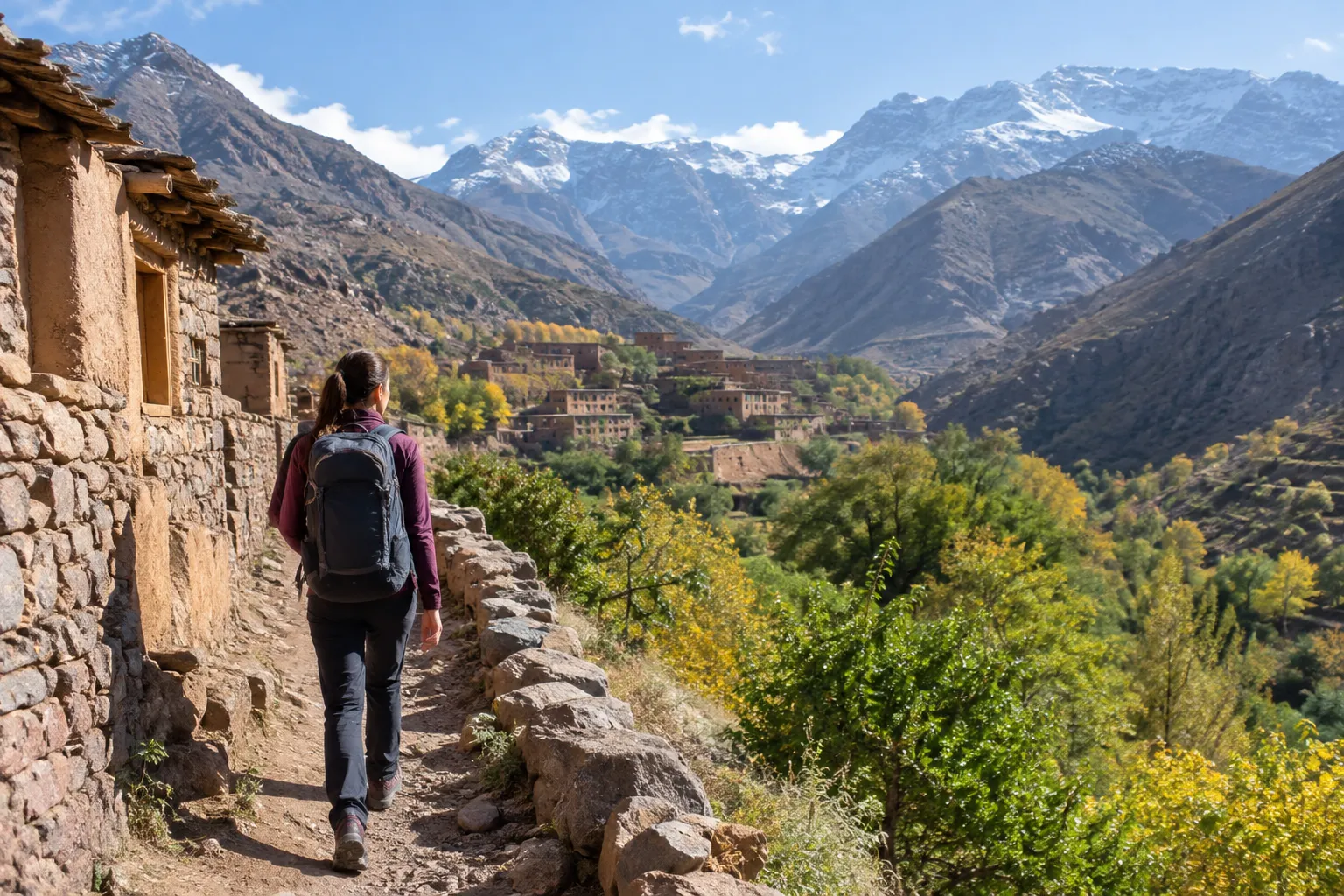
Shorter walks around the Atlas foothills offer a way to see the landscape without taking on a multi-day trek. Paths may connect villages, cross cultivated areas or follow valleys, with the exact route depending on conditions and the group. For a broader overview of route types and planning, read our guide to Morocco trekking routes.
Walking from Imlil through Berber villages
Imlil is a useful starting point for walking in the High Atlas, including routes through nearby Berber villages. A village-to-village walk can combine mountain views with a closer look at everyday life: homes, fields and paths that connect the settlements. It is a different experience from a summit attempt, with more attention on the route through the valley and its communities.
Plan respectfully. Follow your guide’s direction on local customs, ask before photographing people, and keep to established paths where possible. The right outing depends on the time available and how far the group is comfortable walking; a guide can help choose a route and pace that fit.
Waterfalls, valleys and half-day outings
A valley or waterfall walk can suit travellers seeking a scenic outing without an overnight stay. These routes are not automatically easy: surfaces, gradients and seasonal water levels can change the character of a walk, so ask about the specific route before setting out.
For travellers researching Morocco hiking trips, a shorter walk can also be a good first day in the mountains. It leaves room to adjust plans after seeing how the group handles the terrain and pace.
Longer Atlas routes from Marrakech
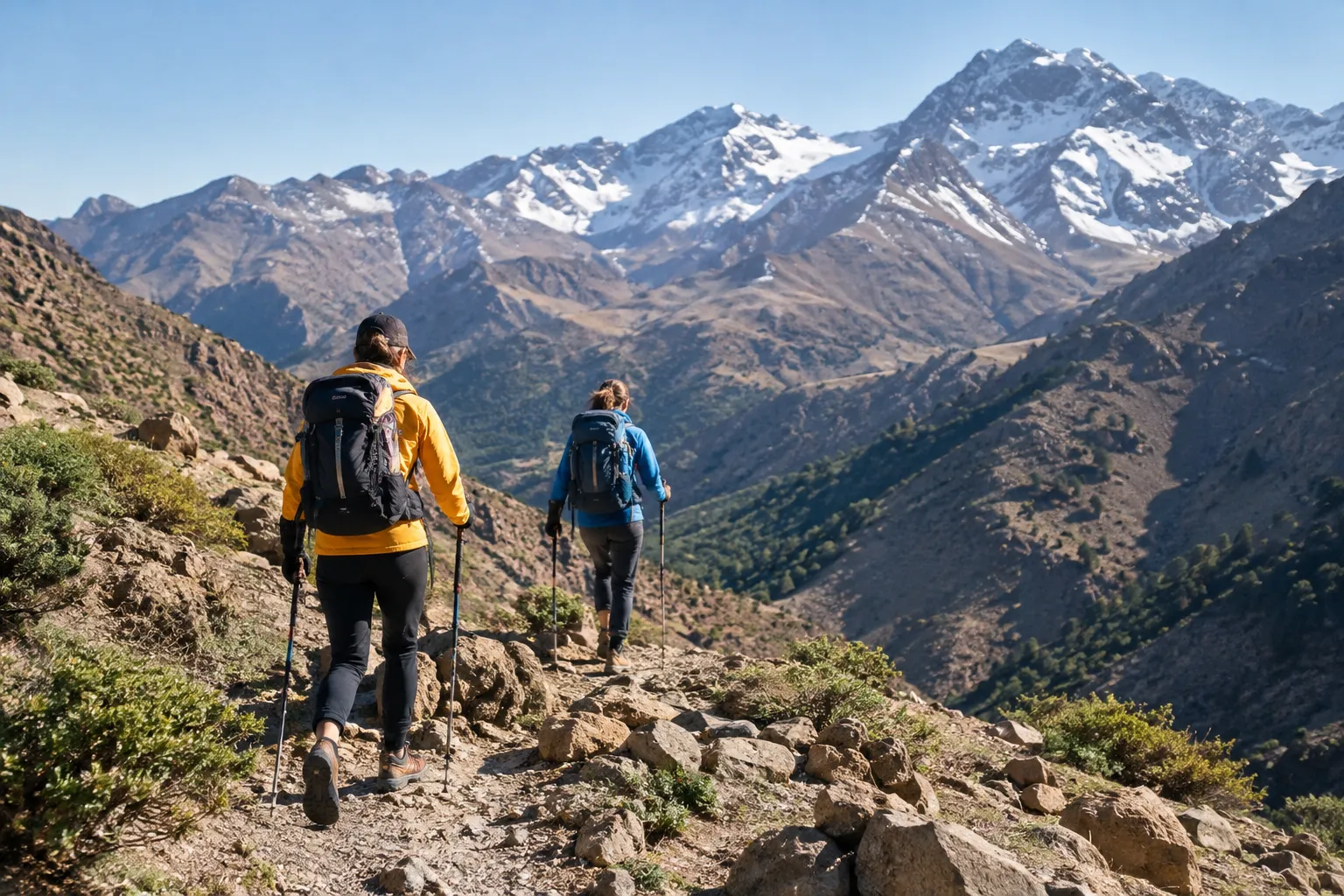
Longer routes from Marrakech usually require more coordination than a day walk: transport to the trailhead, daily stages, overnight arrangements and a plan for luggage. Some itineraries focus on reaching a high point; others link valleys and villages over several days. Compare the route character and daily effort, not just the total number of days.
Toubkal approaches and high-mountain terrain
Routes around Mount Toubkal are summit-oriented and involve sustained climbing at altitude. The high-mountain environment can make a familiar walking distance feel more taxing, particularly if the itinerary gains height quickly. The approach and descent also require time and energy, so a summit plan should not be treated as a casual extension of a village walk.
Check current local requirements and route conditions before travelling, and confirm what support is included in any guided plan. For a closer look at the factors that affect the challenge, see our separate guide to how difficult the Toubkal trek can be.
Multi-day valley and mountain circuits
A circuit through valleys and mountain settlements offers a different rhythm from a summit trek. Rather than organizing the whole trip around one high point, the walking links landscapes and overnight stops from day to day. The appeal is the progression through the region; the tradeoff is that you need enough time for consecutive walking stages.
When comparing itineraries, ask how long each day is expected to take, where you will stay and how the plan changes if weather or group pace affects progress. Our guide to Morocco hiking trips, routes, terrain and trip styles offers further context for comparing trip formats.
How altitude, pace, guides and stays shape the hike
A route name alone does not tell you what a trek will feel like. Elevation gain, walking pace, trail surface, weather and overnight comfort all contribute to the experience. Before booking or setting out independently, get a clear picture of the daily plan and the support available.
Altitude and a realistic walking pace
At higher elevations, give yourself time to adjust and avoid squeezing too much into the itinerary. A steady pace, breaks and realistic daily stages matter more than trying to cover ground quickly. If anyone feels unwell or unusually breathless, stop and reassess rather than pushing on to meet a schedule.
People with health concerns should consult a qualified medical professional before planning strenuous or high-altitude activity.
When local guide support helps
A local guide can help with route-finding, explain the area and coordinate practical details such as the day’s timing and village stops. Support may be especially useful for a group with mixed experience or for travellers unfamiliar with mountain paths.
Ask what the guiding arrangement covers: route choice, pace, transport, luggage handling and overnight coordination may be separate parts of a trip. Clear expectations help a group feel supported without making the itinerary unnecessarily rigid.
Mountain refuges, guesthouses and village stays
Overnight options shape both comfort and the character of a trek. A mountain refuge places you closer to high routes, while a village guesthouse can offer a more settled stop within a community. Facilities and sleeping arrangements vary, so check what is included rather than assuming a particular level of comfort.
Ask about meals, bedding, washing facilities and what you need to carry. These details can affect how much you pack and how rested you feel for the next day.
Plan a hike alongside a cycling holiday
Combining walking and riding can add variety to a Morocco trip, but both activities draw on your time and energy. Decide which is the priority, then plan the other around it. A trek based near Imlil, for example, has different transport and timing needs from a ride based around Marrakech.
Leave room for recovery between activities
Avoid scheduling the most demanding ride immediately after a long or high-altitude walking day. Build in a lighter day or rest period where your itinerary allows, especially if the group has different fitness levels. The right sequence depends on the routes, elevation and each traveller’s experience.
Coordinate routes, luggage and local support
Confirm how you will travel between trailheads and cycling stages, where luggage will be stored or transferred, and what equipment needs to be available on each activity. If you are travelling with a group, agree in advance on the pace and whether everyone will follow the same plan on foot and by bike.
Morocco Hiking FAQ
When is the best time of year to hike in Morocco?
Spring and autumn are often practical seasons for many Atlas hikes, but conditions vary by altitude and route. Check local forecasts and seasonal trail guidance before choosing dates.
What should I pack for a day hike in the Atlas Mountains?
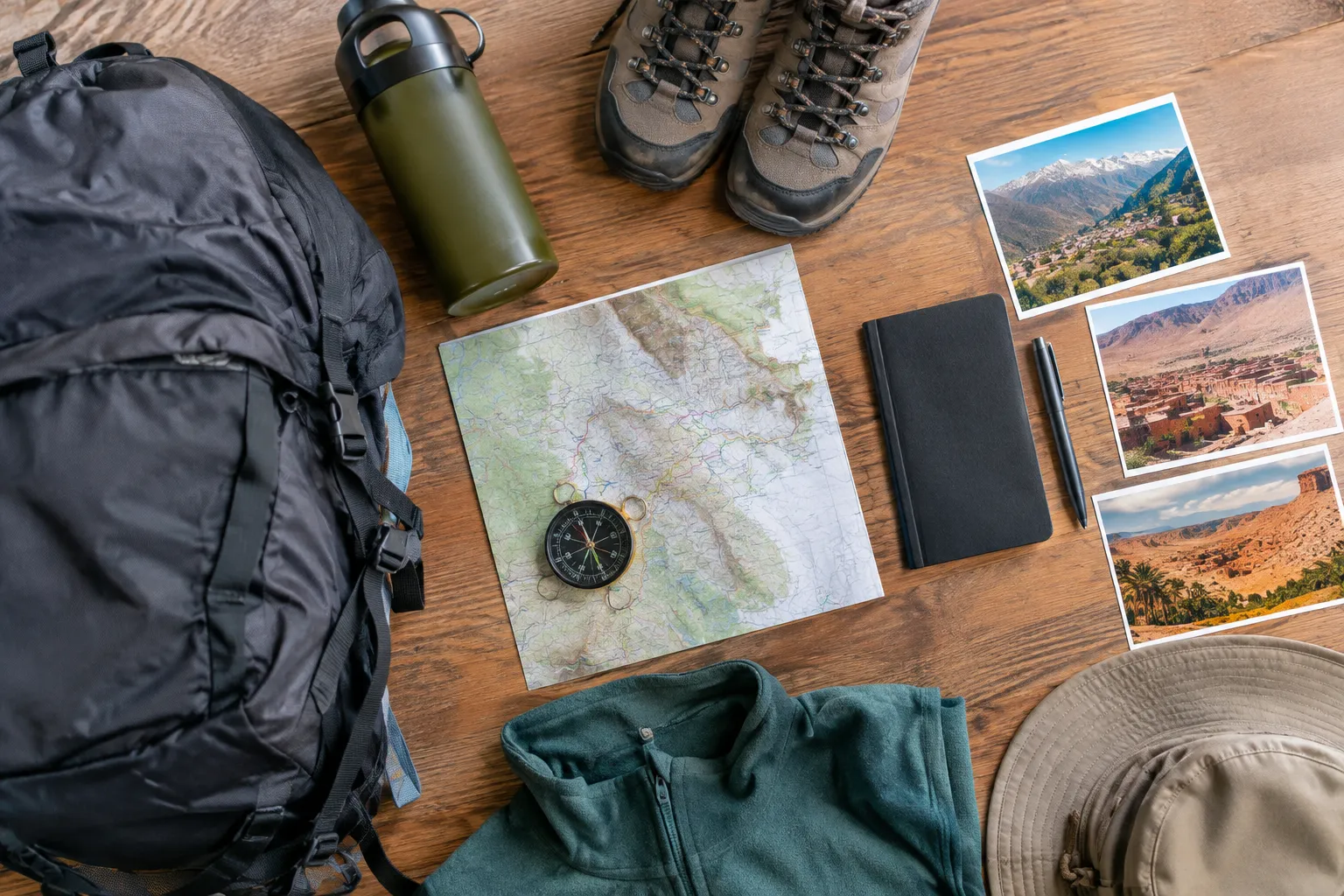
Bring broken-in walking shoes, weather-appropriate layers, sun protection, food and enough drinking water for the planned route. Ask your guide whether any route-specific equipment is needed.
Do I need a permit to hike Mount Toubkal?
Requirements can change, so confirm current access rules and any guide requirements with local authorities or a reputable local operator before travelling. Do not assume that a general Atlas hiking plan covers Toubkal access.
How many days should I allow for a Toubkal trek?
Allow at least two days for a basic summit-oriented itinerary, with extra time if you want a slower pace or a buffer for conditions. Confirm the walking stages and overnight plan before booking.
What level of fitness do I need for a Morocco mountain hike?
For a mountain route, you should be comfortable walking for several hours over uneven ground, including climbs and descents. Higher or longer treks require more preparation than a short village walk.
Can beginners hike in the Atlas Mountains?
Yes, beginners can choose shorter, lower routes with a manageable pace, but not every Atlas trail is a beginner route. Ask about distance, elevation gain, terrain and expected walking time.
Is drinking water available along Atlas hiking routes?
Water access varies by route, so carry enough for the planned stage and ask locally about reliable refill points. Treat water from natural sources appropriately rather than assuming it is safe to drink untreated.
How can I get from Marrakech to the trailheads near Imlil?
Travellers commonly arrange road transport from Marrakech to Imlil, with the journey planned around the chosen trailhead and start time. Confirm pickup, return transport and luggage arrangements in advance.
Recommended next steps
Start by choosing between a village walk, a valley outing, a summit-focused trek or a multi-day circuit. Then compare the daily walking stages, elevation, overnight stays and guiding arrangements against your group’s experience and available time. If cycling is also part of the trip, leave room for recovery and coordinate transport and luggage before finalizing the itinerary.
Hannah Whitaker is an adventure travel editor with a background in outdoor travel writing and guided cycling trips. She specialises in mountain biking and trekking in Morocco, including routes around Marrakech, the Atlas Mountains and the Sahara. Drawing on local guides’ knowledge, she explains trail conditions, practical preparation and the cultural context of each journey. Her articles help riders assess whether a route suits their ability and plan a rewarding day or multi-day trip.