
 18 Oct 2026
 9 min read
Morocco trekking ranges from village-to-village walks in the High Atlas to high-altitude routes, volcanic terrain and desert-edge journeys. The right trip depends on more than distance: altitude, season, trail surface, overnight arrangements and the pace you can sustain all shape the experience.
At a glance:
- Choose the High Atlas for mountain paths and village landscapes, or look beyond it for the different terrain of the Mgoun massif, Jbel Saghro and the Sahara.
- Around Imlil, compare lower village walks with higher routes towards Toubkal; they differ in exertion, altitude and preparation.
- Plan daily stages around ascent, descent, footing and rest stops—not just kilometres.
- Check seasonal conditions and current route guidance before setting out, especially for high passes and summit plans.
Where to go trekking in Morocco

Morocco hiking trips can take in very different environments, from cultivated mountain valleys to dry, open desert landscapes. When comparing atlas mountain treks, look at the elevation profile, trail conditions, daily walking time and type of overnight stay—not only the scenery or route name.
For an overview of guided options and trekking areas, see Morocco treks and tours. The most useful starting point is to decide whether you want village walks, a demanding high-mountain objective or a route through more remote terrain.
High Atlas routes and village trails
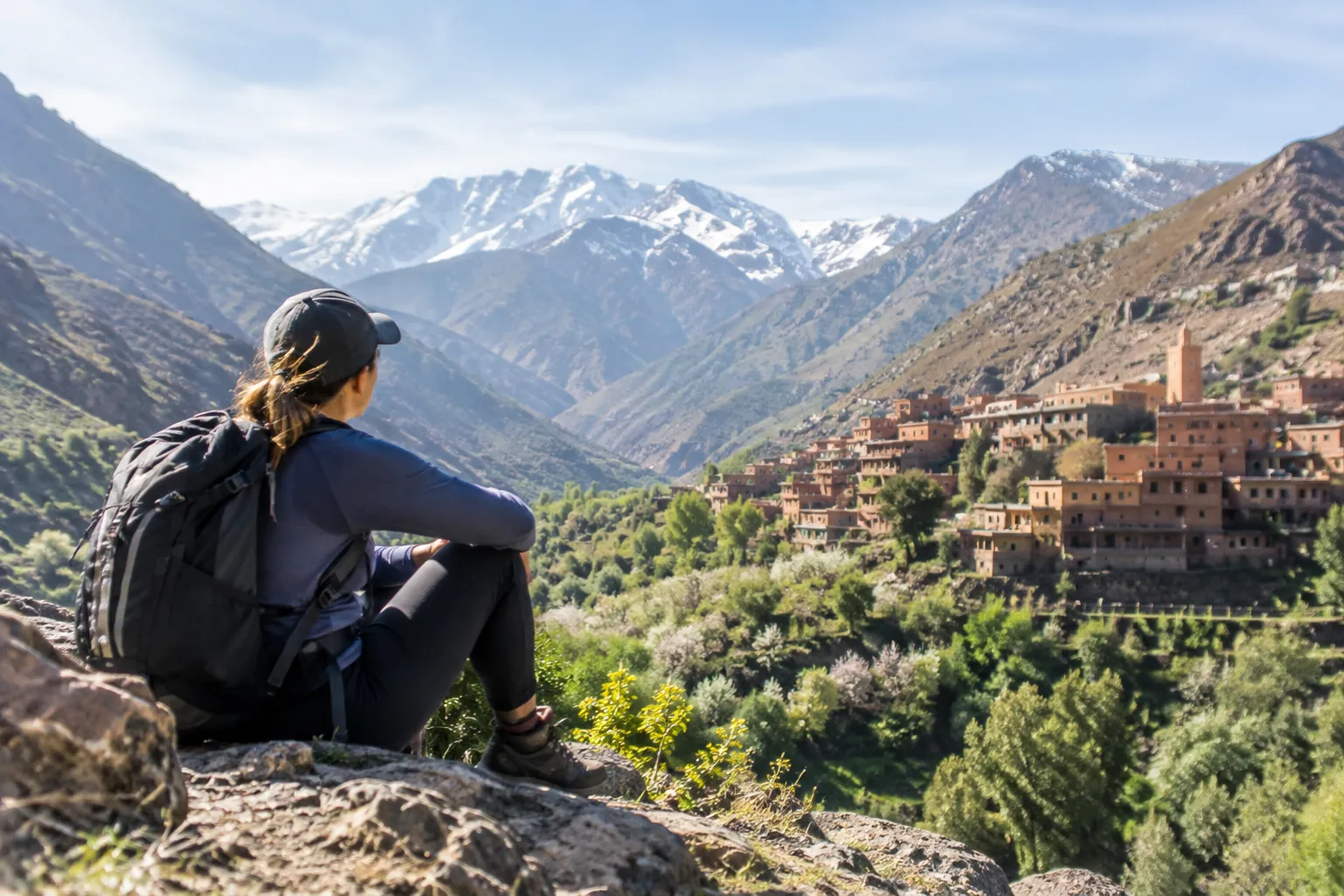
The High Atlas is a natural choice for mountain walking, with paths connecting settlements, cultivated terraces and highland landscapes. Routes around Imlil are particularly relevant for visitors based in or travelling from Marrakech, but the experience can vary considerably: a day walk between villages is not the same undertaking as a multi-day route crossing higher ground.
Village trails often involve uneven paths, steep sections and repeated ascents and descents. Even when the distance looks modest on a map, elevation gain, heat and the footing can make a day tiring. Longer itineraries may link valleys or pass through small settlements, with overnight arrangements influencing how much walking is needed each day.
For a first trek, consider a lower-elevation route with flexible stages rather than choosing solely by a summit objective. More experienced walkers may prefer longer days or higher passes, provided the itinerary accounts for acclimatisation, weather and a realistic pace.
Beyond the Atlas: Mgoun, Saghro and the Sahara
The Mgoun massif offers a different mountain setting from the busy approaches around Imlil. Routes here can feel more remote, and the terrain and logistics may require careful planning. Ask how the itinerary handles water, overnight stops, transport to and from trailheads, and alternatives if conditions change.
Jbel Saghro is known for dry, rugged landscapes rather than the greener village-valley character associated with parts of the High Atlas. Its routes may suit walkers seeking rocky terrain and a more arid mountain environment. The degree of remoteness and the availability of reliable water points should be part of the route discussion.
Sahara trekking is another distinct format. Walking in desert terrain requires attention to heat, water, shade, travel logistics and the timing of each day’s stages. It is not simply a lower-altitude version of a mountain trek. Compare these regions by the experience you want and the practical demands you are prepared for, rather than treating all Morocco hiking trips as interchangeable.
Choosing a trek around Imlil and Toubkal

Imlil is a starting point for routes that range from village walks to high-mountain approaches. The key choice is whether you want to explore the surrounding valleys at a moderate pace or make altitude and a summit attempt central to the trip.
Lower routes can still be physically demanding: trails may climb sharply, and descents on rough ground can tire legs and knees. A Toubkal itinerary adds the challenge of sustained ascent at high altitude, where some walkers feel the effects of thinner air. A summit plan should allow time to acclimatise and should be adjusted to the group’s pace and conditions.
When comparing itineraries, ask how much elevation is gained each day, how long the walking stages typically take, where you will sleep and what happens if someone needs a slower day. A summit is not the only measure of a worthwhile trek; a village-focused route may be a better fit for travellers who want walking without making high altitude the main goal.
Active travellers planning time in the same region may also be interested in Biking Adventure Awaits at Toubkal National Park. Trekking and biking involve different skills and exertion, so plan them as separate activities and allow enough recovery between demanding days.
How season and altitude shape your trek

Conditions change with season, elevation and local weather. Lower trails and high passes can have very different conditions on the same trip, so a general statement about the best time to visit is less useful than checking the specific route and dates.
In warmer periods, heat can affect walking comfort, particularly on exposed trails and desert routes. Cooler conditions at elevation can bring cold mornings and nights, while snow or other adverse weather may affect high routes at certain times. Conditions can also change during a trek; plans should leave room to respond rather than assuming every stage will be passable.
Altitude matters even when you are fit. A steep climb at elevation can feel harder than a similar effort lower down, and ascending too quickly may increase the chance of altitude-related symptoms. Build in time to adjust, especially before a high summit objective, and tell your guide if you feel unwell. Severe or worsening symptoms call for prompt descent and appropriate medical help.
Before choosing dates, check what the route involves at that time of year, including pass conditions, likely temperatures and daylight. For more detailed route and preparation considerations, read Atlas Mountain trek preparation.
Set a realistic daily distance and pace

Distance alone is a poor measure of a trekking day. A short stage with a steep climb, loose footing or a high pass may take more effort than a longer walk on gentler ground. Descent matters too: long downhill sections can be demanding even when they appear straightforward on a map.
Ask for the expected walking time as well as the distance, and check the day’s total ascent and descent. Also consider whether the plan includes regular breaks, a meal stop and time to reach the overnight point before dark. These details help you judge whether the itinerary suits your fitness and experience.
A practical way to assess a route is to compare it with your recent walking:
- Have you completed similar elevation gain on consecutive days?
- Are you comfortable walking on uneven or rocky paths?
- Can you maintain a steady pace while carrying the expected daypack?
- Do you recover well overnight, or would you benefit from shorter stages?
For a group, plan around the pace of the slowest participant rather than the strongest walker. This can make the day more relaxed and reduce pressure to rush. If a route has limited flexibility, ask in advance what options exist for shortening a stage or resting.
Plan with local support and prepare well
Good preparation is practical, not complicated: understand the route, pack for changing conditions and clarify what support is included. For longer atlas mountain treks, transport, meals, luggage arrangements and overnight stops all affect how the days feel. Confirm these details before departure so expectations are aligned.
Guides, village stays and local customs
A local guide can help interpret trail choices, pace the day and adapt plans to conditions and the group. When arranging support, ask about the guide’s role, the planned route, the expected daily schedule and how decisions are made if weather or fitness changes the plan. Specific answers are more helpful than assuming every guided trek follows the same format.
Village stays can make a multi-day walk feel closely connected to the places along the route. Accommodation types and facilities vary, so ask what is arranged and what to bring. Be considerate when passing through communities: follow your guide’s advice on photography, dress appropriately for the setting and respect people’s privacy and property.
What to arrange before setting out
Build fitness with regular walking before the trip, including hills or stairs if available. If your itinerary includes several consecutive walking days, practise on back-to-back days so you can see how your body responds to repeated effort.
Pack in layers. Mountain temperatures can change between exposed climbs, shaded valleys and evenings, so bring suitable sun protection as well as warm clothing for cooler conditions. Choose footwear that is already comfortable and has a grip appropriate to rough trails; avoid relying on brand-new boots for a long trek.
Carry water and snacks suited to the route, and check whether refills are available and how they are handled. Needs vary with heat, effort, body size and access to water, so do not assume a single amount works for everyone. Before departure, confirm the route, weather outlook, meeting arrangements, expected walking time and any changes to local access or trail conditions.
Add a biking experience to your Morocco trip
Some active travellers combine walking with cycling, but the activities call for different equipment, skills and recovery. A mountain bike trip focuses on riding terrain and handling a bike; an e-bike adds electric assistance to pedalling; gravel biking suits routes selected for mixed surfaces and a different riding style. Trekking, by contrast, is travelled on foot and can reach places where cycling is not part of the itinerary.
Atlas Mountain Bike offers guided biking options including mountain bike Morocco, gravel bike Atlas, singletrack MTB Morocco, Morocco mountain biking tours and a High Atlas cycling holiday. If you are planning both activities, allow recovery time after demanding stages and consider how transport between areas affects the schedule. Match the riding format to your experience rather than assuming that fitness for one activity automatically transfers to the other.
Morocco Trekking FAQ
Why is Morocco on high alert?
“High alert” can refer to a particular government’s travel advisory, not a single universal status for Morocco. Check your own government’s current guidance and local updates before travelling, as advice can change.
Can a beginner climb Mount Toubkal?
A beginner may be able to attempt Toubkal with adequate preparation and a suitable itinerary, but it is a strenuous high-altitude trek, not an ideal first-ever hike. Build walking fitness and allow time to acclimatise.
What is the best hike in Morocco for first-time visitors?
For many first-time visitors, a guided village walk around Imlil is a practical introduction because the route can focus on mountain paths without requiring a summit attempt. Choose by fitness, season and desired walking time.
How many days should I allow for a Toubkal trek?
Many standard Toubkal itineraries take around two to three days of trekking, but the right duration depends on acclimatisation, route, conditions and pace. Allow extra time if you want a less rushed schedule.
Do I need a permit to trek in Toubkal National Park?
Access rules and requirements can change, so check current park guidance before setting out and confirm arrangements with your local guide or trip organiser. Do not assume that a route’s usual practice guarantees access on your dates.
What footwear works best for Atlas Mountain trails?
Sturdy, well-fitting walking shoes or boots with reliable grip suit many rough mountain paths; higher, rocky routes may call for more support. Choose footwear based on the terrain and your comfort, and break it in beforehand.
How much water should I carry on a day trek in Morocco?
Carry enough for the expected walking time, heat and effort, plus a margin if reliable refills are uncertain. Ask about water access on the specific route rather than relying on a fixed amount for every trek.
Can children join a guided trek in the Atlas Mountains?
Children can join some guided Atlas treks, but suitability depends on their age, fitness, experience and the route’s length and elevation. Choose flexible stages and discuss the children’s walking experience with the guide beforehand.
Choose your route and plan your next steps
Start with the kind of walking you want: village trails near Imlil, a high-altitude objective, remote mountain terrain or desert walking. Then compare season, daily ascent, walking time, overnight arrangements and the support available. Those details are more useful than choosing by route name alone.
For a first trip, a moderate route with room to adjust the pace may be a better fit than a demanding itinerary built around a summit. For experienced walkers, longer or higher routes can be considered with suitable preparation and current local guidance. If you plan to combine trekking with riding, keep both activities in the schedule without making every day a demanding one.
Hannah Whitaker is an adventure travel editor with a background in outdoor travel writing and guided cycling trips. She specialises in mountain biking and trekking in Morocco, including routes around Marrakech, the Atlas Mountains and the Sahara. Drawing on local guides’ knowledge, she explains trail conditions, practical preparation and the cultural context of each journey. Her articles help riders assess whether a route suits their ability and plan a rewarding day or multi-day trip.