
 10 Oct 2026
 5 min read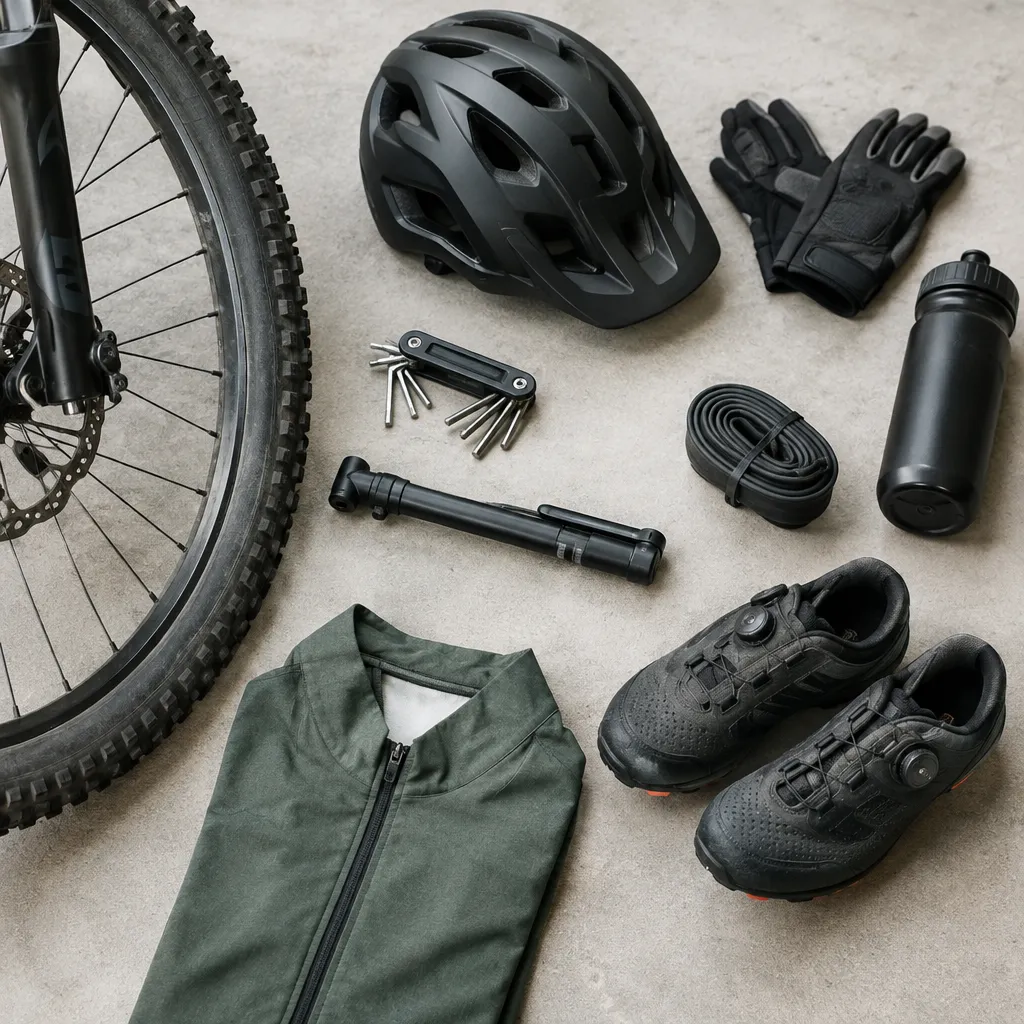
1. Check your bike and gear before setting out
Before each ride, check that both brakes work, the tires look properly seated and inflated, and the wheels spin without obvious rubbing or looseness. Fasten your helmet and confirm it sits level and secure. Carry water, a suitable layer and a way to contact someone if your route or conditions call for it.
A quick check can reveal problems before they become harder to manage on a trail. For more preparation around riding in Morocco, see our first-time cycling tips.
2. Set a relaxed, balanced bike riding position
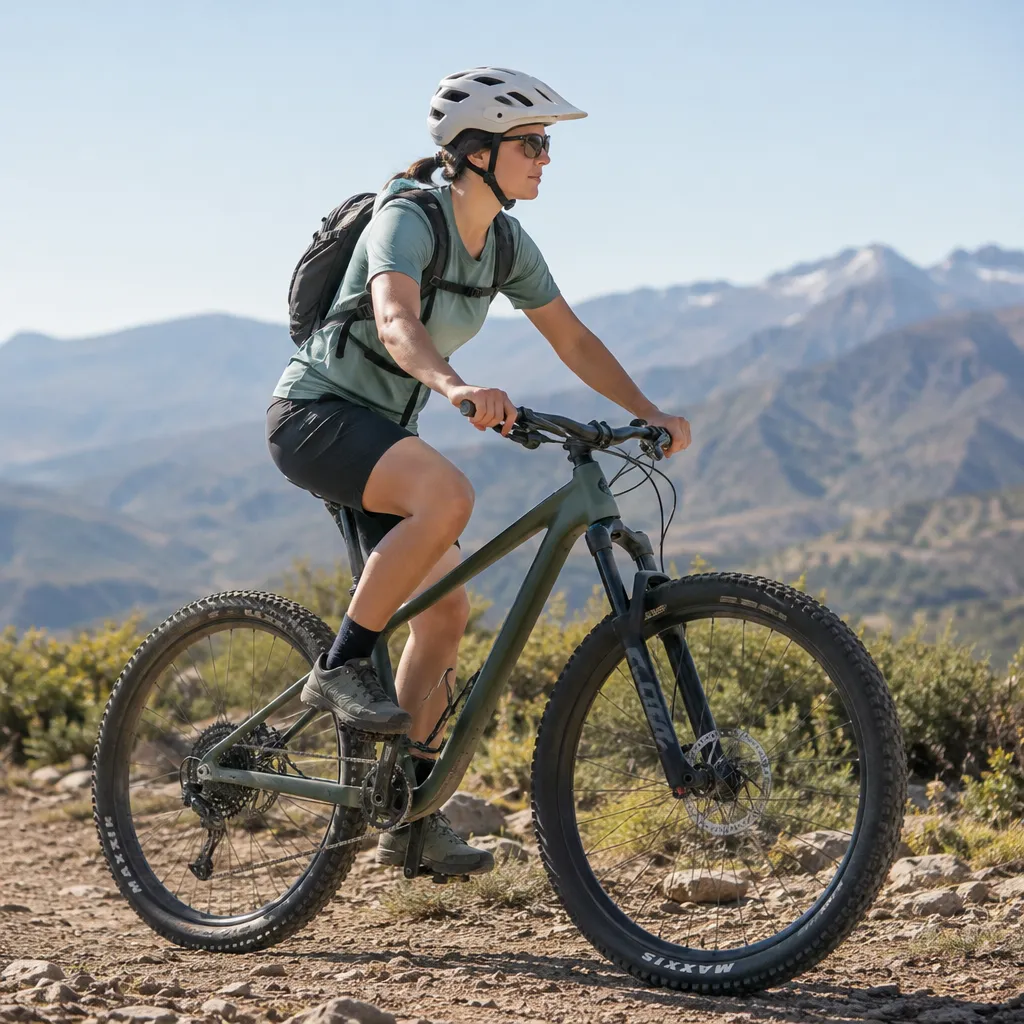
Keep your elbows slightly bent, hands relaxed on the grips and pedals level when coasting over uneven ground. Look ahead along the trail rather than down at the front wheel; this gives you more time to notice changes in the surface and adjust your line.
Aim to move comfortably with the bike instead of locking your arms or gripping tightly. When you want to improve your awareness of surface changes, our guide to reading trail terrain offers a useful next step.
3. Shift before the trail gets steep
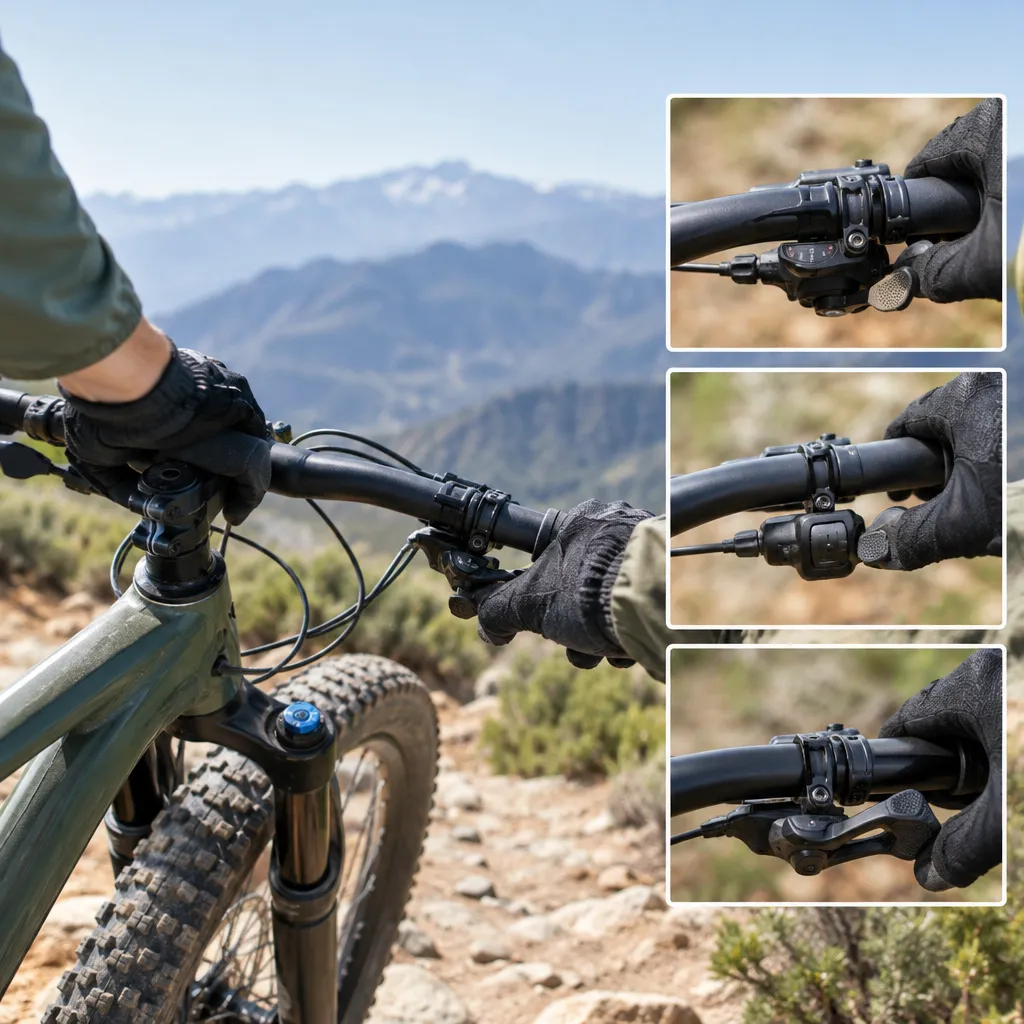
Choose an easier gear before a climb becomes steep, while you can still pedal smoothly. Ease pressure on the pedals briefly as you shift, then keep a steady cadence. Changing gears under heavy force can make shifting rough and interrupt your rhythm.
If a climb is longer than expected, shift down in small steps rather than waiting until pedaling feels strained. On unfamiliar routes, include trail-user awareness in your decisions; our guide to Trail User Safety explores why conditions and context matter.
4. Brake smoothly and control your speed
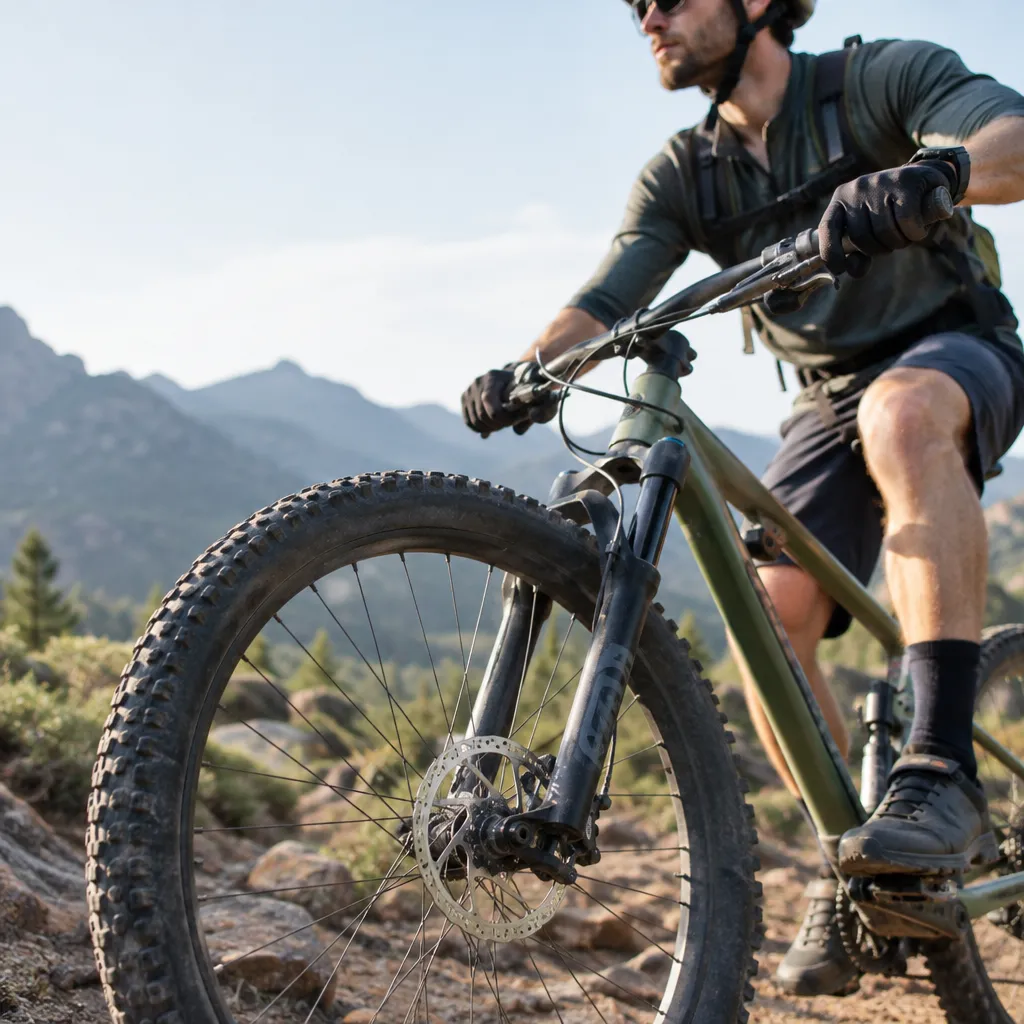
Use both brakes progressively to reduce speed, and do most of your slowing before a turn or obstacle. Keep your body balanced rather than throwing your weight abruptly backward. Sudden, hard braking can unsettle the bike, especially on loose or uneven surfaces.
Practice gentle braking on a clear, level area so you can feel how your mountain bike responds. If the surface is slippery or steep, slow earlier and leave more space to react instead of relying on a last-second stop.
5. Look through turns and corner with control
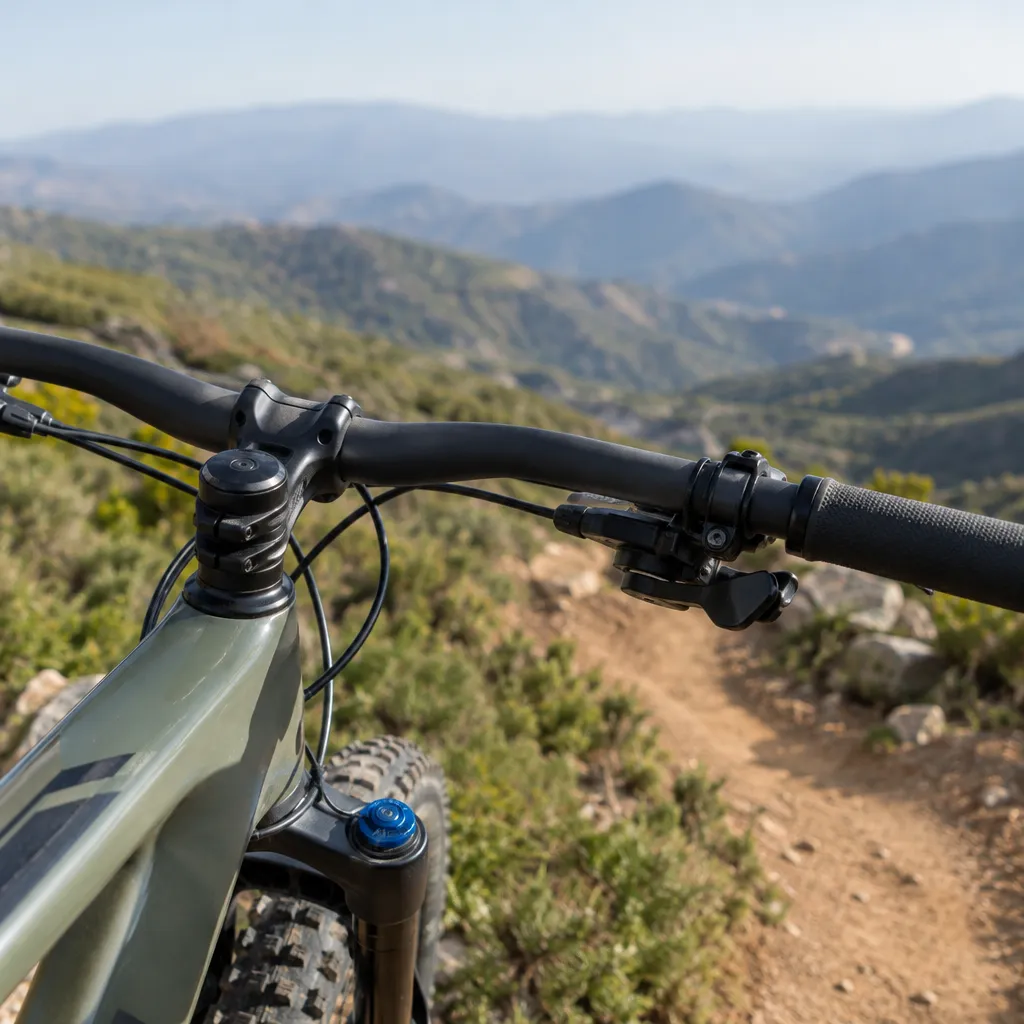
Choose a clear line before entering a turn, then look toward its exit rather than staring at the front tire. Keep your body stable and allow the bike to lean into the curve; use a speed that lets you hold your chosen line without grabbing the brakes mid-turn.
Start with broad, gentle corners on predictable ground. A tight bend, loose gravel or poor visibility changes what a safe line looks like, so reduce speed and make a conservative choice when you cannot see the whole turn.
6. Pace climbs and descents to stay in control
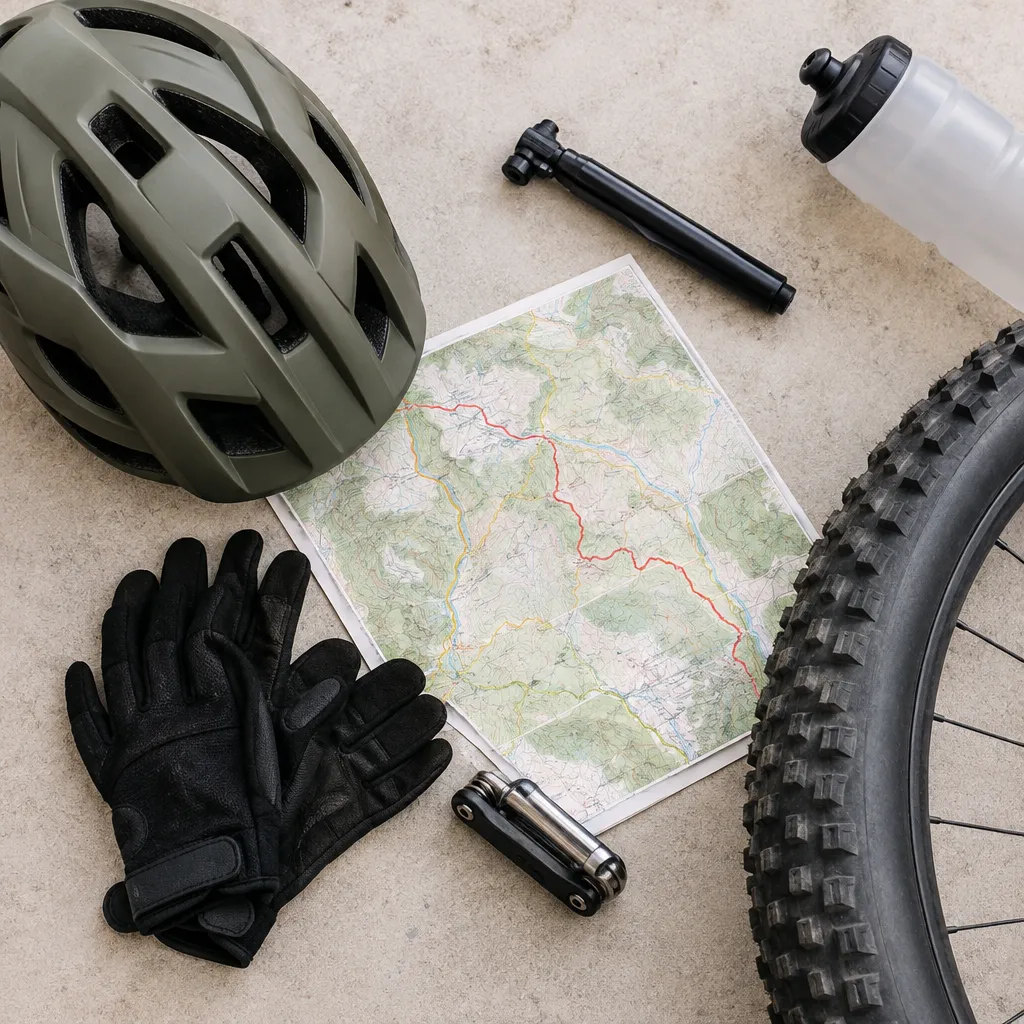
On climbs, settle into a sustainable effort that lets you keep pedaling and steer smoothly. Standing can help in some situations, but it is not necessary for every slope. If your effort becomes frantic, ease off or pause somewhere safe rather than losing control of your line.
On descents, choose a speed that leaves room to respond to the ground ahead. Avoid chasing other riders or letting momentum carry you beyond your comfort level. A controlled descent is one where you can still make deliberate decisions.
7. Build trail skills with a simple practice progression
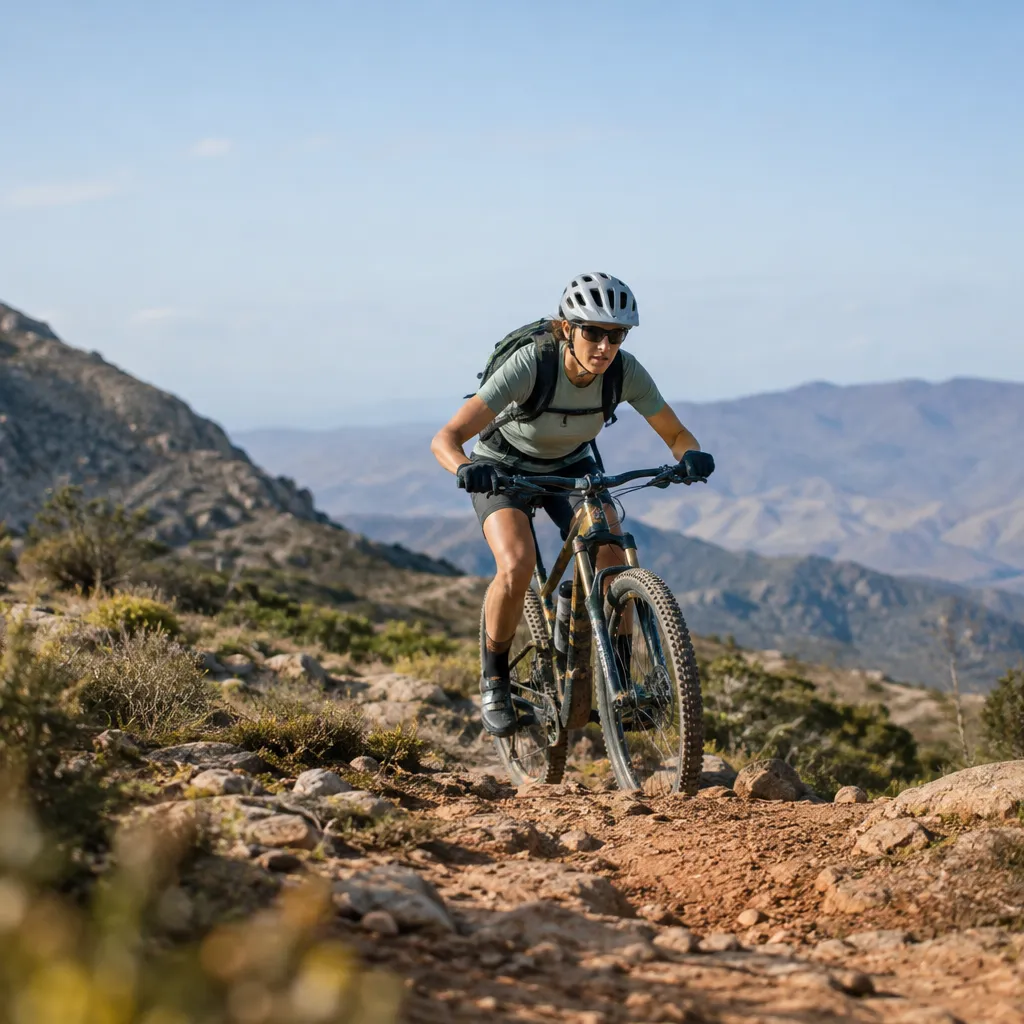
Practice in order: start and stop on flat ground, ride straight while looking ahead, make wide turns, then repeat gentle braking and shifting on a mild slope. Only after these feel predictable should you try small, visible trail features at a controlled speed.
Build consistency before increasing difficulty. Drops, jumps and other technical moves are advanced skills, not requirements for ordinary trail riding. Skip a feature if you cannot see a clear line or do not feel ready to ride it safely.
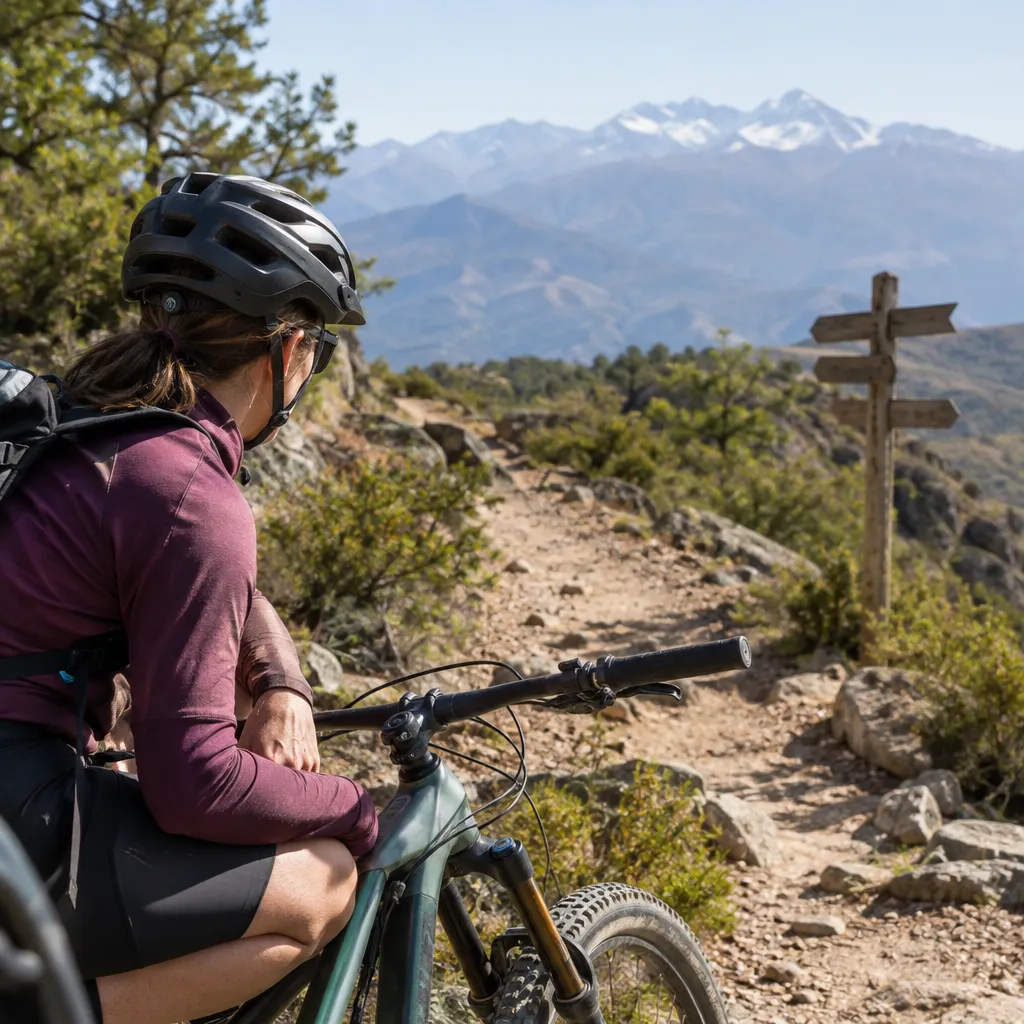
8. Check trail conditions and choose a suitable first route
Before setting out, check the route’s length, steepness, surface, weather and options for turning back. A smooth path with gentle gradients is a more useful starting point than a route described only as “easy”: obstacles, exposure and changing conditions also affect how challenging it feels.
In Morocco, routes around Marrakech, Imlil and the High Atlas can differ greatly in terrain and elevation. Ask a knowledgeable local guide about current conditions and route demands when you are unsure. Choose a first ride that leaves room to build confidence gradually.
Bike Riding FAQs
What is bike riding called?
Riding a bike is commonly called cycling. Mountain biking or MTB refers specifically to riding a mountain bike on trails and other off-road terrain.
What is bike riding?
Bike riding is traveling on a bicycle by pedaling and steering. It can mean road cycling, everyday transport or off-road riding, depending on the bike and route.
Is bike riding good for losing belly fat?
Bike riding can contribute to overall physical activity, but it cannot target fat loss in one area. Changes in body fat vary, and are influenced by factors such as diet, activity and individual health.
What is the 75 rule in cycling?
The 75 rule is a training guideline suggesting that about 75% of training time should be at lower intensity, with the remaining time at higher intensity. It is not a requirement for casual trail riding.
How much biking is equal to 10,000 steps?
There is no exact bike-to-step conversion because effort, terrain and pace vary. If you are tracking activity, use the same measure consistently rather than treating cycling time or distance as a fixed step equivalent.
How should a beginner choose a mountain bike trail?
Choose a short, clearly described route with manageable gradients and a surface you can handle, and check for obstacles, weather and exit options. If the description is unclear, seek local guidance before riding.
When should I shift gears on a mountain bike?
Shift before a climb or other change in terrain makes pedaling difficult. Ease pressure on the pedals as you shift, and avoid waiting until you are pushing hard on the cranks.
Should I use both brakes when slowing down on a trail?
In general, apply both brakes smoothly and progressively, slowing before turns or obstacles. Adjust your braking to the slope and surface, and avoid grabbing either brake suddenly.
Recommended next steps
Use these basics on a familiar, low-pressure route before adding technical features or choosing a more demanding trail. For a new area, check current conditions and match the route to your experience, fitness and comfort with the terrain.
Hannah Whitaker is an adventure travel editor with a background in outdoor travel writing and guided cycling trips. She specialises in mountain biking and trekking in Morocco, including routes around Marrakech, the Atlas Mountains and the Sahara. Drawing on local guides’ knowledge, she explains trail conditions, practical preparation and the cultural context of each journey. Her articles help riders assess whether a route suits their ability and plan a rewarding day or multi-day trip.