 13 Nov 2026
 7 min read
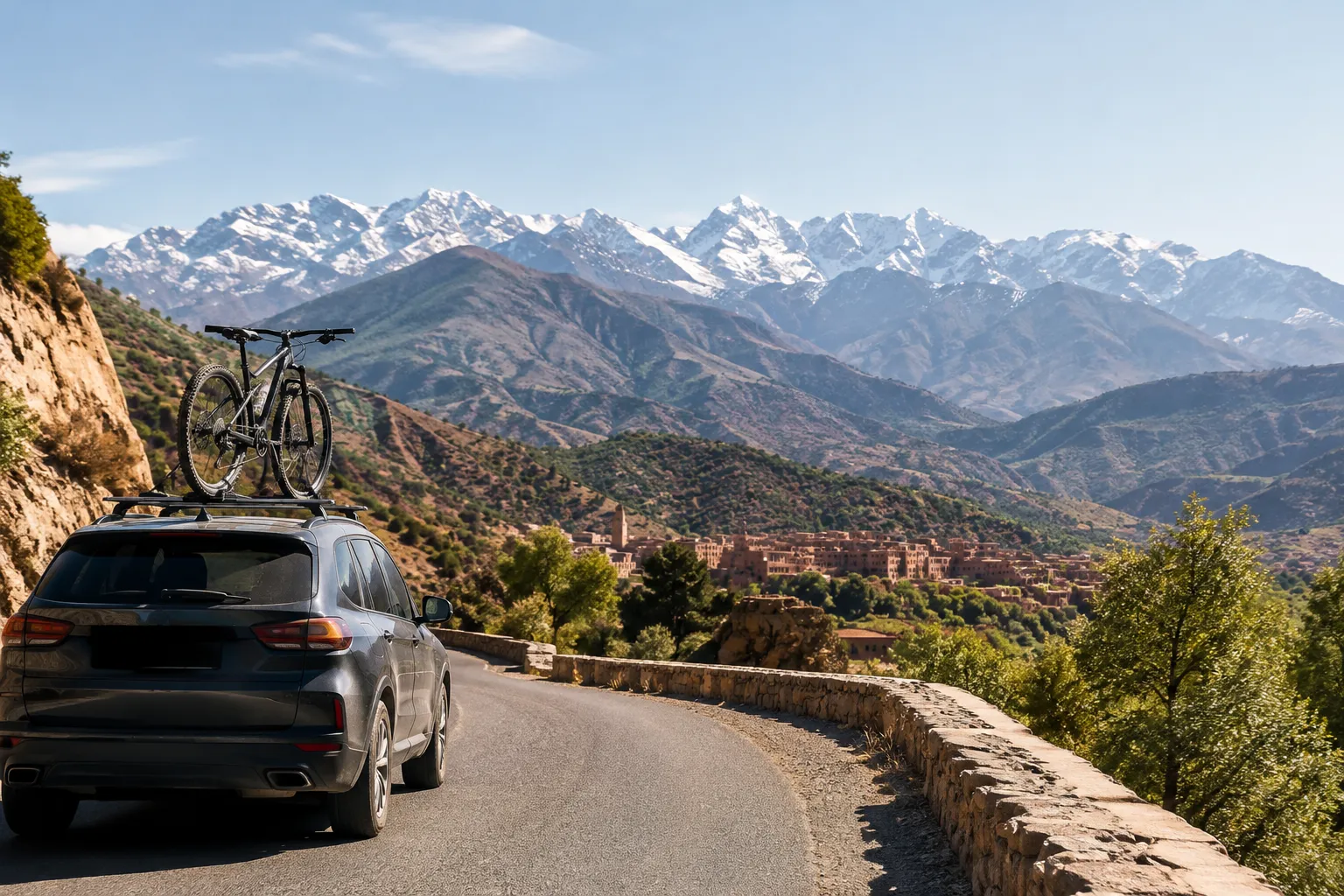
The drive time from Marrakech to the Atlas Mountains depends on which village or activity start point you choose; the mountain range has no single destination or journey time. For a day trip, set the exact endpoint first, then check the route and conditions for that day.
How long is the drive from Marrakech to the Atlas Mountains?
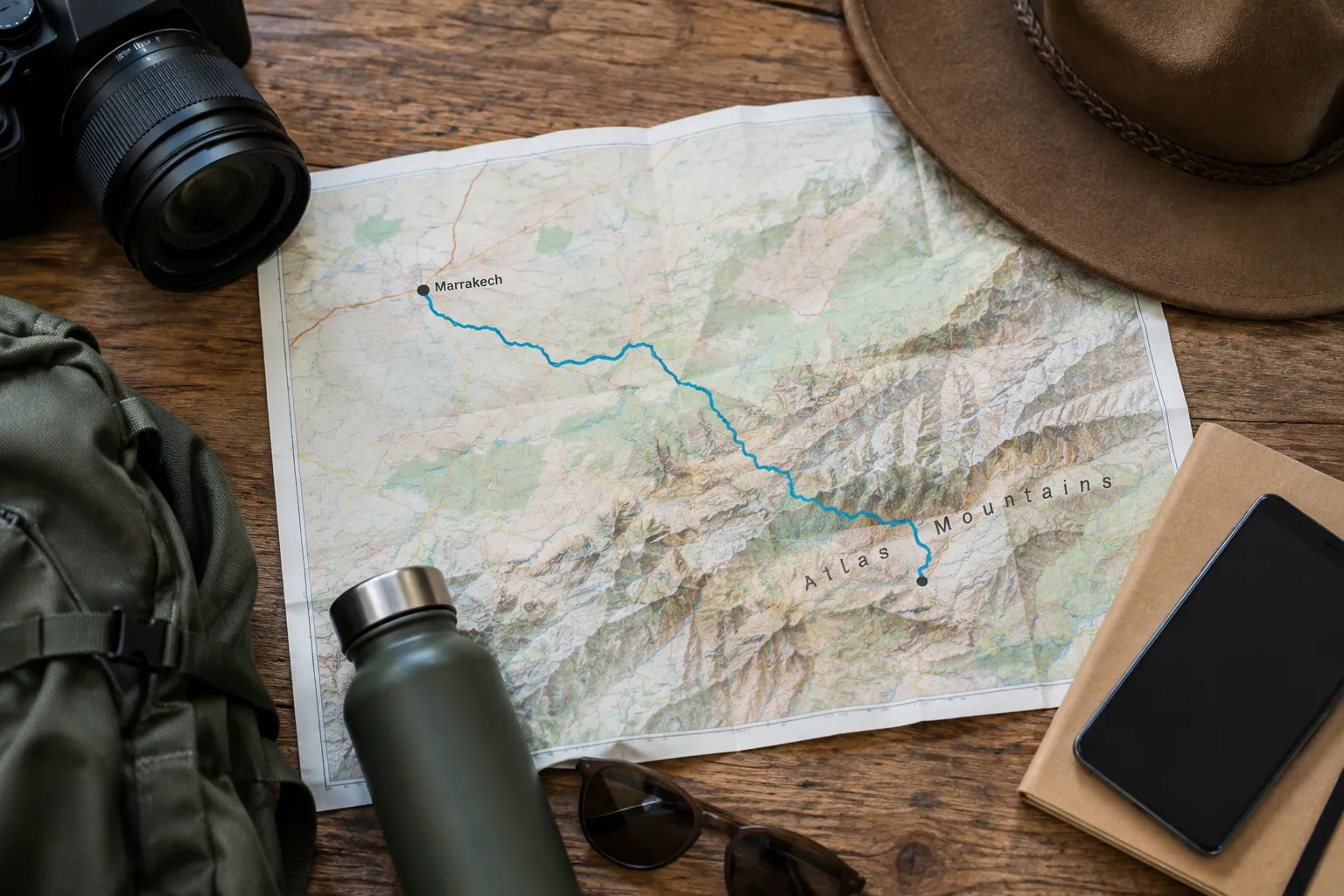
There is no single drive time for the Atlas Mountains: the journey depends on the specific destination, route and conditions, so check the full route before setting your day-trip schedule.
A trip to Imlil, for example, has a defined endpoint: Atlas Mountain Bike is based in Imlil Village, in the High Atlas. That location is more useful for route planning than the broad phrase “the Atlas Mountains”, which could mean a different village, trailhead or activity location.
To find a realistic estimate, enter your exact destination in a route planner and check the journey from your Marrakech starting point. Look at the route and arrival point, not just the headline duration. If your plan includes a walk or ride that starts outside the village centre, use that activity’s actual meeting point.
The drive is only one part of a day trip from Marrakech to the Atlas Mountains. Stops, time in a village and the activity itself all extend the day. A short-looking route on a map does not tell you how much time you will have at your destination.
For more context on distance rather than drive duration, see our guide to how far the mountains are. It helps distinguish the broad region from the particular place you plan to visit.
How distance and route change the journey
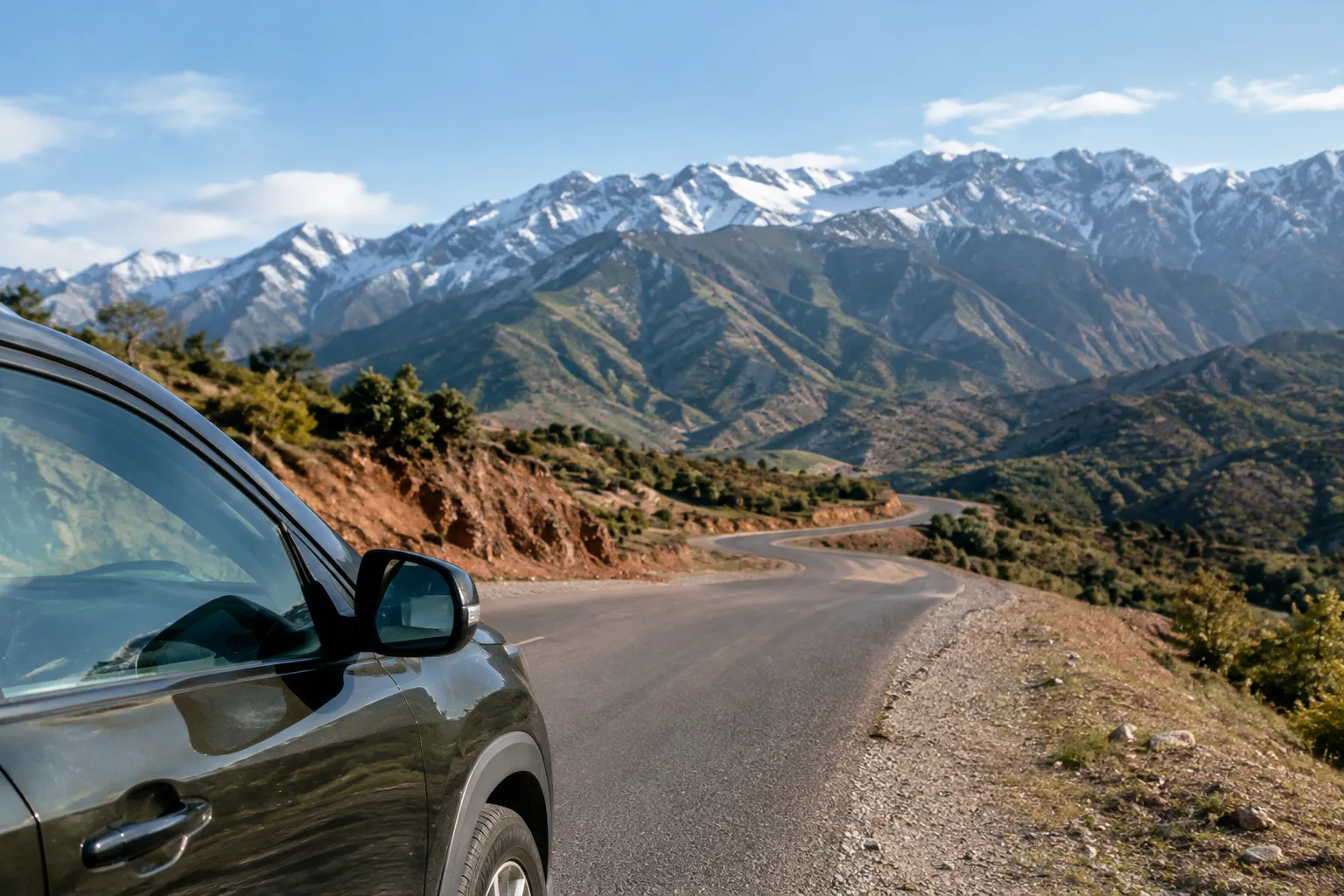
The closer the chosen endpoint is to Marrakech, the less driving time it may require; the route to a particular valley or village matters more than the mountain range’s overall distance.
A practical plan begins with a destination, not a general search for “Atlas Mountains”. The High Atlas, Imlil and Toubkal refer to places or areas that can involve different onward routes and different amounts of time on the road. Confirm the final point where you will be dropped off or start an activity.
For a destination such as Imlil, plan the route to the village itself. If you are arranging a walk or ride, confirm whether its start point is in Imlil or elsewhere. A route planner’s estimate to one point cannot automatically be applied to another.
When comparing routes, check:
- The exact start and end points, including the activity meeting point.
- The suggested road route, rather than distance alone.
- Whether your plan includes stops or a change of vehicle.
- The return journey as well as the outward drive.
A direct route may look simplest, but the useful comparison is the whole day: how long you expect to travel, what you want to do after arrival, and whether the return fits your schedule. For a broader view of the options, read our guide to a day trip from Marrakech.
What can slow the drive from Marrakech?
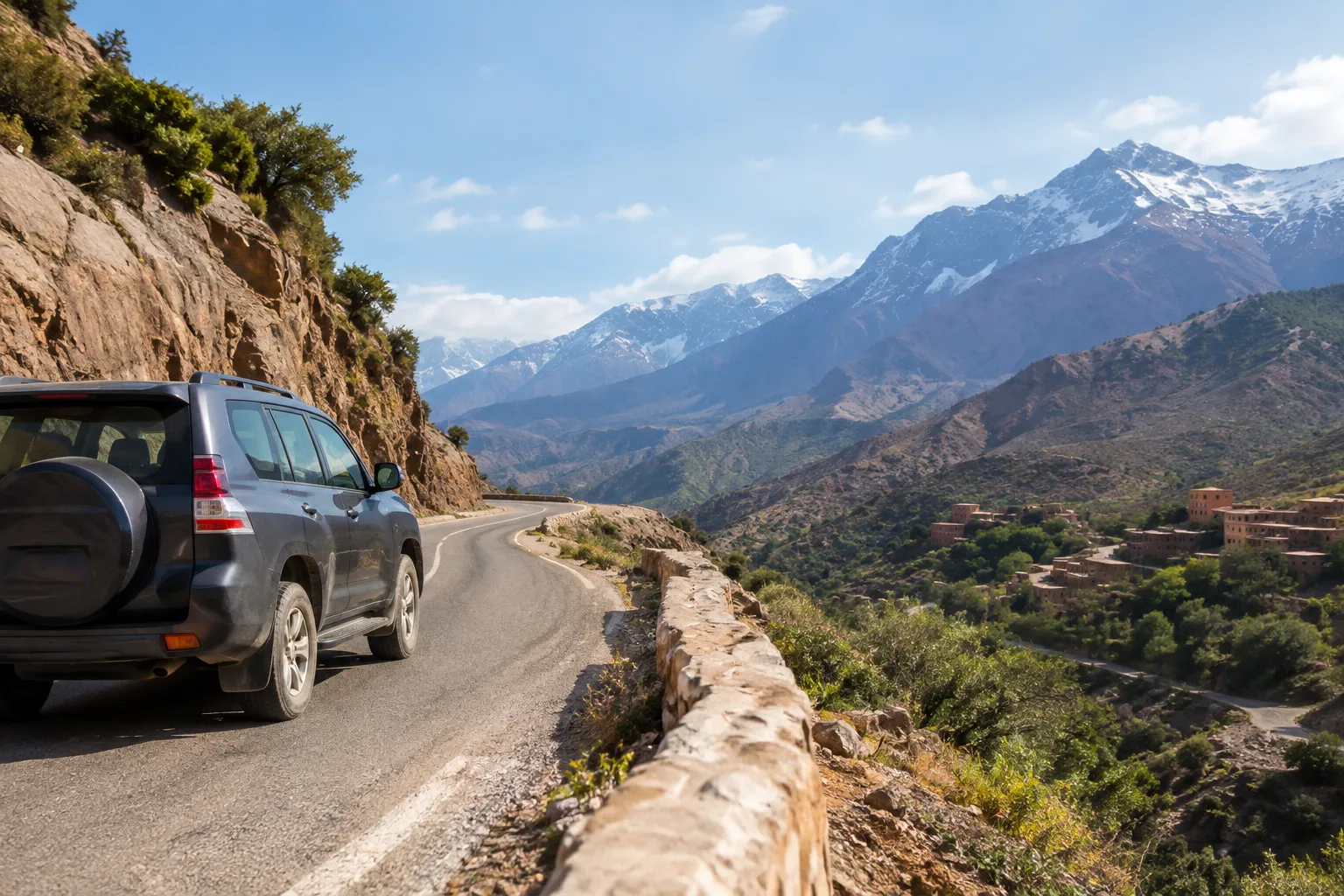
Traffic, road conditions, weather and the exact endpoint can all affect how long the drive takes, so leave room for variation rather than relying on one route estimate.
Check the route close to departure, especially if your plans depend on reaching a particular activity start point. Traffic through or leaving Marrakech can change the journey, while the road beyond the city may involve mountain conditions that differ from the urban route. A map estimate is a planning aid, not a guarantee of arrival time.
Weather matters on mountain roads. The UK government’s Morocco travel advice warns that mountain roads can be hazardous in poor weather. If conditions are adverse, reconsider the plan and follow current local advice rather than trying to preserve a tight itinerary.
The season also affects what to expect in the mountains. A Met Office climate report describes cooler, wetter winters and snowfall on higher ground, including the High Atlas. Those conditions can influence both the journey and the activity you have planned; check the forecast and local road information for your dates.
For a return trip, allow for the possibility that the outward and return drives will not take the same amount of time. Recheck conditions before setting off back, and avoid scheduling a demanding activity so tightly that a road delay leaves no margin.
Choose a day in the Atlas Mountains to suit your pace
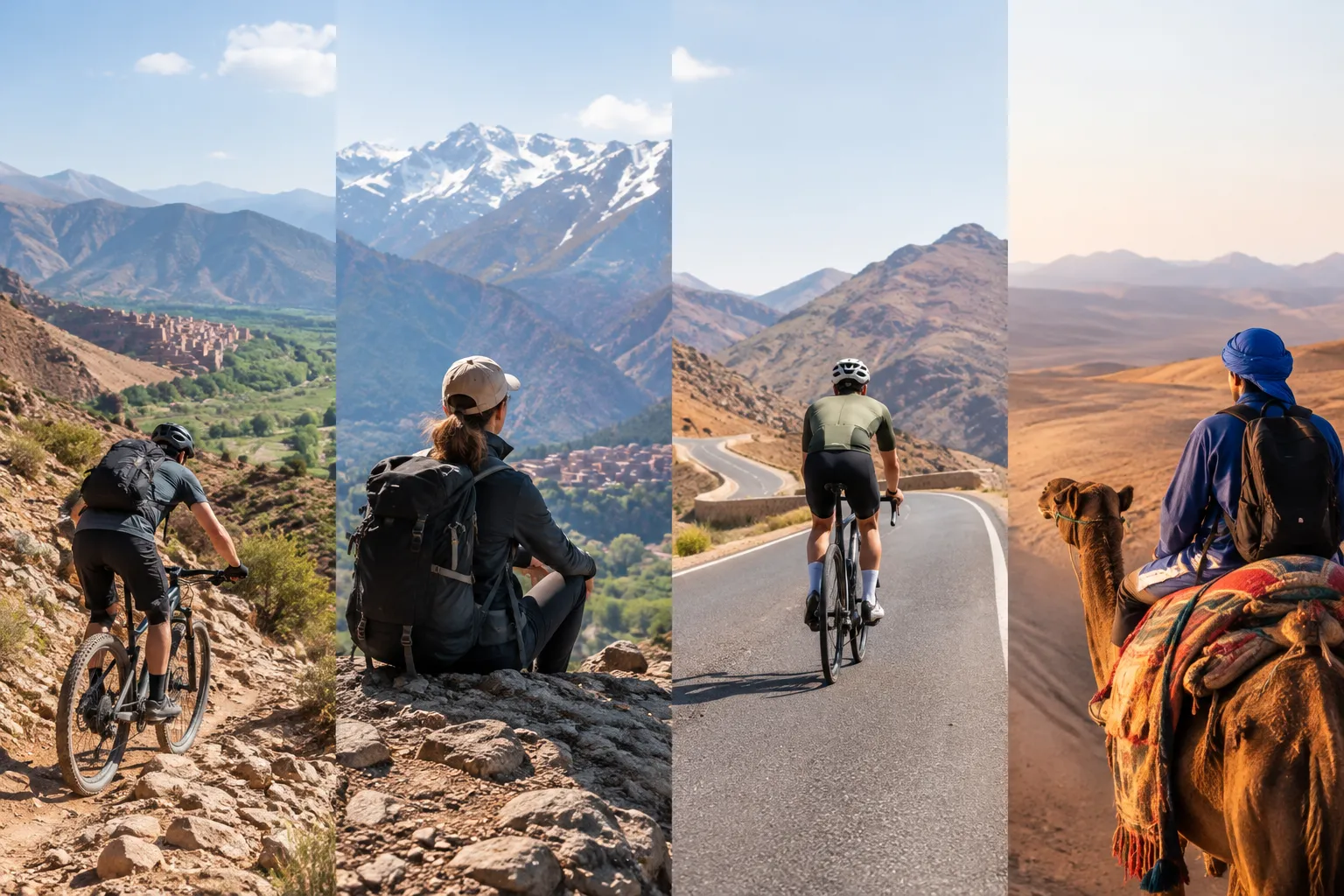
The right day trip depends on how much time you want for activity, how active you want to be and how much of the day you are comfortable spending travelling.
Start by deciding what matters most: a village visit, a walk or a ride. Each uses the time after arrival differently. A village-focused outing may involve less planned exertion; a walk or ride needs an activity duration as well as the drive. None is automatically the right choice for every visitor.
Village visits for a gentler day
A village visit suits travellers who want time in a mountain settlement and local surroundings without making a long walk or ride the main event.
Choose the village first, then confirm what the visit involves and how much time you want to spend there. A relaxed pace can still make for a full day once you add the outward and return drives, stops and time on foot. If you are travelling with people who have different fitness levels, agree how much walking everyone is comfortable with before you set the schedule.
Scenic walks for time on the trails
A walking day suits visitors who want to explore on foot, provided the planned walk fits the available daylight and the group’s ability.
Ask for the walking route, expected duration, terrain and elevation before deciding. These details help you judge the effort involved more meaningfully than a label such as “easy” or “challenging”. Add the walk to the driving time, and leave room for breaks rather than assuming the activity begins as soon as you arrive.
The NHS explains altitude sickness and its symptoms, along with ways to reduce risk on trips at altitude. Read its guidance when planning a higher-altitude outing; anyone with personal health concerns should consult a qualified health professional about their circumstances.
Mountain biking or e-biking for an active day
A guided mountain bike or e-bike outing may suit travellers who want riding to be the main activity and prefer to match the route to their experience.
Atlas Mountain Bike offers guided mountain biking and e-bike adventures around Marrakech and the Atlas Mountains, with Imlil among the places in its operating area. The business was founded in 1998 and is based in Imlil Village. Its offerings include mountain bike trips in Morocco and gravel biking in the Atlas, alongside multi-day tours and trekking-style excursions.
Before choosing a ride, ask about the route’s terrain, expected riding time and how the outing accounts for different experience levels. A mountain bike day is not a gentler substitute for a village visit: it makes physical activity central to the plan. E-biking is another riding format, but riders should still understand the route and the effort involved.
If that active format fits your plans, explore mountain biking in Morocco. If you would rather spend the day walking or visiting villages, choose an itinerary centred on those interests instead.
Allow enough time for the full day trip
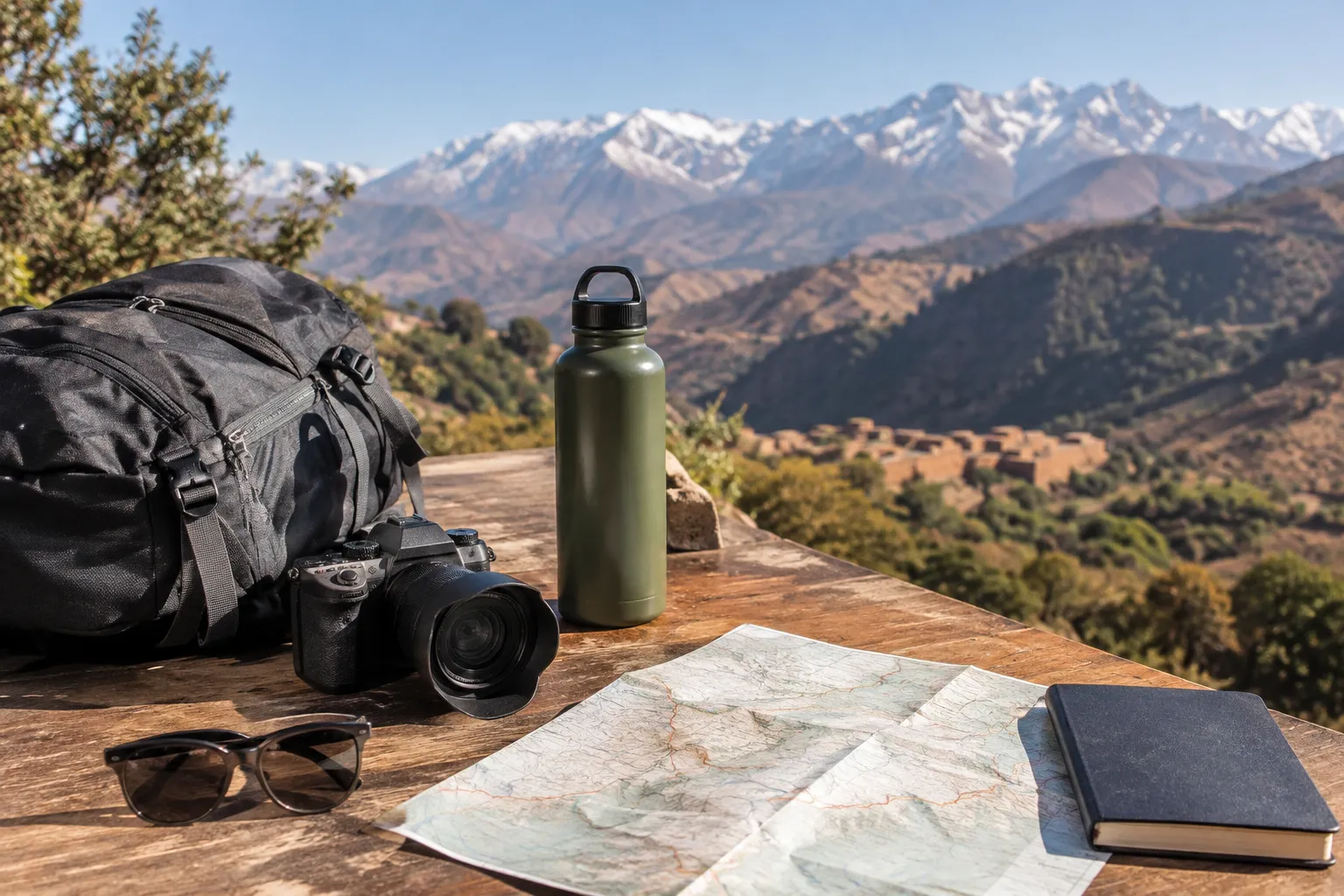
Allow time for both legs of the drive, the activity and any planned stops; the route estimate alone cannot show how much of the day remains in the mountains.
Use four checks to compare day-trip schedules:
- Compare the drive to the actual destination, not just to the general mountain area.
- Add the stated duration of the walk, ride or village visit.
- Include any stops and transitions in the plan.
- Check that the return journey has room for delays and changing conditions.
For example, compare a village visit and a guided ride by adding each activity’s stated duration to the same route estimate for the relevant destination. Then include the same planned stops and return allowance in both schedules. The result is a fairer comparison than looking at the outward drive alone. If the activity durations or exact start points differ, use those differences rather than assuming the days are interchangeable.
This method also helps identify a rushed itinerary. If the schedule leaves little time for the activity after accounting for travel, choose a closer destination, reduce the number of stops or select a shorter outing. A day trip does not need to maximise distance travelled; it needs to leave enough time for the experience you chose.
Plan your Atlas Mountains day from Marrakech
Plan the day around a named destination and its activity, then check the route and current conditions before deciding how much time to allow.
- Choose the village, trailhead or activity location you want to reach.
- Check the route from your Marrakech starting point to that exact endpoint.
- Confirm the activity’s duration, terrain and start point with its organiser.
- Add time for stops, the return journey and possible delays.
- Review the weather and relevant road advice close to departure, then adjust the plan if conditions call for it.
This sequence gives you a practical answer to how long the drive will take for your particular trip, without treating the Atlas Mountains as one point on a map. If your interests are divided between walking, village visits and riding, compare the time each activity needs before settling on the day’s destination.