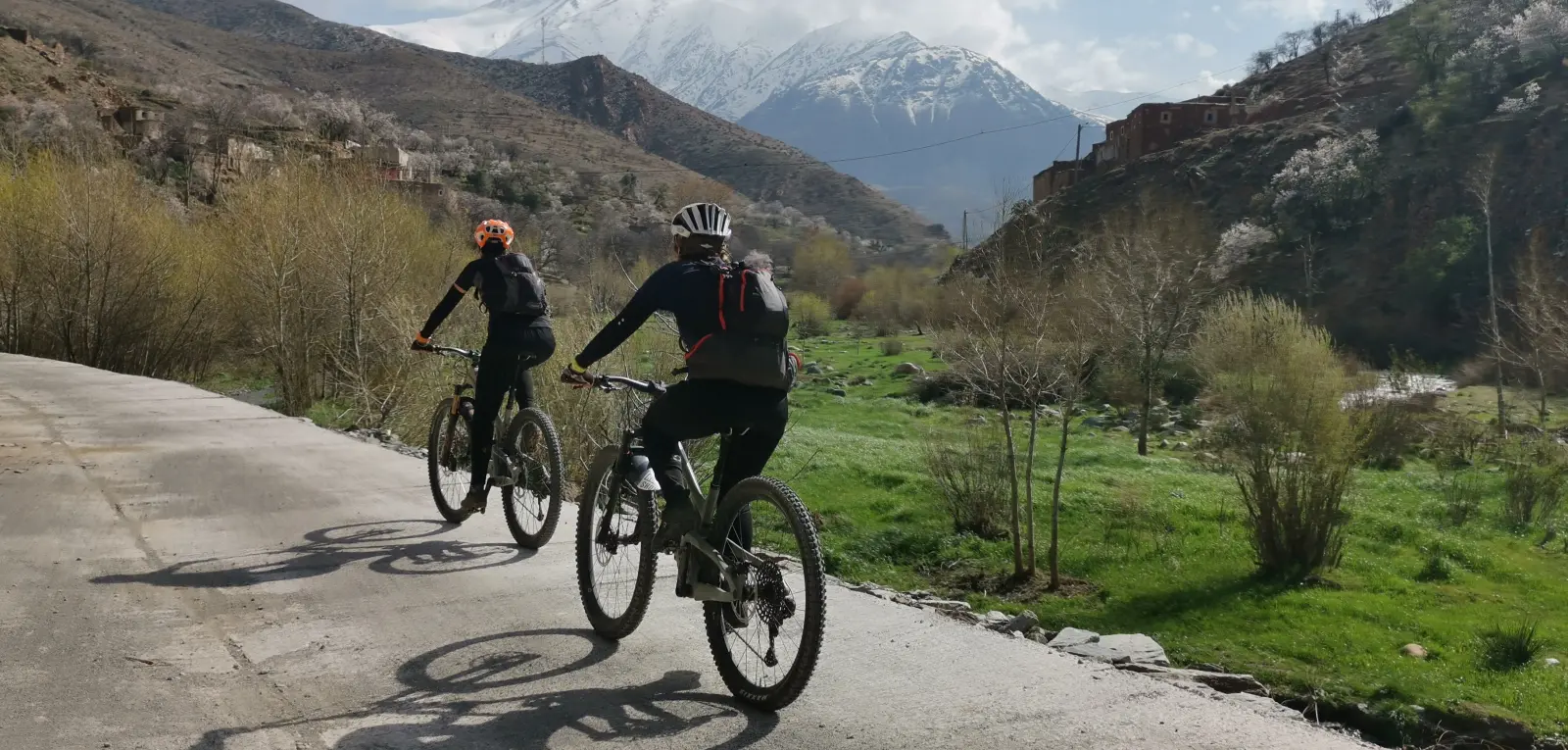
Riders often ask which type of mountain bike works best in the High Atlas. It is a good question, because the terrain here is varied: long dirt-road climbs, smooth plateau tracks, rocky mule paths and technical descents, sometimes all in a single day. Both hardtails and full-suspension bikes can do the job. They just do it differently.
Quick definitions
Hardtail: a bike with front suspension (a suspension fork) and a rigid rear end. Simple, lighter and usually cheaper.
Full suspension: a bike with both a suspension fork and a rear shock, so both wheels can move over bumps. More comfortable and capable on rough ground, but heavier and more complex.
Suspension travel, measured in millimetres, describes how far the suspension can move. For Atlas trails, around 120 to 150 mm is a sweet spot for most riders.
How they feel on Atlas trails
On long climbs
Many Atlas climbs are on dirt roads and wide tracks. Here, a hardtail feels efficient and light. Every pedal stroke goes straight into forward motion. Modern full-suspension bikes climb very well too, especially with a lockout or climb switch, but they are a little heavier.
On rocky, technical climbs, the full-suspension bike often has the advantage. The rear wheel follows the ground and keeps traction, so you are less likely to spin out on loose stones.
On rocky descents
This is where the difference is clearest. Atlas descents are full of rock gardens, stone steps and loose sections. On a full-suspension bike, the rear wheel absorbs the hits, the bike stays calmer and you can ride faster with more control and less fatigue.
On a hardtail, you feel every rock through your legs and back. Skilled riders love the precision and feedback, but it is more demanding, especially on long descents and after several days of riding.
Over several days
Fatigue builds up on a multi-day trip. By day four or five, the comfort of full suspension makes a real difference to your back, arms and legs. Many riders who own hardtails at home are surprised by how much fresher they feel on a full-suspension rental after a week in the Atlas.
On smooth trails and plateaus
On the Kik Plateau, Agafay tracks or easier village paths, a hardtail is perfectly comfortable and very enjoyable. The extra suspension of a full-suspension bike is less important here.
Which one should you choose?
Choose full suspension if:
- your trip includes technical, rocky descents such as Tizi n'Mzik, Azzaden or the Saghro
- you are riding for four days or more
- you want comfort and control on long descents
- you are not a very experienced technical rider and want extra margin for error
- you have back or joint issues
A hardtail is fine if:
- you are mostly riding plateaus, dirt roads and smoother singletrack
- you are on a day trip or a short trip
- you are an experienced rider who enjoys the precision of a hardtail
- you are riding gravel-style routes such as Agafay
For most of our multi-day High Atlas trips, we recommend a full-suspension trail bike. For day trips on easier terrain, a quality hardtail is a great choice.
What about e-bikes?
Most e-mountain bikes are full suspension, which is ideal for Atlas trails. The extra weight of the motor and battery is well controlled by rear suspension on rough descents. If you are thinking about an e-bike, read e-bike vs mountain bike.
Other features that matter as much as suspension
- Tyres: wide, grippy tyres around 2.3 to 2.5 inches, ideally tubeless, make a huge difference on loose and rocky ground. See how to handle loose gravel.
- Brakes: powerful hydraulic disc brakes are essential for long descents.
- Gearing: a wide-range drivetrain with easy gears for long climbs at altitude.
- Dropper post: lowering the saddle on descents makes steep, technical trails much easier and safer.
- Geometry: a modern trail geometry, with a slacker head angle, feels more stable on steep descents.
- Fit: a correctly sized bike, set up for your height and riding style, is more important than any spec sheet.
Maintenance considerations
Hardtails have fewer moving parts, so they are simpler to maintain and less likely to have problems in remote places. Full-suspension bikes need more care: pivot bearings, rear shock servicing and correct air pressure. On a guided trip, the support team handles this. If you bring your own full-suspension bike, have it serviced before you travel and bring a shock pump.
Bringing your own or renting?
If you bring your own bike, choose the one that suits the trip best, not just your favourite. If you own both, bring the full-suspension bike for a technical week. If you rent, ask exactly what model and travel you will get. Read bring your own bike or rent? for the full comparison.
The bottom line
A good hardtail will take you almost anywhere in the Atlas. A good full-suspension bike will take you there with more comfort, more control and more energy left for the next day. For multi-day trips on rocky trails, full suspension is our recommendation. For shorter or smoother rides, ride what you enjoy. And whatever you ride, our tips on descending rocky trails will help you get the most from it.