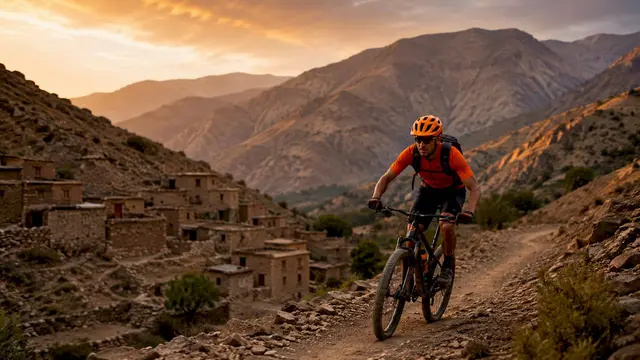
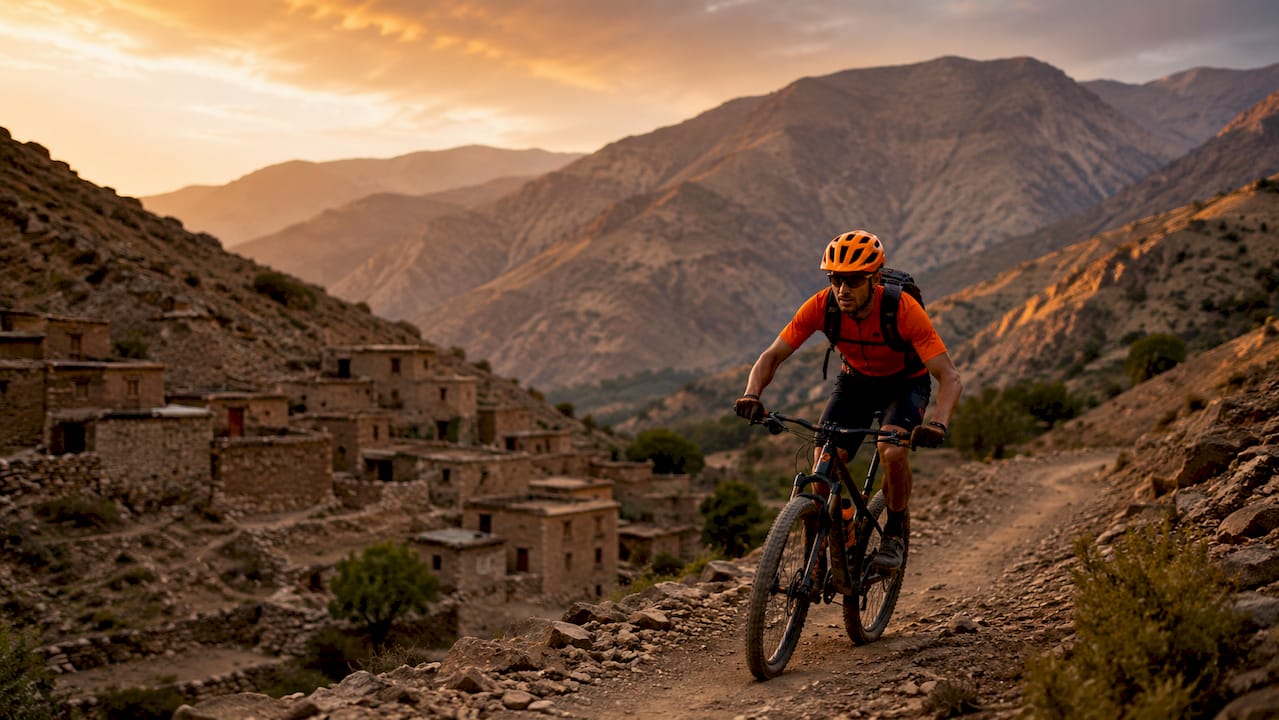
Cycling through Morocco’s Atlas Mountains is the most direct way to learn Amazigh traditions on cycling routes that connect ancient villages, rugged passes, and living cultural practices. The Amazigh people, the indigenous inhabitants of North Africa, have shaped the High Atlas for thousands of years through their language, architecture, and communal values. A bike gives you access that no bus or car can match. You move at a pace that invites conversation, spontaneous stops, and genuine connection with the people who call these mountains home. Atlasmountainbike has spent over 25 years guiding cyclists through this terrain, and the cultural depth of these routes is what keeps riders coming back.
What are the key Amazigh traditions cyclists can learn en route?
Amazigh cultural cycling begins with understanding who the Amazigh people are and what makes their traditions distinct. The term “Amazigh” is the preferred name for the indigenous people historically called Berbers. Recognizing this distinction shows respect and signals cultural awareness before you even clip into your pedals.
Language: Tamazight on the trail
Tamazight is an official Moroccan language, and its living presence in villages along cycling routes makes it one of the most immediate cultural encounters you will have. The language is preserved through oral transmission, poetry, and daily conversation in settlements along the High Atlas. Learning even five phrases before your ride changes how locals receive you. “Azul” (hello) and “Tanmirt” (thank you) open doors that silence keeps shut.
Pro Tip: Pack a small printed card with 10 basic Tamazight phrases. Locals respond with visible warmth when a cyclist makes the effort, and the exchange often leads to an invitation for tea.
Architecture, crafts, and cuisine
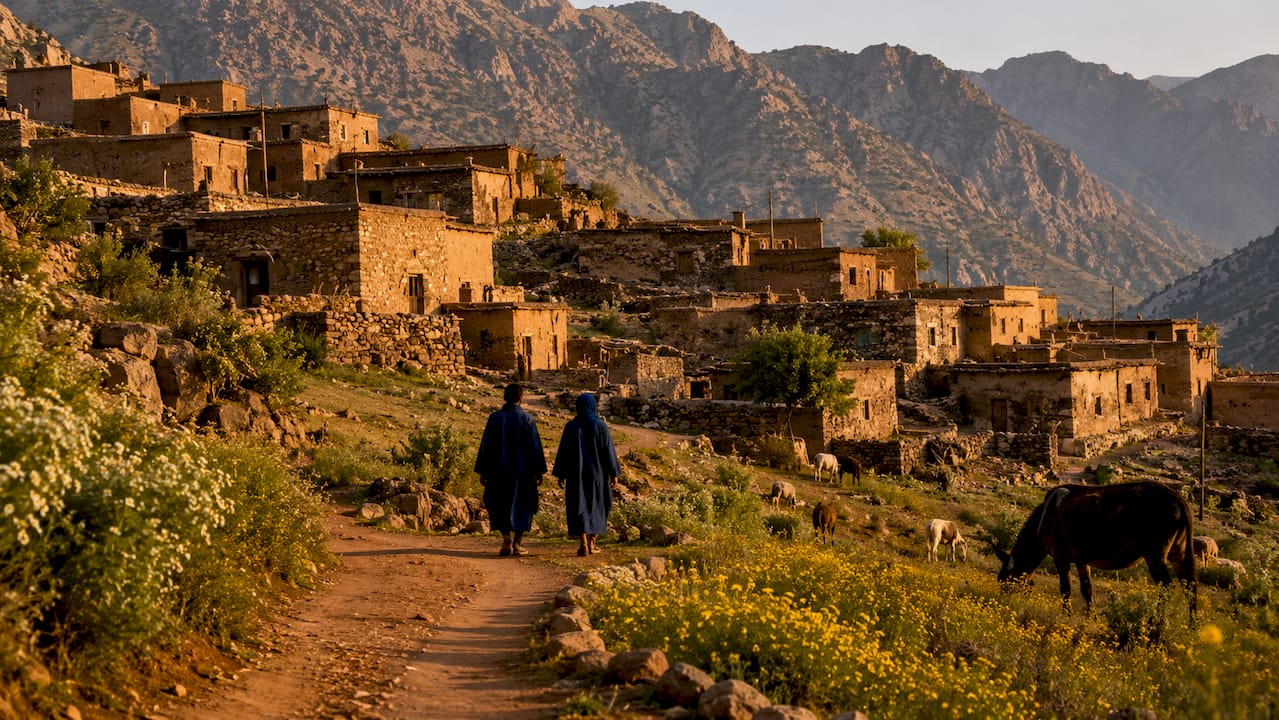
Traditional Amazigh architecture uses earth and stone in ways that blend with the mountain landscape. Flat-roofed homes, communal granaries called agadirs, and hand-carved wooden doors are visible from the saddle as you pass through villages. Stopping at a local artisan’s workshop to watch carpet weaving or pottery reveals a craft tradition passed down through generations. Meals at family-run guesthouses typically feature tagine, couscous, and fresh-baked bread cooked in clay ovens. These are not tourist performances. They are daily practices you observe by slowing down.
Social customs and hospitality
Amazigh hospitality is a core social value, not a formality. Accepting an offer of mint tea is a sign of respect, not an obligation to buy anything. Communal farming practices, including traditional irrigation systems called seguias, are visible along many routes and reflect a deep relationship with water and land. Staying in family-run guesthouses places you inside this social fabric rather than observing it from the outside.
Which cycling routes are best for discovering Amazigh heritage?
The best cycling routes in Amazigh regions of the High Atlas are concentrated around the Marrakech hinterland, where paved roads give way to gravel tracks and the villages grow quieter and more traditional the higher you climb.
Route comparison: cultural depth vs. physical demand
Route | Duration | Cultural highlights | Difficulty |
|---|---|---|---|
Amizmiz to Ourika Valley | 4 days | Weekly souks, terraced farms, Amazigh guesthouses | Moderate |
Marrakech to Imlil | 2 days | Kasbah villages, mule tracks, High Atlas views | Moderate to hard |
Route of a Thousand Kasbahs | 5+ days | Fortified villages, Draa Valley culture, remote trails | Hard |
Toubkal National Park loop | 3–4 days | Alpine terrain, Berber shepherds, summit views | Hard |
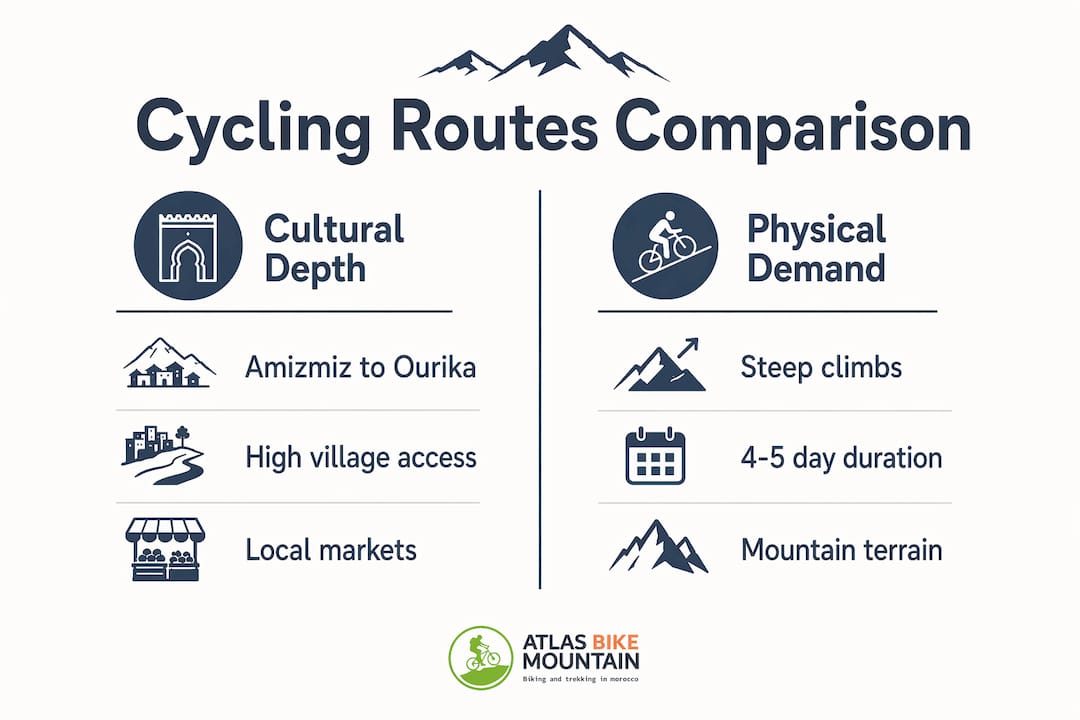
Multi-day cycling expeditions in the High Atlas typically run 2–5 days, connecting villages such as Amizmiz, Ouirgane, and Imlil. The 4-day Amizmiz to Ourika itinerary is the most culturally rich for first-time visitors. It passes through weekly market towns, terraced barley fields, and villages where Tamazight is the primary language.
The Imlil area offers a shorter but more intense introduction. The village of Imlil sits at the base of Jebel Toubkal, North Africa’s highest peak, and the surrounding hamlets are almost entirely Amazigh. The Toubkal National Park MTB tour from Atlasmountainbike covers this terrain with guides who know the cultural context of every stop.
Self-guided vs. supported tours
Self-guided rides give you freedom but remove the cultural interpreter. Without a local guide, you may miss the significance of what you see.
Supported tours with experienced guides provide real-time cultural context, handle logistics, and open doors to private homes and workshops.
Atlasmountainbike’s 7-day High Atlas itinerary combines both: structured cultural stops with enough flexibility for spontaneous encounters.
For cyclists who want to explore Amazigh society by bike without committing to a long expedition, the 2-day Berber villages tour from Atlasmountainbike is a focused and rewarding starting point.
How do you prepare for an Amazigh cultural cycling expedition?
Preparation for high-altitude gravel riding in the Atlas requires attention to gear, fitness, and cultural awareness in equal measure.
Gear up for variable terrain. High-altitude gravel riding in the Atlas demands preparation for elevation, technical terrain, and temperature swings. Pack layers, a windproof shell, and puncture-resistant tires. Temperatures can drop sharply after sunset even in summer.
Acclimatize before you ride. Spend at least one night in Marrakech or a mid-altitude village before tackling passes above 2,000 meters. Altitude fatigue reduces both physical performance and your capacity to engage meaningfully with people you meet.
Learn cultural etiquette. Dress modestly when passing through villages, particularly on market days when communities gather. Ask permission before photographing people or their homes. Remove your helmet when entering a guesthouse or accepting tea.
Carry small gifts. Experienced riders recommend bringing quality loose-leaf tea or small non-perishable items as gifts for guesthouse hosts. These gestures significantly deepen the welcome you receive and reflect an understanding of Amazigh hospitality values.
Plan for remote health and safety. Cell coverage is patchy above 1,500 meters. Carry a basic first-aid kit, water purification tablets, and a downloaded offline map. A support vehicle or experienced guide dramatically reduces risk on remote sections.
Pro Tip: Review the terrain and preparation guide from Atlasmountainbike before your trip. It covers gear specifics for the Atlas’s microclimates and is written by guides with decades of local experience.
Practical tips for deepening your cultural connection on the bike
Cycling through Amazigh villages at the right time and in the right spirit transforms a scenic ride into a genuine cultural exchange. Cycling Morocco at a human pace enables deeper cultural exchange with local historians, artisans, and residents compared to conventional travel. Cyclist Ali bin Towar, featured in a 2026 Al Jazeera documentary, describes how cycling shifts travelers into a receptive mode that builds genuine human connection. Speed is the enemy of cultural depth.
Here are the practices that make the biggest difference:
Time your ride around market days. Weekly souks in villages like Asni and Moulay Brahim draw the entire surrounding community. Arriving on market day means you encounter Amazigh social life at its most vibrant.
Stay in family-run guesthouses. These are called “gites” in the Atlas and are typically run by Amazigh families. Sleeping and eating with a local family gives you access to daily rhythms that no hotel can replicate.
Learn basic Tamazight phrases. Tamazight carries many dialects, but a few shared phrases go a long way. Beyond “Azul” and “Tanmirt,” try “Mamnoun” (I am grateful) and “Matta tssawalt?” (What is your name?).
Slow down deliberately. Flexible pacing on routes like the Route of a Thousand Kasbahs creates space for spontaneous cultural exchanges. Many cyclists miss invitations for tea and chances to observe traditional farming simply by riding too fast.
Engage with artisans directly. Buying a small handwoven item directly from the maker, rather than from a roadside stall, keeps money in the community and creates a personal story attached to the object.
Amazigh folklore cycling tours work best when you treat the route as a conversation rather than a course to complete. The best cycling routes in Morocco reward patience with experiences that no itinerary can fully plan.
Key takeaways
Cycling Amazigh traditions routes delivers the most authentic cultural immersion when you combine the right itinerary, genuine preparation, and a deliberate commitment to slowing down.
Point | Details |
|---|---|
Use the correct terminology | “Amazigh” is the preferred term; using it shows respect and builds trust with local communities. |
Choose routes by cultural depth | The Amizmiz to Ourika and Imlil routes offer the richest Amazigh village encounters for cyclists. |
Prepare for altitude and culture | Acclimatize, pack layers, and learn basic Tamazight phrases before you ride. |
Slow down for real connection | Spontaneous tea stops and market day visits deliver more cultural value than covering maximum distance. |
Stay with local families | Family-run guesthouses place you inside Amazigh daily life rather than observing it from a distance. |
Why cycling changed how I see Amazigh culture
I have ridden through the High Atlas more times than I can count, and the experience still surprises me. The first time a village elder invited me into his home after I greeted him with “Azul,” I understood something that no guidebook had prepared me for. The Amazigh people do not perform their culture for visitors. They simply live it, and if you arrive slowly and respectfully, they let you witness it.
Most cyclists I meet focus on elevation gain and trail conditions. Those things matter, but they are not what you remember five years later. What stays with you is the woman weaving a carpet in a doorway, the smell of bread from a clay oven, the sound of Tamazight spoken between neighbors across a narrow alley. The bike is just the vehicle. The culture is the destination.
My honest advice: resist the urge to cover ground. The Route of a Thousand Kasbahs is not a race. The Imlil valley is not a checkpoint. Treat every village as a reason to stop, not an obstacle to pass. The cyclists who return to Morocco are almost always the ones who learned this early. The ones who rush through rarely come back, because they never really arrived.
— Rachid
Ride with Atlasmountainbike and discover Amazigh heritage firsthand
Atlasmountainbike has been leading cyclists through the High Atlas for over 25 years, and every route is built around authentic cultural encounters, not just scenic trails. The guides are local, fluent in Tamazight and Arabic, and deeply connected to the Amazigh communities along each route.
Whether you are looking for a focused 2-day village immersion or a full 5-day Atlas mountain bike trail, Atlasmountainbike has a tour that matches your fitness level and cultural curiosity. Every expedition includes cultural briefings, guesthouse stays, and guide-led introductions to local artisans and families. Browse the full range of mountain biking tours and find the itinerary that fits your adventure.
FAQ
What does “Amazigh” mean and why does it matter for cyclists?
“Amazigh” is the indigenous name for the people historically called Berbers, and using it correctly signals cultural respect. Cyclists who use the term find it opens conversations and earns goodwill in High Atlas villages.
What is the best time of year to cycle Amazigh routes in Morocco?
Spring (march through may) and fall (september through november) offer the most comfortable temperatures for high-altitude riding. Summer is possible but hot in lower valleys, while winter brings snow to passes above 2,000 meters.
Do I need to speak Tamazight to connect with local communities?
You do not need fluency, but learning basic phrases like “Azul” (hello) and “Tanmirt” (thank you) makes a significant difference. Locals respond warmly to any effort, and a guide can bridge the rest.
How long should I plan for a culturally immersive cycling trip in the Atlas?
A minimum of 4 days gives you enough time to ride between villages, attend a market, and stay in at least two family guesthouses. Multi-day itineraries of 4–5 days are the standard for meaningful cultural engagement.
Is it safe to cycle remote Amazigh routes without a guide?
Remote High Atlas routes carry real risks from altitude, weather changes, and limited cell coverage. Experienced local guides improve both safety and cultural access, navigating microclimates and social norms that self-guided riders often miss.
Recommended
Navigating Moroccan Terrain: Tips for Cyclists of All Levels - Atlas Mountain Bike Blog
Best Cycling Routes in Morocco | Adventurer’s Guide - Atlas Mountain Bike Blog
Top 10 Must-See Morocco Cycling Tour Destinations - Atlas Mountain Bike Blog
Cycling Through Morocco: the Atlas Mountains to the Sahara - Atlas Mountain Bike Blog