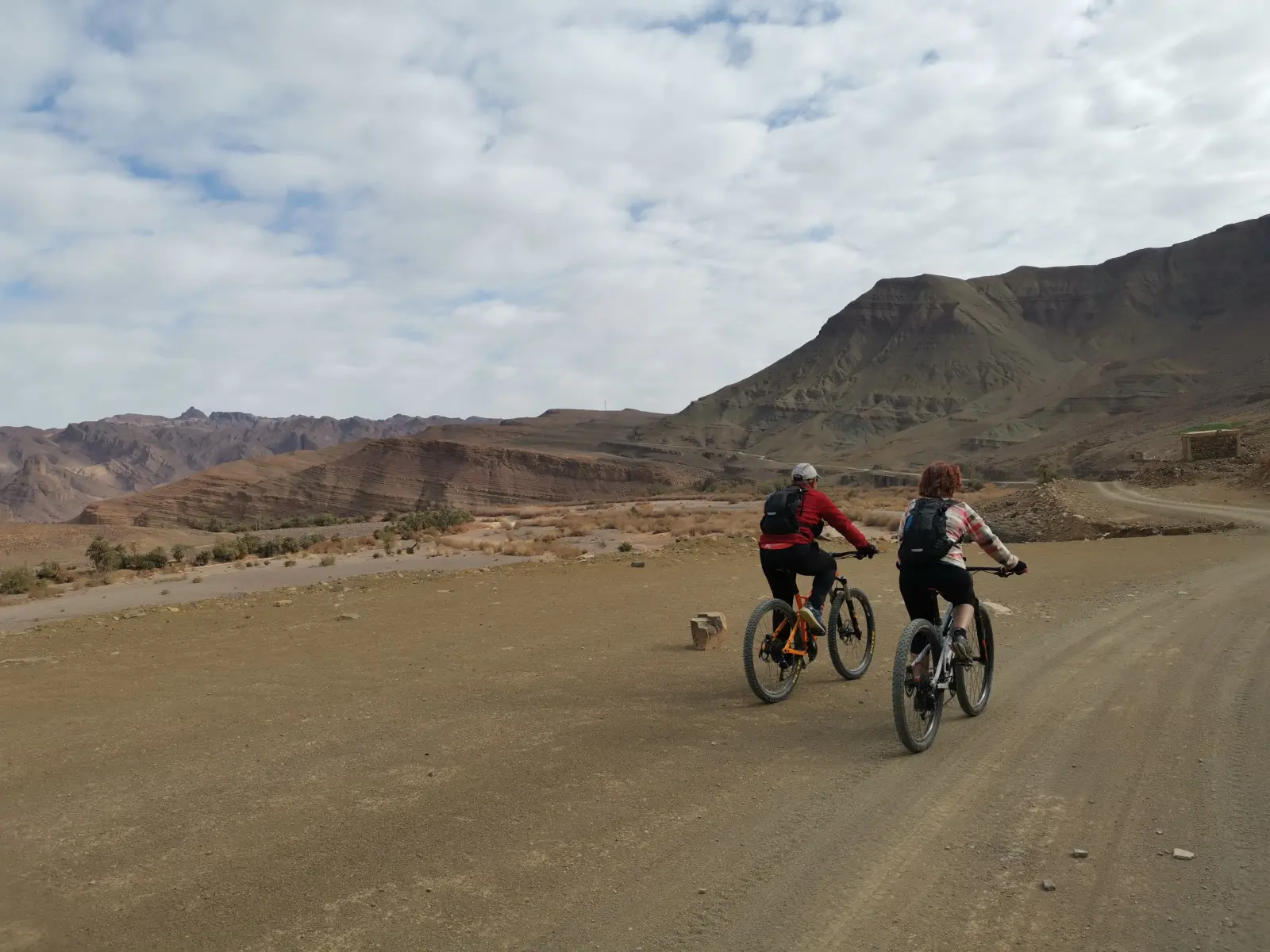
Most people imagine Morocco as hot and sunny all year round. Then they see the High Atlas in January: Toubkal and its neighbours white with snow, the sky deep blue and the valleys quiet. Winter is one of the most beautiful times to be in the mountains, as long as you choose the right routes and come prepared.
What winter is like
Winter in Morocco runs roughly from December to February. Conditions depend a lot on altitude:
- Marrakech and the plains (around 450 m): mild, sunny days, often pleasant for riding, with cold nights.
- Foothills and the Agafay (500–1,000 m): comfortable riding temperatures in the middle of the day.
- Mid-mountain valleys like Imlil and Ouirgane (1,000–1,800 m): cool to cold days, freezing nights, occasional snow.
- High passes and plateaus (above 2,000 m): regular snow and ice, strong cold wind. Often not rideable.
Winter weather can change fast. Sunny days are common, but storms can bring rain to the valleys and heavy snow to the high ground, sometimes closing mountain roads for a while. Your guide will follow the forecast closely and adapt the route. Read best time of year to mountain bike in the Atlas.
Why ride in winter?
- The views. Snow-capped peaks above red-earth villages and green barley fields make winter the most photogenic season. Read top 10 photo spots.
- Quiet trails. Fewer visitors, empty paths and a peaceful atmosphere in the villages.
- Clear air. After a storm, visibility is often superb, with the whole Atlas range on show from the plains.
- No heat. If you struggle with hot weather, winter's cool days are a relief on the climbs.
- Cosy evenings. Guesthouse fires, hot soup, tagines and endless tea. Read a night in a Berber village guesthouse.
Best winter routes
In winter, we choose routes by altitude and conditions. Some favourites:
- The Agafay desert: stony hills, wide views and the snowy Atlas on the horizon. Great riding in winter sunshine. Read Agafay desert by bike.
- Lalla Takerkoust and the foothills: rolling trails around the lake, with mountain views.
- The lower Ourika valley: villages, orchards and river, with snow on the peaks above. Read Ourika valley by bike.
- Ouirgane and lower Imlil trails: possible on many winter days, depending on snow and ice.
- Further south: on multi-day trips, the Anti-Atlas and the Saghro can offer milder conditions and stunning light. Read exploring the Saghro.
High routes like the Kik plateau or passes above 2,000 metres are best left for spring to autumn, unless a long dry spell has kept them clear.
What to wear
Layering is everything. A typical winter kit list:
- thermal base layer (merino is ideal)
- long-sleeve jersey
- insulating mid-layer or light down jacket for stops
- windproof and waterproof jacket
- long tights or riding trousers, or shorts with knee warmers on milder days
- full-finger winter gloves, plus a spare pair
- thin hat or buff under your helmet
- warm socks and, for cold mornings, overshoes
- warm clothes for the evening, as guesthouses can be chilly
Read what to wear for mountain biking in every Moroccan season and what to pack for a bike tour.
Winter riding tips
- Start a little later. Unlike summer, there is no need to beat the heat. Waiting until the sun has warmed the valley avoids icy patches on shaded trails.
- Finish before dark. Days are short, and temperatures drop quickly once the sun goes behind the ridges.
- Watch for ice in the shade, on north-facing slopes and near streams.
- Keep drinking. You may not feel thirsty in the cold, but the dry mountain air still dehydrates you.
- Eat regularly. Your body burns more energy staying warm.
- Expect some mud after rain, and allow extra time.
- Stay flexible. The plan may change with the weather. A good guide always has a lower-altitude alternative. Read mountain biking safety rules.
E-bikes in winter
E-bikes work well in winter, but cold reduces battery range. Keep batteries indoors overnight, use a higher assist mode only when needed and plan routes with a comfortable margin. Read e-bike tours in the Atlas.
Snow days: ride and something else
Winter also opens up options you will not find in summer. When snow conditions allow, the Oukaïmeden ski area, about 75 km from Marrakech, is one of the few places in Africa where you can ski, so some riders combine a few days on the bike with a day in the snow. Others add a winter walk in the Imlil valley or a hammam back in Marrakech.
Our partner Morocco Cycling Tours runs multi-day trips that head south towards the desert, where winter days are sunny and mild. It is a great way to combine snowy mountain views with warm desert riding.
Is winter right for you?
Winter in the Atlas suits riders who:
- love quiet trails and dramatic scenery
- are happy with cool temperatures and a flexible plan
- prefer moderate routes over long, high-altitude days
- want a cheaper, calmer travel season (outside Christmas and New Year)
If you dream of the highest passes and long days at altitude, spring and autumn are better. But if you want snowy peaks, empty trails and evenings by the fire, winter might be your favourite season. Read how many days you need for an Atlas bike tour to start planning.