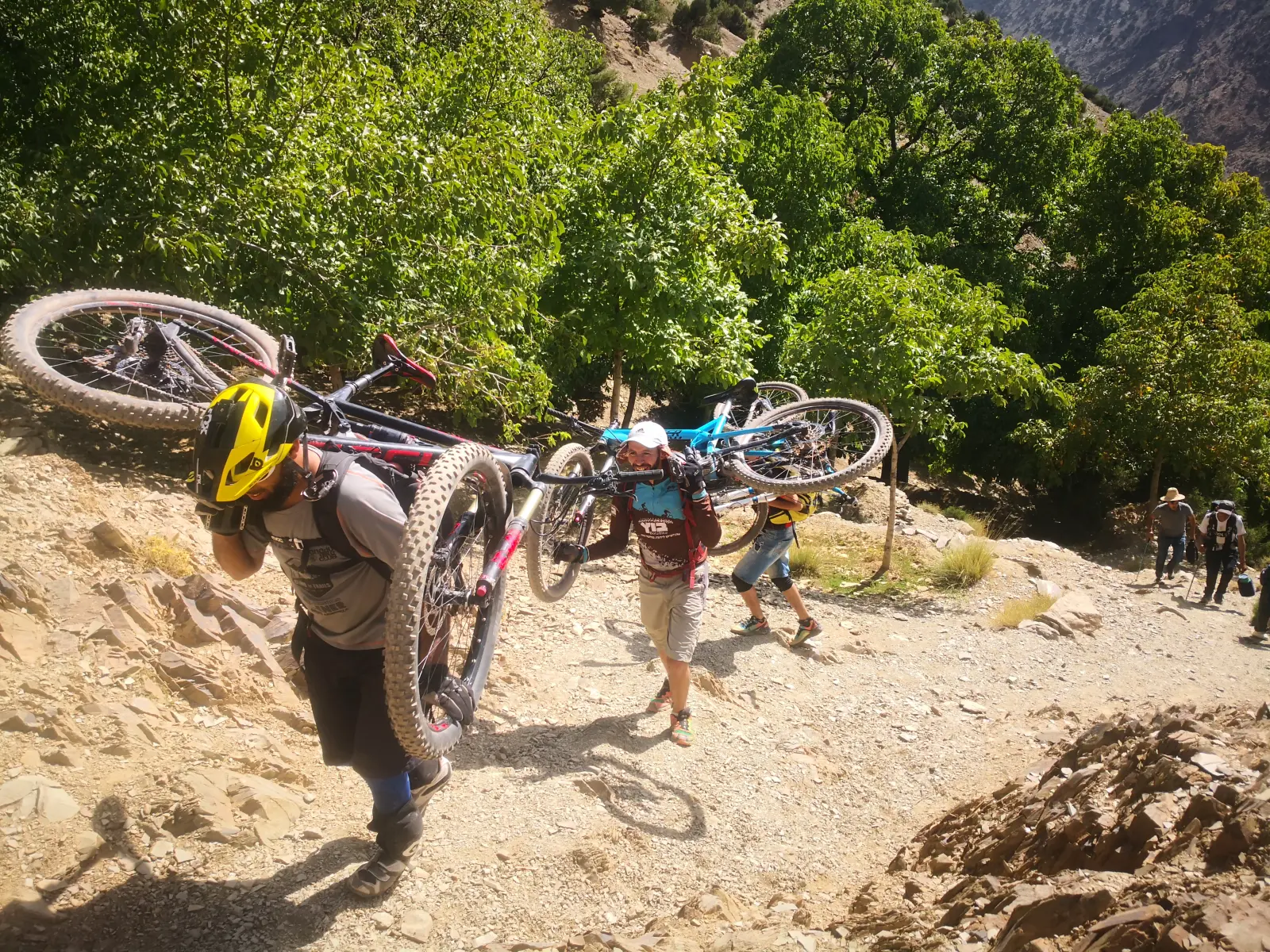
When a ride goes well, riders remember the views, the descents and the lunch. They rarely notice the decisions that kept the day safe: the bike check in the morning, the route changed because of clouds, the regroup before a tricky section. Good guiding is mostly invisible, and that is how it should be.
We asked our guides to write down the rules they follow every day in the mountains. Here they are, in their own order of importance.
1. Check the bike before every ride
Every morning starts with a quick check of every bike:
- brakes working and pads not worn
- tyres in good condition, at the right pressure
- quick-release levers and thru-axles tight
- headset and handlebars secure
- chain and gears working smoothly
Many problems are spotted before they become accidents. If you are riding your own bike, join in. Our repair kit guide lists what we carry for fixes on the trail.
2. Brief the group every day
Before we set off, the guide explains the route: the distance, the climbs, the tricky sections, the lunch stop and where the support vehicle will be. Everyone knows what to expect, and nobody is surprised by a two-hour climb after lunch.
3. Nobody rides alone
We ride as a group, with a guide at the front and, for larger groups, a second guide at the back. The front guide never loses contact with the rest of the group. We regroup at every junction, before technical sections and at the top of climbs. If you need to stop for any reason, tell someone.
4. Ride within your limits
This is the rule we repeat most. There is no prize for riding a section that scares you. Walk it, watch the guide's line, and try again another day if you want. Most accidents happen when riders push too hard, ride too fast or try to keep up with someone stronger. Read our descending tips for ways to build confidence safely.
5. Respect the weather
Mountain weather changes fast. Our guides watch the sky all day.
- Afternoon thunderstorms can build quickly in spring and summer. We start early to finish high sections before they arrive.
- Never shelter under a lone tree in a storm, and stay away from ridges.
- After heavy rain, we avoid riverbeds and narrow valleys because of flash floods.
- In winter, high passes may be blocked by snow, so we choose lower routes.
We will change or shorten a route without hesitation if the weather turns. The mountains will still be there tomorrow.
6. Water, food and sun
Dehydration, heat and low energy cause many problems on the trail. Guides remind riders to drink and eat regularly, plan shaded rest stops and adjust the pace in the heat. See staying hydrated and fuelled.
7. Know when to turn back
Sometimes the safest decision is not to finish the planned route. A rider who is exhausted, unwell or struggling with altitude should not be pushed over a high pass. Our guides are trained to make that call early, using the support vehicle, a shortcut or a slower pace. A good day out is more important than a completed route.
8. Slow down in villages
Trails pass through villages where children play, women carry heavy loads and animals wander. We slow to walking pace, give way to everyone and keep the noise down. This is not only about manners. It is about safety for the people who live there and for us. Our post on etiquette in Berber villages explains more.
9. Give animals space
Mules and donkeys carrying loads always have priority. Stop on the uphill side of the path to let them pass, and do not make sudden movements. Village dogs sometimes bark and chase. Slow down, stay calm and keep the bike between you and the dog if needed.
10. Carry the right kit
Every guide carries:
- a full first-aid kit
- a mobile phone, with emergency numbers and local contacts
- tools, spare tubes, a pump and spare parts
- extra water and some food
- a warm layer and a rain jacket
The support vehicle carries more of everything, including spare wheels and extra bikes on many trips.
11. Be ready for emergencies
Our guides are trained in first aid and know the evacuation routes for every trail we ride: where the nearest road is, where phone signal can be found and how to reach the clinics in Marrakech. We also insist that every rider has travel insurance that covers mountain biking and evacuation.
12. Wear the right protection
A properly fitted helmet is compulsory on every ride. Gloves are strongly recommended. Many riders also wear knee pads on rocky trails, and sunglasses protect your eyes from dust and branches. See choosing the right helmet and protective gear.
13. Leave no trace
Safety includes the safety of the mountains themselves. We stay on existing trails, avoid skidding, carry all rubbish out and never light fires. More in responsible mountain biking.
What we ask of riders
Safety works best as a team effort. We ask you to:
- be honest about your fitness, experience and any health issues
- tell the guide if you feel unwell, tired or uncomfortable
- follow instructions on technical sections and in villages
- keep your helmet on while riding
- look after your own bike and kit, and report any problems
The bottom line
Mountain biking in the Atlas has real risks, as in any mountains. With experienced local guides, careful planning and riders who listen to their bodies, those risks are small. Our guides want you to go home tired, happy and with stories to tell, not bandages. That is why these rules matter. If you want to know more about how safe Morocco is in general, read is Morocco safe for cycling holidays?.