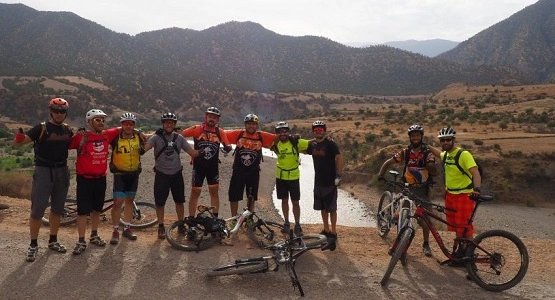
People often imagine Morocco as permanently hot. Then they arrive in Imlil in April, set off at 8am and discover their fingers are frozen on the first descent. A few hours later, they are climbing in full sun and wondering why they wore so much. The mountains have big daily temperature swings, and the right clothes make the difference between misery and comfort.
This guide covers how to dress for each season. For a complete checklist of everything to bring, see our packing list.
The layering system
The key to riding in Morocco is layers you can add and remove quickly. Think of three levels:
1. Base layer: a breathable short- or long-sleeved jersey that moves sweat away from your skin. Merino or a good synthetic works best.
2. Mid layer: something warm and light, such as a thin fleece, a gilet or arm warmers.
3. Outer layer: a windproof or waterproof jacket that packs small.
On a typical day, you start with all three, remove the outer layer on the first climb, the mid layer when the sun hits you and put the jacket back on for the descent or a lunch stop in the shade. It sounds fussy, but it quickly becomes routine.
Spring (March to May)
Spring is beautiful, but changeable. Mornings in the mountains can be close to freezing, especially in March, while afternoons reach the low twenties. Afternoon storms are possible, particularly in April and May.
What to wear:
- base layer with arm warmers
- light gilet or fleece for the morning
- windproof jacket for descents
- a packable waterproof in your backpack
- full-finger gloves, and thin liner gloves for cold mornings in March
- knee warmers or light leg warmers for early starts
Read more in spring in the High Atlas.
Summer (June to August)
Summer is hot in the lowlands and pleasantly warm in the high valleys. The sun is very strong at altitude, and burns happen fast.
What to wear:
- a light, long-sleeved sun jersey, which is often cooler than bare arms in strong sun
- a buff or neck gaiter you can soak in water
- light-coloured clothing
- sunglasses with good UV protection
- a thin windproof for the summit of a pass or a summer storm
- a warm layer for the evening, as nights at 1,800 metres can still be cool
Start early and use high-factor sun cream. Our post on staying hydrated and fuelled in hot weather has more tips.
Autumn (September to November)
Autumn mirrors spring. September can still be hot, October is mild and golden, and November brings cold mornings and the first snow on the peaks.
What to wear:
- in September, summer kit plus a light layer for mornings
- in October, the full layering system
- in November, add thermal base layers, warmer gloves and a hat or headband under the helmet
Days get shorter, so we often start later when it is cold and finish before dark.
Winter (December to February)
Winter riding is mostly on lower trails and in the south. Days are often clear and sunny, but temperatures can be below zero at dawn and only mild in the afternoon. In the shade, it stays cold all day.
What to wear:
- a thermal long-sleeved base layer
- a winter jersey or fleece
- a windproof or softshell jacket
- warm full-finger gloves
- a thin hat or headband under your helmet
- thermal tights or knee warmers
- warm socks and, if you ride clipless, overshoes for very cold mornings
- a down jacket for evenings and lunch stops
Read riding the Atlas in winter for more on winter trips.
Desert rides
In the Agafay or the Sahara, the contrast between day and night is even bigger. Expect cold mornings and evenings in winter and spring, and intense midday heat. A buff is essential against dust and sun, and long sleeves protect your skin. See Agafay by bike.
Dressing respectfully in villages
Moroccan mountain villages are traditional and conservative. On the bike, normal cycling kit is accepted, especially when riding with a local guide. But when you stop in a village, have lunch in a family home or visit a market, it is respectful to cover up a little more:
- wear baggy shorts over Lycra
- cover your shoulders with a T-shirt or light shirt
- bring light trousers or a long skirt for longer visits
- avoid very tight or revealing clothing off the bike
This applies to everyone, not only women. Locals notice and appreciate it. Our post on etiquette in Berber villages has more advice.
Shoes, gloves and protection
- Shoes: stiff-soled riding shoes for clipless pedals, or grippy flat-pedal shoes. Choose something you can also walk in, as some sections need pushing.
- Gloves: full-finger gloves all year, for grip and protection.
- Helmet: essential in every season. See choosing the right helmet.
- Glasses: tinted for sun, clear for shade and dust.
A simple rule
Our guides use a simple test: if you feel slightly cool when you set off, you are dressed correctly. If you feel warm before you start, you will overheat on the first climb. Start a little cool, and add layers for descents and stops.
What we provide
On our tours, the support vehicle carries your extra layers, so you can swap clothes during the day. We can also lend helmets and, in winter, some warm gear. If you are not sure what to bring for your dates, ask us. We will tell you exactly what the weather is doing in the mountains that week.