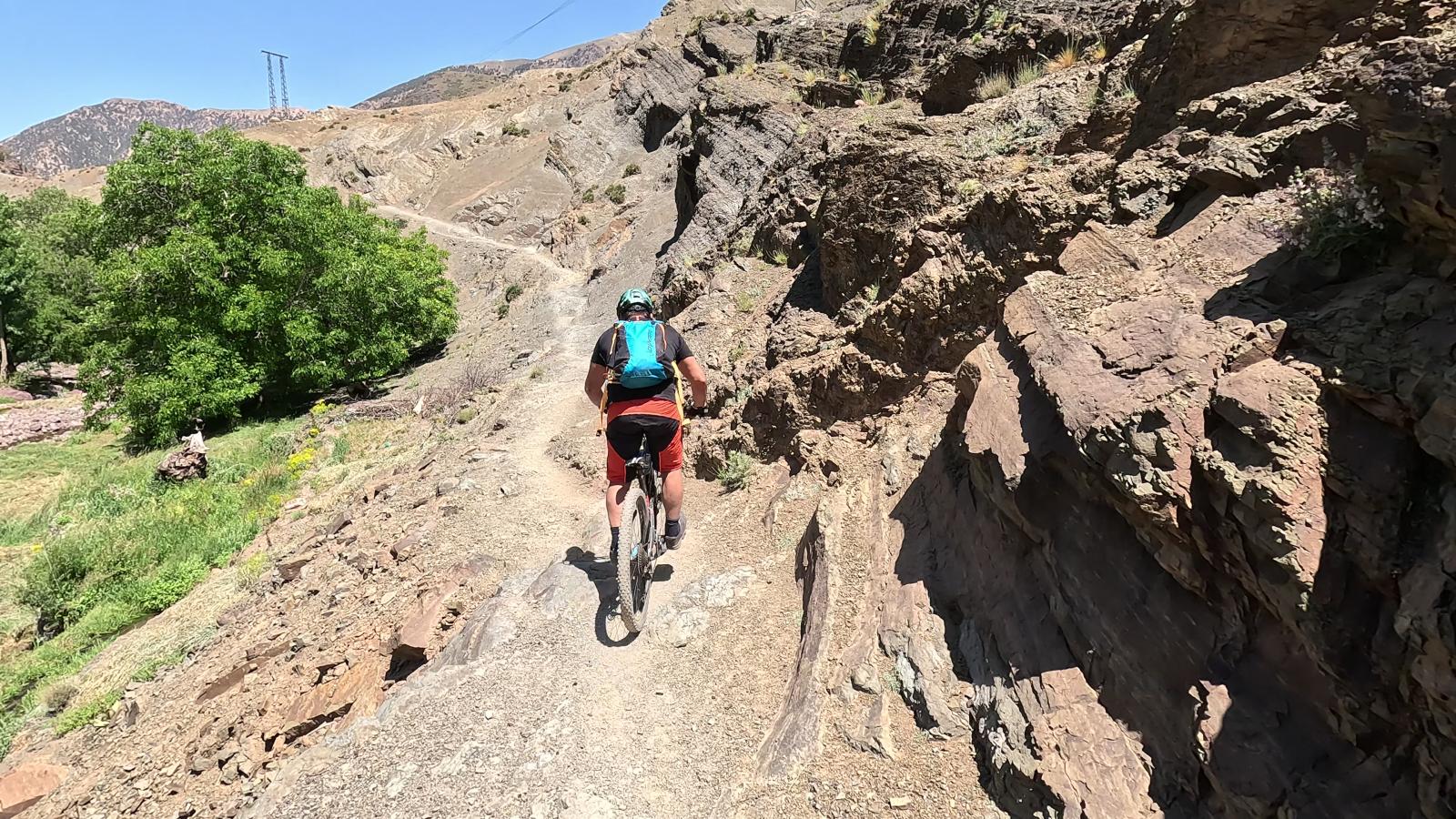
The air in the Atlas is dry. You often do not feel yourself sweating, because sweat evaporates almost as soon as it appears. Add altitude, strong sun and long climbs, and you can lose a lot of water without noticing. Dehydration is one of the most common reasons riders feel unwell on a trip, and it is also one of the easiest to prevent.
Here is what we tell every group before the first ride.
Why Morocco is extra thirsty
- Dry air: low humidity means sweat evaporates fast and you underestimate your losses.
- Altitude: you breathe faster and lose more water through breathing.
- Sun: high UV and little shade on many trails.
- Long days: five or six hours on the bike, often with long climbs.
Even in spring and autumn, when temperatures feel mild, you can lose more fluid than you think.
How much to drink
Everyone is different, but as a rough guide:
- Before the ride: drink half a litre of water with breakfast.
- During the ride: aim for around half a litre to three-quarters of a litre per hour in warm weather, more in real heat and on long climbs. Sip little and often, every 10 to 15 minutes, rather than gulping a lot at once.
- After the ride: keep drinking steadily through the afternoon and evening.
A simple check: your urine should be pale yellow. Dark urine means you need more water. Very clear urine all day may mean you are drinking more than you need without enough salt.
Do not forget the salt
When you sweat, you lose salt as well as water. On long, hot days, drinking only plain water can leave you feeling flat, crampy or even nauseous. Add electrolyte tablets or powder to at least one bottle. Salty snacks help too: olives, salted nuts, bread with a little salt.
Carry enough
We recommend carrying at least two litres on the bike, more on long or hot days. A hydration pack with a 2 to 3 litre bladder plus one bottle is a popular set-up. Our support vehicle carries extra water, and we refill at planned stops. Read best hydration packs for long days in the saddle for advice on choosing one.
Water safety
Village springs and taps are common, but the water is not always safe for visitors. Drink bottled water or use a good filter or purification tablets. On our tours, we provide safe drinking water every day. Please reuse your bottle and refill it rather than buying many small plastic bottles. Rubbish is a growing problem in the mountains.
What to eat before the ride
Breakfast matters. A typical Moroccan breakfast works well: bread, msemen (a flaky pancake), honey, olive oil, eggs, olives, fruit and tea or coffee. Eat at least an hour before you start, and include some carbohydrates and a little protein.
What to eat during the ride
On rides over two hours, you need to keep fuelling. Aim for something small every 30 to 45 minutes.
- Dates: the perfect natural energy food, easy to carry and loved by every Moroccan guide.
- Dried fruit and nuts: figs, apricots, almonds and walnuts, all grown in the Atlas.
- Bread: a piece of khobz with a little cheese or olive oil.
- Energy bars or gels: bring your favourites from home, as they are hard to find in the mountains.
- Fresh fruit: oranges, bananas and seasonal fruit from village shops.
Practise eating on the bike before your trip so your stomach is used to it.
Lunch on the trail
Lunch is usually the main meal of the riding day. Tagines, salads, grilled meat, bread and fruit give you plenty of energy for the afternoon. Eat well, but not so much that the first climb after lunch feels impossible. Our post on what you'll eat on a Morocco bike tour describes the food in more detail.
Recovery
After the ride, drink, then eat a mix of carbohydrates and protein within an hour or two. Mint tea is lovely, but it is sweet and contains caffeine, so drink water too. Dinner in a guesthouse is usually generous, so you will not go hungry.
Know the warning signs
Dehydration: thirst, dry mouth, headache, dark urine, tiredness, dizziness when standing up.
Heat exhaustion: heavy sweating, pale and clammy skin, weakness, nausea, headache, muscle cramps. Stop in the shade, drink water with electrolytes, cool down and tell your guide.
Heat stroke: confusion, hot dry skin, very high body temperature, collapse. This is a medical emergency. Guides are trained to recognise it and act quickly.
If you feel unwell, say so early. It is much easier to fix a small problem than a big one.
Beat the heat
- Start early, especially in summer. Our sunrise rides are popular for a reason.
- Take a long lunch in the shade during the hottest hours.
- Wear light, breathable clothing, and a buff you can soak in water.
- Use high-factor sun cream and reapply it at lunch.
- Ride at a steady pace on climbs to keep your body temperature down.
The guide's rule of thumb
Our guides have a simple saying: "Drink before you are thirsty, eat before you are hungry, and rest before you are tired." Follow it, and the heat becomes part of the adventure rather than a problem. For more on preparing for the conditions, see riding at altitude and our packing list.