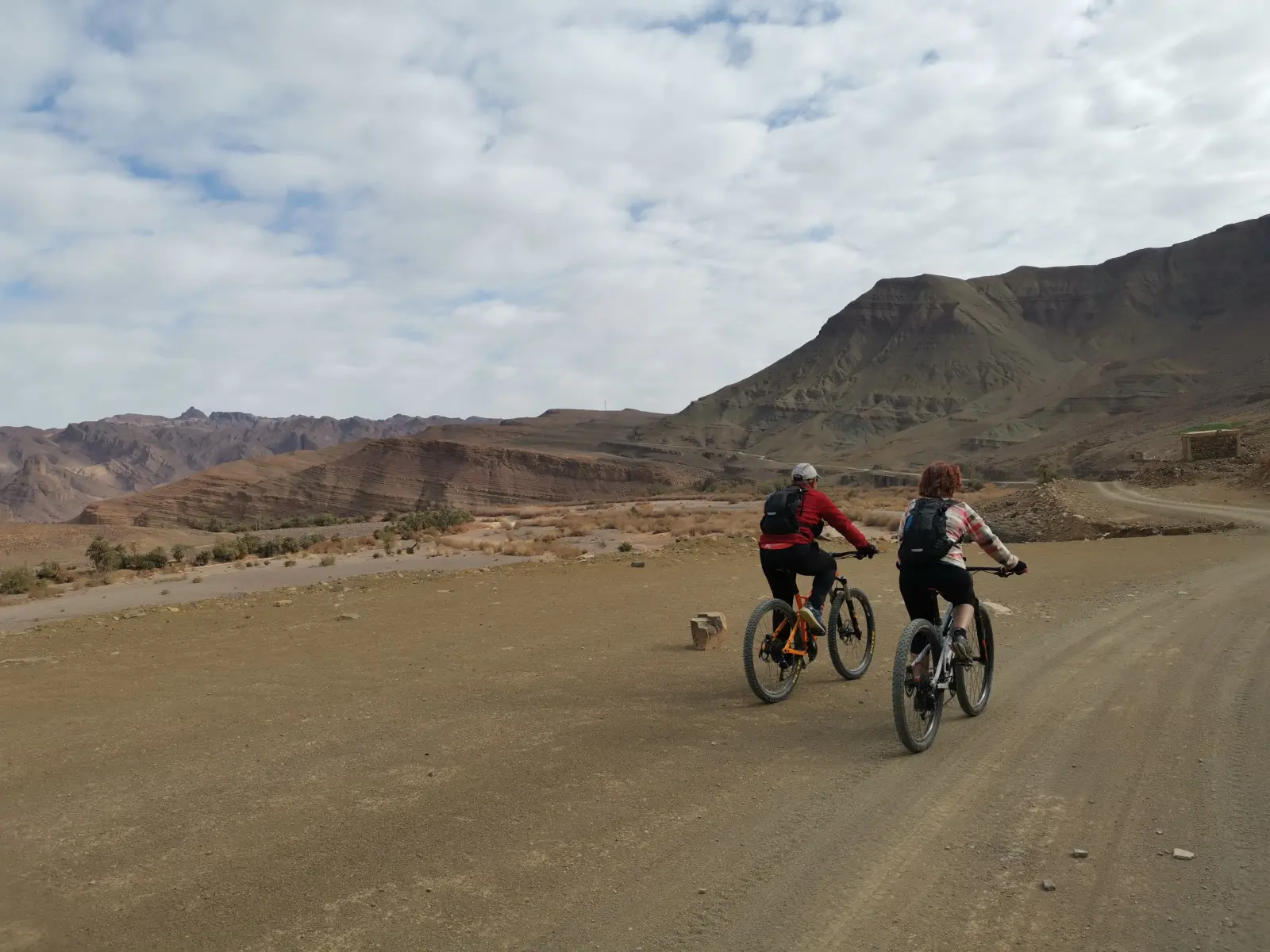
We ride with many road cyclists. Some come for the famous climbs and want to try the trails. Others have heard about the Atlas and want a new kind of adventure. They are usually very fit, often fitter than the mountain bikers in the group. And on the first rocky descent, many of them are surprised at how different it feels.
The good news is that road cyclists usually make the switch quickly. Your engine is already built. You just need to learn a few new skills and unlearn a few habits.
What transfers from road riding
- Fitness: your aerobic base and climbing legs are a huge advantage on long Atlas climbs.
- Pacing: you know how to hold a steady effort, which is exactly what big mountain climbs need.
- Bike handling at speed: you are used to cornering and descending on tarmac.
- Fuelling: you already know how to eat and drink on long rides.
- Comfort in the saddle: five hours on a bike will not scare you.
What is different
Terrain. Instead of smooth tarmac, you ride on rocks, loose gravel, roots, steps and dust. The bike moves around under you, and that is normal.
Body position. On a road bike, you sit and spin. On a mountain bike, you stand on rough ground with bent knees and elbows, using your body as suspension.
Braking. Mountain bike disc brakes are very powerful. You brake earlier and more gently, and almost never in the middle of a rough section.
Speed. Speeds are lower, but the concentration needed is higher. A 10 km/h descent through a rock garden can feel faster than 60 km/h on a road.
Effort. Power is less steady. You make short bursts to clear obstacles, and climbs on loose ground need constant small adjustments.
Upper body. Your arms, shoulders and core work hard on descents. Many road cyclists are surprised by how tired their hands and forearms feel after the first day.
The skills to learn first
1. The ready position. Stand on level pedals with bent knees and elbows, weight centred. This is the base of everything. See descending rocky trails.
2. Look ahead. Pick your line early and look where you want to go, not at obstacles.
3. Brake before, not during. Slow down on the smooth bits, roll through the rough bits.
4. Relax. A loose grip and soft elbows let the bike move. Tension is the enemy.
5. Loose surfaces. Accept a little drift. Read how to handle loose gravel.
6. Walk when needed. Nobody expects you to ride everything on day one.
Habits to unlearn
- Sitting down on descents. It makes the bike buck and transfers every hit to your back.
- Clipping in too early. If you use clipless pedals on the road, consider flat pedals for your first days off-road. It makes putting a foot down much easier.
- Chasing the stats. Average speed means very little on rocky trails. Enjoy the terrain.
- Pushing the pace on climbs. On loose ground, smooth pedalling matters more than raw power.
Bike set-up for road riders
If you rent, ask the guide to set the bike up for you. A few things to check:
- Saddle height: similar to your road bike for climbing, but lower it for descents if the bike has a dropper post.
- Bar width: mountain bike bars are much wider than road bars. They feel strange at first but give far more control.
- Tyre pressure: much lower than road tyres. Trust the guide's suggestion.
- Brake levers: set so you can brake with one finger.
- Pedals: flats or clipless. Many road cyclists find flats less stressful while learning.
Read hardtail vs full suspension to understand the bikes you will see.
Choosing your first mountain bike trip
For road cyclists switching to mountain biking, we suggest:
- A trip that mixes dirt roads and singletrack. The Kik Plateau, Ouirgane and Agafay have long, flowing tracks where your fitness shines, with easier trails to build skills.
- A day or two of skills before big descents. Our guides can run a short coaching session on day one.
- A gravel option. If you are unsure about technical trails, gravel riding on dirt roads gives you the scenery without the rock gardens.
Our post on how fit you need to be explains our grading. As a road cyclist, you can probably handle the fitness of a challenging trip, but choose a moderate technical level at first.
Combining road and dirt
Morocco is one of the best countries in the world for riders who love both. You can ride the great passes on a road bike, then switch to a mountain bike for village singletrack in the same week. Read the Tizi n'Test and Tizi n'Tichka passes and road cycling holidays in Morocco. If road and gravel remain your main interest, our partners at Morocco Cycling Tours specialise in road and gravel trips.
A road cyclist's typical first week
Most road cyclists follow the same pattern. Day one feels awkward and slow. Day two, things start to click. By day three, they are grinning on descents and teasing the mountain bikers on the climbs. By the end of the week, many are already planning which mountain bike to buy at home.
Give yourself time, listen to the guide and enjoy being a beginner again. It is one of the most fun things that can happen to an experienced cyclist.