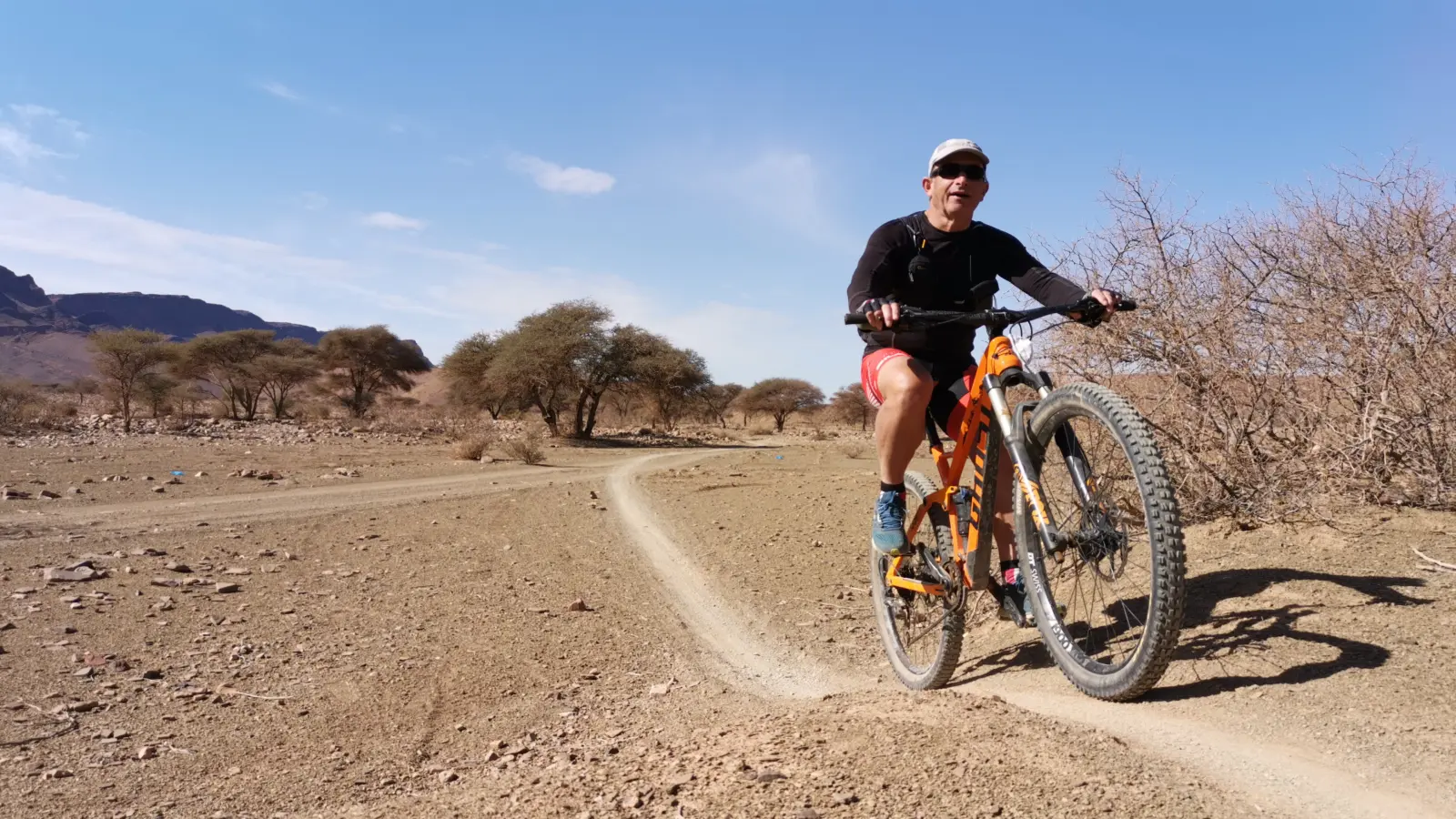
The trails we love in the High Atlas were not built for mountain bikes. Most are mule tracks and footpaths that have connected villages for centuries. Farmers use them to reach their fields, shepherds move flocks along them, children walk them to school and mules carry everything from firewood to gas bottles.
When we ride these paths, we are guests. Responsible riding means leaving the trails, the land and the people at least as well as we found them. Here is how.
1. Stay on the trail
- Ride existing paths only. Do not create new lines, cut corners on switchbacks or ride across open hillside.
- Avoid fields and terraces. Terraced fields take generations to build and maintain. Riding across them damages crops and walls.
- Respect irrigation channels. The small channels (seguias) that carry water to fields are vital. Never ride along them or block them, and cross only where your guide shows you.
- Skid less, brake smart. Locking the rear wheel tears up the trail surface and speeds up erosion. Read descending rocky trails.
2. Share the trail
On Atlas trails, mules, walkers and shepherds always have priority.
- Slow down early when you see people or animals ahead.
- Give mules space. Stop, move to the safe side (usually the uphill side) and let them pass. Mules can be startled by bikes, and a frightened mule on a narrow path is dangerous for everyone.
- Greet people. A smile and "salam" or "azul" make a big difference. Read learning a few words of Tamazight.
- Ride slowly through villages. These are people's homes, with children and animals around every corner.
- Close gates if you open them, and do not disturb livestock.
3. Leave no trace
- Carry out all rubbish, including fruit peel, nut shells and tissues. Organic waste takes a long time to break down in dry mountain conditions.
- Use a refillable bottle or hydration pack instead of single-use plastic. Our support teams carry water for refills. Read the best hydration packs for long days.
- Pick up litter you find along the way, if you can do so safely. Every bit helps.
- Use toilets in villages and guesthouses where possible. If you have to go outdoors, move well away from water and paths, and pack out toilet paper.
- Do not take souvenirs from nature or historic sites, like fossils, stones or plants.
4. Respect water
Water is precious in the mountains. Villages depend on springs, rivers and channels for drinking water and farming.
- Never wash bikes, dishes or yourself directly in springs or channels.
- Use water carefully in guesthouses. Short showers help.
- Do not contaminate water sources with soap, sunscreen or waste.
5. Respect people and culture
- Dress modestly off the bike, and cover up when walking through villages.
- Ask before taking photos of people, especially women and children.
- Do not give sweets, pens or money to children. It encourages begging. If you want to help, give through a school or local association.
- Follow your guide's advice on local customs.
Read respectful travel: etiquette in Berber villages.
6. Travel in a way that supports local communities
- Ride with local guides who know the trails, the people and the rules.
- Stay in locally owned guesthouses and eat local food.
- Buy from local cooperatives and craftspeople.
- Tip fairly.
Read how tourism supports mountain communities in Imlil.
7. Keep groups small
Large groups put pressure on trails, villages and guesthouses. Smaller groups are quieter, safer and easier for local people to welcome. We keep our groups small for this reason. Read private vs group bike tours.
8. Think about your travel footprint
Flights are often the biggest part of a trip's footprint. A few ways to reduce yours:
- Stay longer, travel less often. One longer trip has a smaller impact than several short ones.
- Combine activities in one region, like riding, trekking and city time. Read combining trekking and biking.
- Use shared transport where possible.
- Choose an e-bike thoughtfully. E-bikes let more people enjoy the mountains. Charging them uses electricity, so we plan routes and charging carefully. Read are e-bikes cheating?
9. Ride safely
Being responsible also means not putting yourself or others at risk. Ride within your limits, wear a helmet, keep your bike in good condition and follow your guide's instructions. Read the safety rules our guides live by.
What we do as a company
[Add your own commitments here, for example: maximum group sizes, local guides and suppliers, plastic reduction, trail clean-up days, support for local schools or associations, earthquake recovery projects. Only list what you actually do.]
Shared values with our partners
Our partners share the same approach to riding. Morocco Cycling Tours works with local teams across Morocco, and Marrakech by Bike encourages visitors to discover Marrakech by bike instead of by car, reducing traffic in the old city.
The trails will thank you
Responsible riding is not about rules for their own sake. It is about making sure that the trails stay open, villages keep welcoming riders and the mountains stay as beautiful for the next generation as they are today. Ride gently, smile often and leave nothing but tyre tracks.