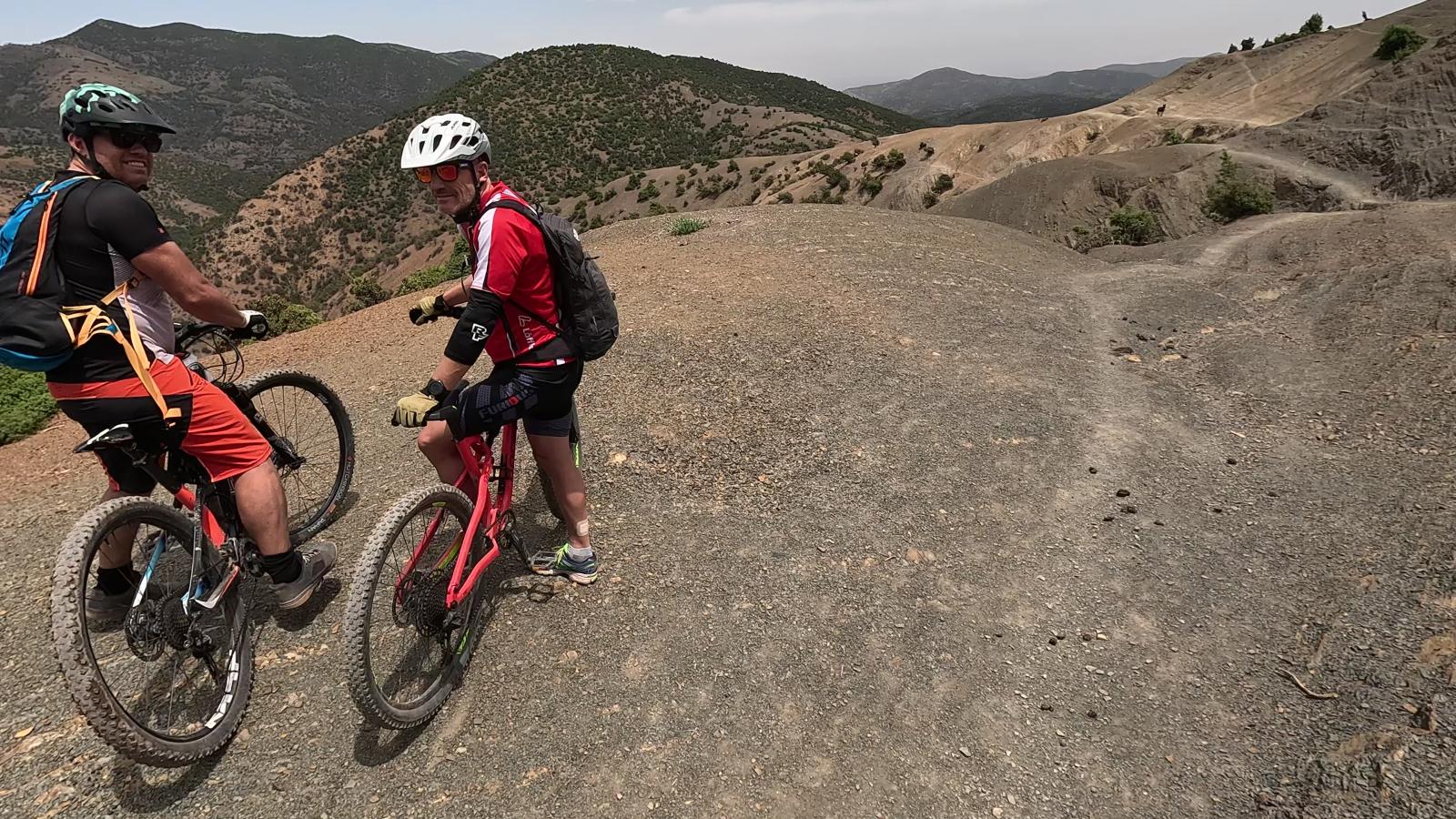
On a big day in the High Atlas, you might climb for two hours or more without much of a break. It can feel daunting on paper. In practice, long climbs are mostly about rhythm. Riders who learn to settle into a steady pace usually find they enjoy the climbs far more than they expected. Some even start to look forward to them.
Here is what our guides teach on the way up to passes like Tizi n'Tamatert and Tizi n'Mzik.
1. Start slower than you want to
The most common mistake on long climbs is starting too fast. The first ten minutes feel easy, so riders push. Twenty minutes later, their legs are burning and their breathing is out of control. At altitude this happens even faster.
Begin at a pace that feels almost too easy. You should be able to talk in full sentences. If you feel good after half an hour, you can increase the effort a little. It is much easier to speed up at the end than to recover from going too hard at the start.
2. Find your rhythm
Long climbs reward a steady effort. Try to keep your breathing and pedalling at the same rhythm, even when the gradient changes slightly. Many riders find it helps to:
- count pedal strokes in sets of ten
- match breathing to pedalling, for example breathing in for three strokes and out for three
- focus on smooth circles rather than stamping on the pedals
3. Use your gears early
Shift into an easier gear before the slope steepens, not halfway up a ramp. A higher cadence, around 70 to 85 pedal revolutions per minute, is gentler on your muscles than grinding a big gear slowly. On loose Atlas tracks, a light gear also helps the rear tyre keep traction.
If you are bringing your own bike, consider a wide-range cassette. You will never regret having one more easy gear at 2,000 metres.
4. Sit and stay smooth
On most Atlas climbs, staying seated is more efficient. It keeps weight over the rear wheel for traction and uses less energy. Slide slightly forward on the saddle on steep pitches, bend your elbows and lower your chest a little to keep the front wheel down.
Stand up only for short, steep kicks or to stretch your legs and back for a few strokes. On loose ground, standing can cause the rear wheel to spin.
5. Choose your line uphill too
Lines matter on the way up as well as on the way down. Look for:
- packed dirt rather than loose gravel
- the inside of a gentle curve, if it is smoother
- the outside of steep hairpins, where the gradient is gentler
- a path between rocks that lets you keep pedalling
Look ahead and plan, so you do not have to stop suddenly in front of a rock.
6. Breathe well
Altitude makes breathing feel harder. Focus on deep belly breaths rather than shallow chest breathing. Relax your shoulders and jaw. Tension wastes energy. If your breathing gets out of control, ease off for a minute until it settles. Our post on riding at altitude has more breathing tips.
7. Eat and drink before you need to
On a two-hour climb, you burn a lot of energy. Do not wait until you feel empty. Sip water every 10 to 15 minutes, and eat something small every 30 to 45 minutes: dates, a bar, a piece of bread. Running out of energy halfway up a pass, known to cyclists as "bonking", is miserable and avoidable. See staying hydrated and fuelled.
8. Break it into pieces
A climb of 1,000 metres can feel overwhelming. Break it into smaller goals:
- the next village
- the next bend
- the walnut tree where the guide said we would stop
Our guides often plan regroup points at natural landmarks. Each one is a small win.
9. Accept walking
Some Atlas climbs have short sections that are simply too steep, rocky or loose to ride. Walking them is not failure. Pushing your bike for a few minutes often uses less energy than fighting it, and many experienced riders do it without a second thought. Tizi n'Mzik is a good example. Almost everybody walks part of it.
10. Use your head
Long climbs are as much mental as physical.
- Stop comparing yourself with faster riders. Ride your own climb.
- Look around. Some of the best views in the Atlas appear halfway up a pass.
- Talk to the people you pass. A "salam" to a shepherd is a great distraction.
- Remember the descent waiting at the top.
On an e-bike
E-bike riders climb too, just with help. Use the lower assist modes on long climbs to save battery for later, and keep a steady cadence so the motor works efficiently. Read e-bike tours in the Atlas for more.
Train for climbing at home
The best preparation is simply riding long climbs before your trip. If you live somewhere flat, long seated efforts on an indoor trainer work well. Our 8-week training plan includes climbing sessions designed for Atlas riding.
At the top
Stop, put on a layer before you get cold, eat something and enjoy the view. You earned it. Then check your brakes, lower your saddle if you have a dropper and get ready for the fun part. Our tips on descending rocky trails will help you make the most of it.